

Ready & Packaged Foods
All →Vegetables & Legumes
All →Desserts & Confectionery
All →Meat & Protein
All →Grains & Bakery
All →Beverages
All →Milk & Dairy
All →

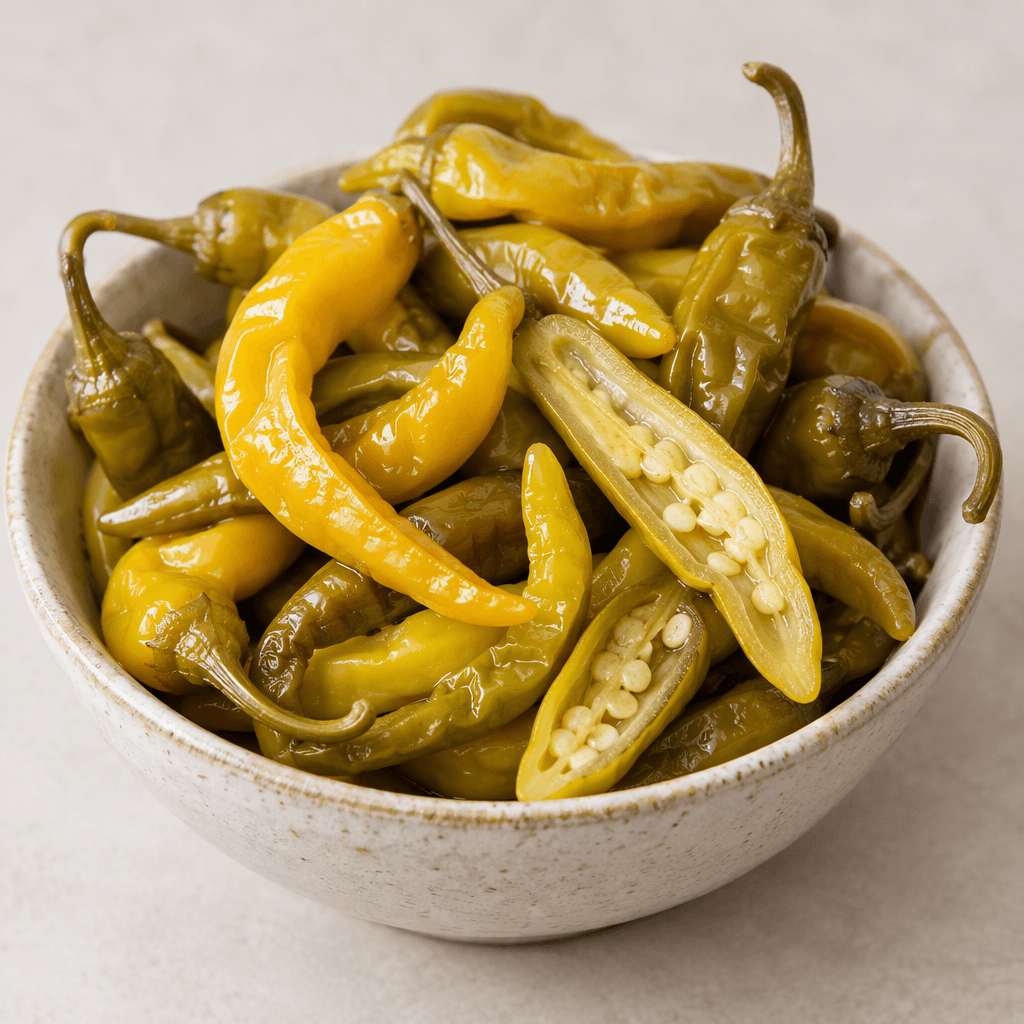
Hot pickled pepper Calories
Spicy, low-calorie, source of vitamin C, probiotic potential
In season: Summer · Autumn
CALORIES
GI
POTASSIUM
FIBER
Quick answer
5 piece (medium) of Hot pickled pepper (40 g) has 11 calories. That works out to 28 calories per 100 g. It contains 2.1 g of carbs, 0.4 g of protein, 0.1 g of fat and 0.8 g of fiber. Its 26 mg of Vitamin C covers 29% of the Daily Value. Its glycemic index is 15 (low), so it raises blood sugar slowly.
What is Hot pickled pepper?
Hot pickled pepper is made by preserving slender hot peppers in brine or vinegar, a familiar pickle in Turkish cooking. It brings together the pepper’s heat with a sharp, salty tang; the peppers are often pleasantly firm, with glossy, slightly wrinkled skins. Pickling methods vary, so the flavour can lean more sour or more savoury.
In Turkey, these peppers commonly accompany kebabs, beans and other home-style meals, and may be tucked into a sandwich or wrap. Elsewhere, they work much the same way as a punchy side or condiment. At 28 calories per 100 g, they add plenty of flavour without much energy; a small serving is usually enough. Pair them with rice, grilled vegetables or a cooling yoghurt dip to balance the heat.
Hot pickled pepper Nutrition Facts
Selected: 100 g
28
KCAL / 100G
Carbs
5.2g
· 2% DV
Protein
1.1g
· 2% DV
Fat
0.3g
· 0% DV
Fiber
2.1g
· 8% DV
DV is the share of the daily value covered, on a 2,000 kcal reference diet.
Calories come from: Carbs 75% · Protein 16% · Fat 9%
Hot pickled pepper Vitamins & Minerals
Vitamins
Vitamin C
65mg · 72% DV
B6
0.22mg · 13% DV
Vitamin A
110µg · 12% DV
Folate
23µg · 6% DV
Minerals
Sodium
850mg · 37% DV
Iron
1mg · 6% DV
Potassium ⭐
170mg · 5% DV
Magnesium
13mg · 3% DV
How Nutritious Is Hot pickled pepper?
Nutrient density
High
How many vitamins, minerals and how much fiber this food carries per calorie. A high score means a lot of nutrition for few calories.
Satiety score
Medium
An EatBetter score computed from fiber, protein and calorie density. A high score means staying full longer on the same calories.
Both scores are calculated per 100 g and do not change with the selected portion. The satiety score is EatBetter's own calculation, not a clinical measure.
Hot pickled pepper Glycemic Index
GLYCEMIC INDEX
GLYCEMIC LOAD
Accounts for portion size — a more realistic measure than GI alone.
How to Burn Off Hot pickled pepper
To burn the 28 calories in 100 g:
🚶
Walking (5 km/h)
🏃
Running (8 km/h)
🚴
Cycling
🏊
Swimming
Times are calculated with the MET equation for a 70 kg adult. Actual burn varies with your weight, age and pace.
Is Hot pickled pepper Processed?
NOVA 3
Processed
1. Unprocessed
2. Minimally Processed
3. Processed
4. Ultra-Processed
NOVA classifies foods into 4 groups by industrial processing. NOVA 1 (unprocessed) is the healthiest.
Does Hot pickled pepper Contain Allergens?
No known major allergens
Which Diets Is Hot pickled pepper Good For?
Vegan
✓ Suitable
Vegetarian
✓ Suitable
Gluten-Free
✓ Suitable
Dairy-Free
— Not suitable
Mediterranean
✓ Suitable
Paleo
✓ Suitable
Whole30
— Not suitable
DASH
— Not suitable
Keto
— Not suitable
Low FODMAP
— Not suitable
Hot pickled pepper Fat Profile
SATURATED
0.05g
MONOUNSATURATED
0.04g
POLYUNSATURATED
0.09g
Omega 6:3 ratio 2.7:1
Below the ideal 4:1 — a good omega balance.
Compare Hot pickled pepper
Foods Similar to Hot pickled pepper
Frequently Asked Questions About Hot pickled pepper
How do you make hot pickled peppers?
Hot pickled peppers are made by packing clean peppers into a jar and covering them with brine; some recipes also use vinegar. The method affects whether they ferment or are simply pickled, so follow a tested recipe and keep the peppers submerged.
Are hot pickled peppers fermented?
Some hot pickled peppers are fermented, but not all. Naturally fermented peppers develop through the action of microorganisms in brine, while vinegar-pickled or pasteurized peppers may not undergo fermentation or contain live cultures.
Do hot pickled peppers have probiotics?
Hot pickled peppers may contain live microorganisms if they were naturally fermented and have not been pasteurized. Vinegar pickling and heat processing can leave them without live cultures, so the word “pickled” alone does not mean they are probiotic.
Why do hot pickled peppers get soft?
Hot pickled peppers can soften if the brine has the wrong salt concentration, the jar is kept too warm, or peppers sit above the liquid. Start with firm peppers, follow a tested recipe, and keep them submerged.
How long do hot pickled peppers last after opening?
Keep opened hot pickled peppers refrigerated, covered in brine, and use a clean utensil each time. For a packaged product, follow its storage instructions; homemade peppers do not have one reliable shelf life because recipes and preparation methods vary.
What peppers are used to make hot pickled peppers?
Small hot varieties such as jalapeños, serranos, or Thai chilies are commonly used for hot pickled peppers. The variety determines the heat and flavor, while firm, unblemished peppers are more likely to hold their texture in the jar.
How can you make hot pickled peppers less spicy?
Rinsing hot pickled peppers briefly can remove some of the spicy brine from their surface, but it will not remove all their heat. Slicing them can spread that heat through a dish, so use whole peppers or add them sparingly.
Can you eat hot pickled peppers straight from the jar?
Yes, hot pickled peppers can be eaten straight from the jar if they have been stored properly. Their brine can make them especially salty and spicy, so drain them first or serve a small amount alongside a meal.
How can you tell if hot pickled peppers have gone bad?
Discard hot pickled peppers if you see mold, notice a rotten or unusually unpleasant smell, or find a slimy texture. Bubbles can occur during active fermentation, so they are not by themselves proof of spoilage; do not taste a jar that seems suspect.
What goes well with hot pickled peppers?
Hot pickled peppers pair well with tacos, sandwiches, grilled meats, and beans because their sharp acidity and heat cut through rich flavors. Chop a few into a relish or serve them whole on the side so diners can control the spice.
Have another question about Hot pickled pepper?
Ask the AI nutrition coach — calories, portions, alternatives and more, answered in seconds in the app.

Scan calories with your camera
Instant AI nutrition analysis

Nutrition data compiled from USDA FoodData Central and scientific sources.