

Ready & Packaged Foods
All →Vegetables & Legumes
All →Desserts & Confectionery
All →Meat & Protein
All →Grains & Bakery
All →Beverages
All →Milk & Dairy
All →

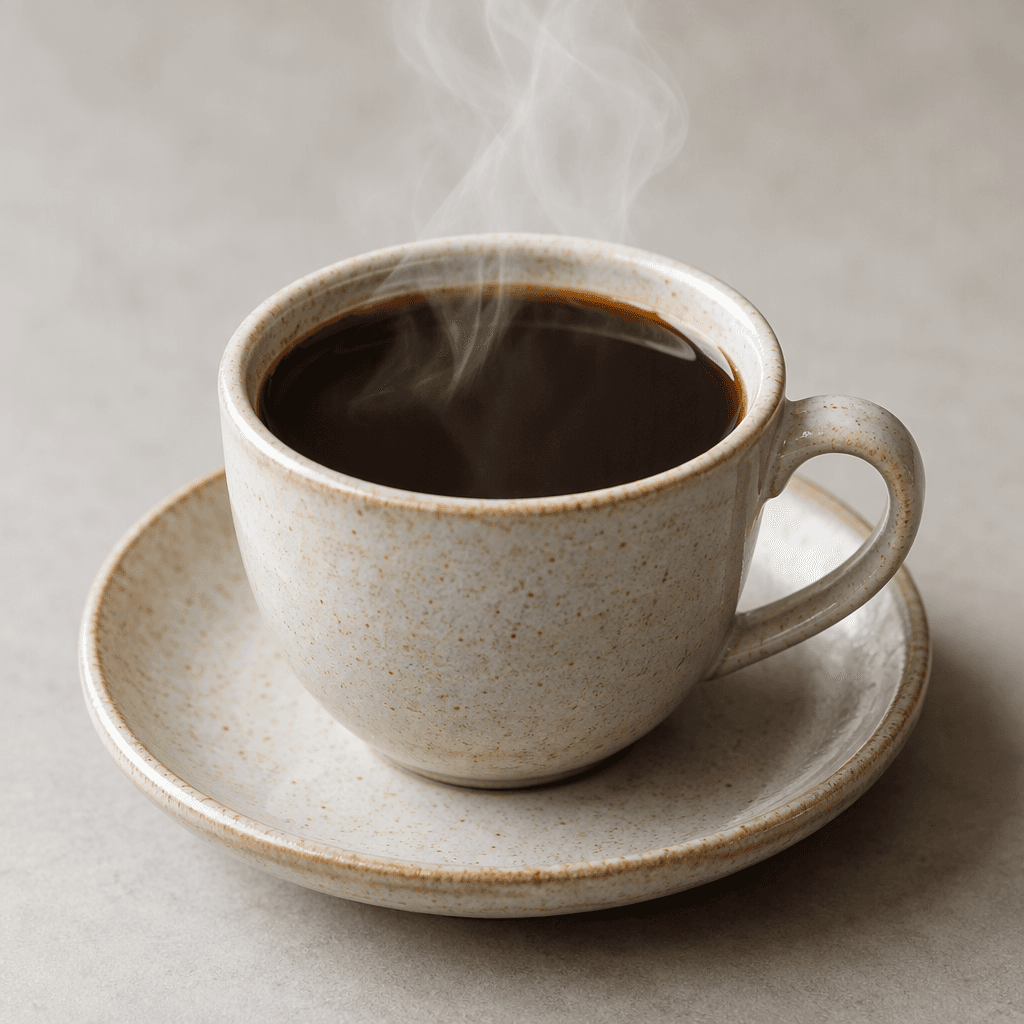
Hot coffee Calories
Caffeine source, low calorie, contains antioxidants
In season: Winter · Spring · Summer · Autumn
CALORIES
GI
POTASSIUM
FIBER
Quick answer
1 cup (medium) of Hot coffee (240 g) has 5 calories. That works out to 2 calories per 100 g. It contains 0 g of carbs, 0.7 g of protein, 0 g of fat and 0 g of fiber. Its 1.7 mg of B3 covers 11% of the Daily Value. Its glycemic index is 0 (low), so it raises blood sugar slowly.
What is Hot coffee?
Hot coffee is made by brewing roasted, ground coffee beans with hot water. The method might be a pour-over, French press, espresso or another style, so its strength and flavour can range from delicate and bright to dark and intense.
Around the world, people drink it at breakfast, during a work break or after a meal; it may be served black or with milk and sweetener. When served plain, hot coffee is very low in calories and provides caffeine, along with antioxidants from the beans. Milk, cream and sugar add to its energy content. For a lighter cup, keep it black or add just a splash of milk, and pair it with breakfast or a small snack.
Hot coffee Nutrition Facts
Selected: 100 g
2
KCAL / 100G
Carbs
0g
· 0% DV
Protein
0.3g
· 1% DV
Fat
0g
· 0% DV
Fiber
0g
· 0% DV
DV is the share of the daily value covered, on a 2,000 kcal reference diet.
Calories come from: Carbs 0% · Protein 100% · Fat 0%

Log this food in EatBetter
100,000+ people use it
- Get your daily calorie target
- Snap your meal, log it in seconds
- See every vitamin and mineral

📸 Scan the code to get the app free.

Hot coffee Vitamins & Minerals
Vitamins
B3
0.7mg · 4% DV
B2
0.02mg · 2% DV
B1
0.01mg · 1% DV
B5
0.03mg · 1% DV
Minerals
Magnesium
7mg · 2% DV
Potassium ⭐
49mg · 1% DV
Manganese
0mg · 0% DV
Copper
0mg · 0% DV
How Nutritious Is Hot coffee?
Nutrient density
Low
How many vitamins, minerals and how much fiber this food carries per calorie. A high score means a lot of nutrition for few calories.
Satiety score
Medium
An EatBetter score computed from fiber, protein and calorie density. A high score means staying full longer on the same calories.
Both scores are calculated per 100 g and do not change with the selected portion. The satiety score is EatBetter's own calculation, not a clinical measure.
Hot coffee Glycemic Index
GLYCEMIC INDEX
GLYCEMIC LOAD
Accounts for portion size — a more realistic measure than GI alone.
How to Burn Off Hot coffee
To burn the 2 calories in 100 g:
🚶
Walking (5 km/h)
🏃
Running (8 km/h)
🚴
Cycling
🏊
Swimming
Times are calculated with the MET equation for a 70 kg adult. Actual burn varies with your weight, age and pace.
Is Hot coffee Processed?
NOVA 2
Minimally Processed
1. Unprocessed
2. Minimally Processed
3. Processed
4. Ultra-Processed
NOVA classifies foods into 4 groups by industrial processing. NOVA 1 (unprocessed) is the healthiest.
Does Hot coffee Contain Allergens?
No known major allergens
Which Diets Is Hot coffee Good For?
Vegan
✓ Suitable
Vegetarian
✓ Suitable
Gluten-Free
✓ Suitable
Dairy-Free
— Not suitable
Mediterranean
✓ Suitable
Paleo
✓ Suitable
Whole30
— Not suitable
DASH
— Not suitable
Keto
✓ Suitable
Low FODMAP
— Not suitable
Hot coffee Fat Profile
SATURATED
0g
MONOUNSATURATED
0g
POLYUNSATURATED
0g
Compare Hot coffee
Foods Similar to Hot coffee
Frequently Asked Questions About Hot coffee
Does hot coffee keep you awake?
Yes, caffeine in hot coffee can increase alertness and make it harder to fall asleep. Its effects vary from person to person, so if your sleep suffers, have coffee earlier in the day rather than close to bedtime.
Is hot coffee more hydrating than it is dehydrating?
Yes, for most people, the water in hot coffee contributes to fluid intake rather than causing dehydration. Caffeine can have a mild diuretic effect, especially if you are not used to it, but ordinary coffee drinking does not usually cancel out the fluid.
Is hot coffee stronger than iced coffee?
Not necessarily. Hot coffee and iced coffee can have different caffeine levels because the amount of coffee and the brewing method matter more than serving temperature. Cold brew, for example, is made differently from coffee brewed hot and then chilled.
Can you drink hot coffee on an empty stomach?
Yes, you can drink hot coffee on an empty stomach, but it may cause heartburn, nausea, or jitters in some people. If that happens, try having it with breakfast or after eating instead.
Does hot coffee cause acid reflux?
Yes, hot coffee can worsen reflux or heartburn symptoms for some people. If you notice a connection, try a smaller serving, avoid drinking it before lying down, and see whether having it with food makes a difference.
Does reheating hot coffee make it unsafe to drink?
No, reheating hot coffee does not automatically make it unsafe, though it can taste stale or more bitter. Avoid leaving brewed coffee at room temperature for a long time, and refrigerate leftovers promptly if you plan to keep them.
Why does hot coffee taste bitter?
Hot coffee often tastes bitter when it is over-extracted, brewed with water that is too hot, or made with very finely ground coffee. Try a shorter brew time or a coarser grind to bring out a smoother flavor.
Does hot coffee help you have a bowel movement?
Yes, hot coffee can stimulate bowel activity in some people, partly through its caffeine and partly through the body's response to drinking coffee. The effect is not guaranteed, and coffee should not replace water or a varied, fibre-rich diet.
Is hot coffee good to drink before a workout?
Yes, hot coffee before exercise can provide caffeine that may improve alertness and perceived effort. Avoid it if caffeine makes you jittery or upsets your stomach, and allow time to drink it before starting your workout.
Does the temperature of hot coffee change its flavor?
Yes, coffee's flavor changes as it cools: very hot coffee can hide some aromas, while a slightly cooler cup may taste more rounded or reveal more acidity. Let hot coffee cool briefly before sipping so you can taste it comfortably.
Have another question about Hot coffee?
Ask the AI nutrition coach — calories, portions, alternatives and more, answered in seconds in the app.

Scan calories with your camera
Instant AI nutrition analysis

Nutrition data compiled from USDA FoodData Central and scientific sources.