

Ready & Packaged Foods
All →Vegetables & Legumes
All →Desserts & Confectionery
All →Meat & Protein
All →Grains & Bakery
All →Beverages
All →Milk & Dairy
All →

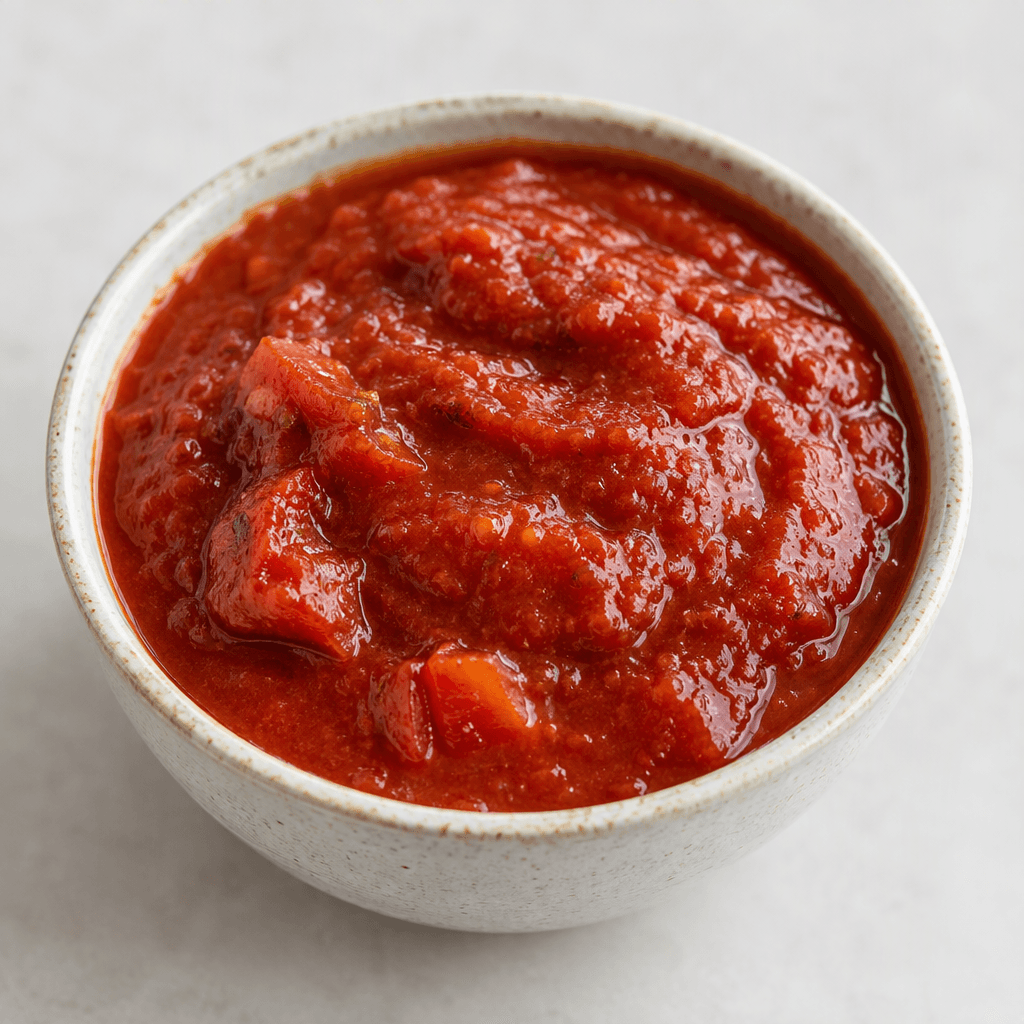
Homemade tomato sauce Calories
Fresh tomatoes, low oil, homemade, source of fiber and vitamins
In season: Summer · Autumn
CALORIES
GI
POTASSIUM
FIBER
Quick answer
2 tablespoon (medium) of Homemade tomato sauce (30 g) has 11 calories. That works out to 35 calories per 100 g. It contains 2.2 g of carbs, 0.4 g of protein, 0.2 g of fat and 0.5 g of fiber. Its 126 µg of Vitamin A covers 14% of the Daily Value. Its glycemic index is 38 (low), so it raises blood sugar slowly.
What is Homemade tomato sauce?
Homemade tomato sauce is made by cooking ripe tomatoes until soft and spoonable, often after chopping or grating them. Recipes vary: a little oil and salt may be added, along with garlic or herbs, but the tomatoes remain the focus. It is a familiar home-cooking staple in many cuisines rather than a single dish tied to one place.
Its mellow sweet-tart flavour and soft, sometimes slightly chunky texture work well with pasta, eggs, vegetables, or as a base for stews. In many households, it is also prepared in batches when tomatoes are plentiful and kept for later use. Made with little oil, it is a light way to add tomato flavour; it provides 35 calories per 100 g. Pair it with beans or whole grains for a more substantial meal.
Homemade tomato sauce Nutrition Facts
Selected: 100 g
35
KCAL / 100G
Carbs
7.2g
· 3% DV
Protein
1.3g
· 3% DV
Fat
0.5g
· 1% DV
Fiber
1.8g
· 6% DV
DV is the share of the daily value covered, on a 2,000 kcal reference diet.
Calories come from: Carbs 75% · Protein 14% · Fat 11%
Homemade tomato sauce Vitamins & Minerals
Vitamins
Vitamin A
420µg · 47% DV
Vitamin C
13mg · 14% DV
Biotin
2.5µg · 8% DV
Vitamin E
0.9mg · 6% DV
Minerals
Sodium
220mg · 10% DV
Potassium ⭐
260mg · 8% DV
Iron
1mg · 6% DV
Phosphorus
28mg · 4% DV
How Nutritious Is Homemade tomato sauce?
Nutrient density
High
How many vitamins, minerals and how much fiber this food carries per calorie. A high score means a lot of nutrition for few calories.
Satiety score
Medium
An EatBetter score computed from fiber, protein and calorie density. A high score means staying full longer on the same calories.
Both scores are calculated per 100 g and do not change with the selected portion. The satiety score is EatBetter's own calculation, not a clinical measure.
Homemade tomato sauce Glycemic Index
GLYCEMIC INDEX
GLYCEMIC LOAD
Accounts for portion size — a more realistic measure than GI alone.
How to Burn Off Homemade tomato sauce
To burn the 35 calories in 100 g:
🚶
Walking (5 km/h)
🏃
Running (8 km/h)
🚴
Cycling
🏊
Swimming
Times are calculated with the MET equation for a 70 kg adult. Actual burn varies with your weight, age and pace.
Is Homemade tomato sauce Processed?
NOVA 2
Minimally Processed
1. Unprocessed
2. Minimally Processed
3. Processed
4. Ultra-Processed
NOVA classifies foods into 4 groups by industrial processing. NOVA 1 (unprocessed) is the healthiest.
Does Homemade tomato sauce Contain Allergens?
No known major allergens
Which Diets Is Homemade tomato sauce Good For?
Vegan
✓ Suitable
Vegetarian
✓ Suitable
Gluten-Free
✓ Suitable
Dairy-Free
— Not suitable
Mediterranean
✓ Suitable
Paleo
✓ Suitable
Whole30
— Not suitable
DASH
— Not suitable
Keto
— Not suitable
Low FODMAP
— Not suitable
Homemade tomato sauce Fat Profile
SATURATED
0.08g
MONOUNSATURATED
0.11g
POLYUNSATURATED
0.13g
Omega 6:3 ratio 3:1
Below the ideal 4:1 — a good omega balance.
Compare Homemade tomato sauce
Foods Similar to Homemade tomato sauce
Frequently Asked Questions About Homemade tomato sauce
How do you make Homemade tomato sauce from fresh tomatoes?
To make Homemade tomato sauce, chop ripe tomatoes and simmer them until soft and reduced to the thickness you want. Blend for a smooth sauce or leave it chunky, then season near the end so the tomato flavour stays prominent.
How long does Homemade tomato sauce last in the fridge?
Homemade tomato sauce usually keeps for about 3–4 days in a clean, covered container in the refrigerator. Cool it promptly after cooking, and discard it if you notice mould, bubbling, or an unusual smell.
Can you freeze Homemade tomato sauce?
Yes, Homemade tomato sauce freezes well. Let it cool, portion it into freezer-safe containers, and leave room for expansion. Thaw it in the refrigerator and reheat it thoroughly before serving.
Do you need to peel tomatoes for Homemade tomato sauce?
No, you do not have to peel tomatoes for Homemade tomato sauce. The skins soften during cooking, though they can leave small flecks. For a smoother texture, blend the sauce or pass it through a sieve.
How do you thicken Homemade tomato sauce without tomato paste?
Simmer Homemade tomato sauce uncovered to let excess water evaporate, stirring regularly to prevent sticking. Using a wide pan speeds reduction. Avoid adding flour or starch if you want the sauce to keep its clean tomato flavour.
How do you make Homemade tomato sauce less acidic?
Use ripe tomatoes and simmer Homemade tomato sauce longer to mellow its sharpness. A little grated carrot can add natural sweetness, too. Avoid relying on lots of sugar, which can make the sauce taste sweet rather than balanced.
Can Homemade tomato sauce be canned in jars?
Yes, but Homemade tomato sauce should be canned only with a tested recipe that specifies the acidity and processing method. Simply sterilizing jars or turning them upside down does not make the sauce safe for room-temperature storage.
What is the difference between Homemade tomato sauce and marinara sauce?
Homemade tomato sauce is a broad term for cooked tomato sauce, while marinara is a particular Italian-style version, commonly made with tomatoes, garlic, herbs, and olive oil. A homemade sauce can be blended, chunky, or seasoned in many other ways.
Can you use Homemade tomato sauce instead of canned tomato sauce in a recipe?
Yes, Homemade tomato sauce can replace canned tomato sauce in most recipes. Since homemade versions vary in thickness and seasoning, reduce other liquid slightly if yours is thin, and adjust salt and herbs after tasting.
Why does Homemade tomato sauce taste bitter?
Homemade tomato sauce can taste bitter if garlic or herbs scorch, or if the tomatoes are underripe. Cook aromatics gently, use ripe tomatoes, and add delicate herbs near the end rather than frying them for a long time.
Have another question about Homemade tomato sauce?
Ask the AI nutrition coach — calories, portions, alternatives and more, answered in seconds in the app.

Scan calories with your camera
Instant AI nutrition analysis

Nutrition data compiled from USDA FoodData Central and scientific sources.