

Ready & Packaged Foods
All →Vegetables & Legumes
All →Desserts & Confectionery
All →Meat & Protein
All →Grains & Bakery
All →Beverages
All →Milk & Dairy
All →

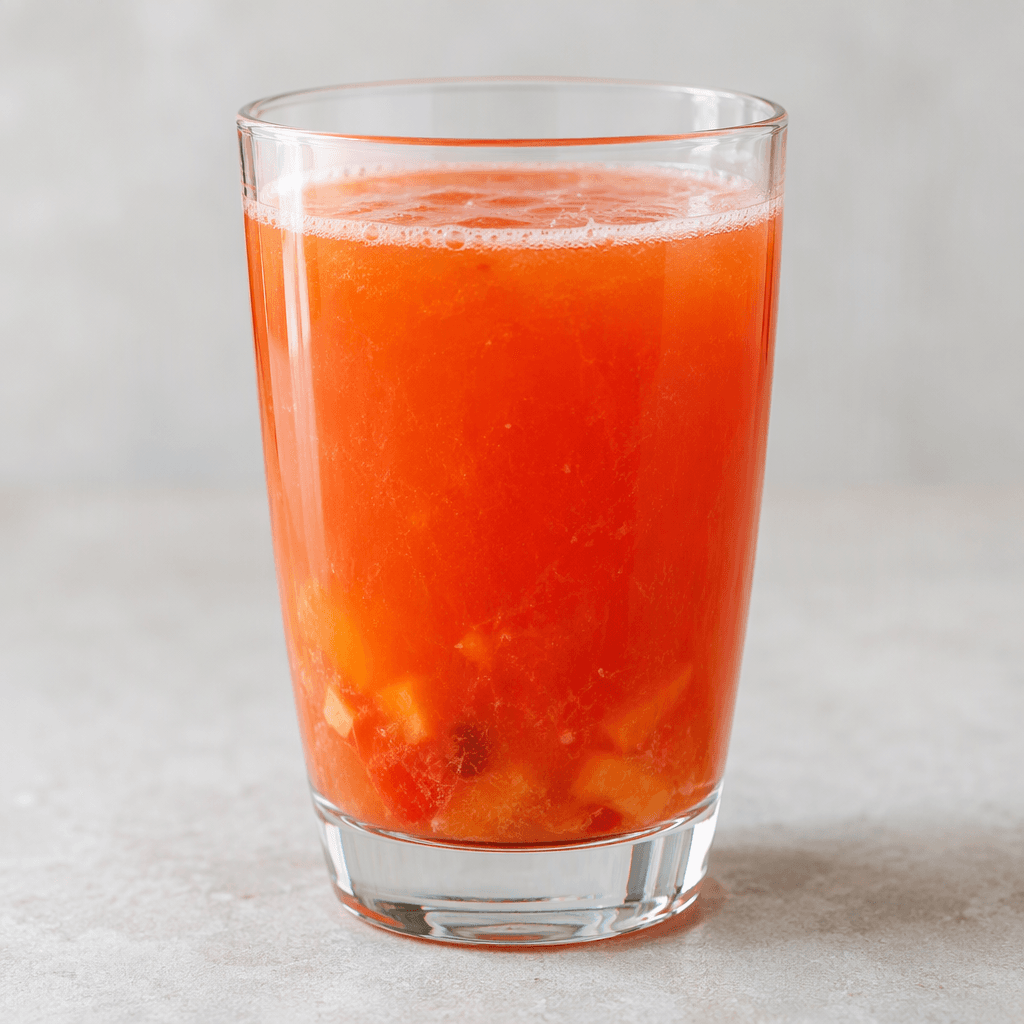
Homemade Fruit Juice Calories
Freshly squeezed, rich in vitamins and minerals, no additives
In season: Spring · Summer · Autumn · Winter
CALORIES
GI
POTASSIUM
FIBER
Quick answer
1 cup (medium) of Homemade Fruit Juice (200 g) has 90 calories. That works out to 45 calories per 100 g. It contains 21 g of carbs, 1 g of protein, 0.2 g of fat and 0.8 g of fiber. Its 50 mg of Vitamin C covers 56% of the Daily Value. Its glycemic index is 45 (medium), so it raises blood sugar at a moderate pace.
What is Homemade Fruit Juice?
Homemade Fruit Juice is made by squeezing or blending fresh fruit, with the flavour, colour and amount of pulp depending on what goes in. It has no single place of origin: people make it at home in many regions to use seasonal fruit. Common choices include oranges, apples and berries, either on their own or mixed.
It can taste sweet or tart, and retaining some pulp gives it a fuller texture. Serve it chilled at breakfast or alongside a meal; in many places it is also poured as a refreshing drink for guests. It is mainly a source of carbohydrates, with small amounts of fibre and vitamins and minerals from the fruit. For a less concentrated drink, dilute it with water and skip added sugar.
Homemade Fruit Juice Nutrition Facts
Selected: 100 g
45
KCAL / 100G
Carbs
10.5g
· 4% DV
Protein
0.5g
· 1% DV
Fat
0.1g
· 0% DV
Fiber
0.4g
· 1% DV
DV is the share of the daily value covered, on a 2,000 kcal reference diet.
Calories come from: Carbs 94% · Protein 4% · Fat 2%
Homemade Fruit Juice Vitamins & Minerals
Vitamins
Vitamin C
25mg · 28% DV
Biotin
1.2µg · 4% DV
B1
0.04mg · 3% DV
B5
0.15mg · 3% DV
Minerals
Potassium ⭐
120mg · 4% DV
Magnesium
7mg · 2% DV
Phosphorus
12mg · 2% DV
Calcium
10mg · 1% DV
How Nutritious Is Homemade Fruit Juice?
Nutrient density
High
How many vitamins, minerals and how much fiber this food carries per calorie. A high score means a lot of nutrition for few calories.
Satiety score
Medium
An EatBetter score computed from fiber, protein and calorie density. A high score means staying full longer on the same calories.
Both scores are calculated per 100 g and do not change with the selected portion. The satiety score is EatBetter's own calculation, not a clinical measure.
Homemade Fruit Juice Glycemic Index
GLYCEMIC INDEX
GLYCEMIC LOAD
Accounts for portion size — a more realistic measure than GI alone.
How to Burn Off Homemade Fruit Juice
To burn the 45 calories in 100 g:
🚶
Walking (5 km/h)
🏃
Running (8 km/h)
🚴
Cycling
🏊
Swimming
Times are calculated with the MET equation for a 70 kg adult. Actual burn varies with your weight, age and pace.
Is Homemade Fruit Juice Processed?
NOVA 2
Minimally Processed
1. Unprocessed
2. Minimally Processed
3. Processed
4. Ultra-Processed
NOVA classifies foods into 4 groups by industrial processing. NOVA 1 (unprocessed) is the healthiest.
Does Homemade Fruit Juice Contain Allergens?
No known major allergens
Which Diets Is Homemade Fruit Juice Good For?
Vegan
✓ Suitable
Vegetarian
✓ Suitable
Gluten-Free
✓ Suitable
Dairy-Free
— Not suitable
Mediterranean
✓ Suitable
Paleo
— Not suitable
Whole30
— Not suitable
DASH
— Not suitable
Keto
— Not suitable
Low FODMAP
— Not suitable
Homemade Fruit Juice Fat Profile
SATURATED
0.01g
MONOUNSATURATED
0.01g
POLYUNSATURATED
0.02g
Omega 6:3 ratio 2:1
Below the ideal 4:1 — a good omega balance.
Compare Homemade Fruit Juice
Foods Similar to Homemade Fruit Juice
Frequently Asked Questions About Homemade Fruit Juice
How do you make Homemade Fruit Juice?
Homemade Fruit Juice is made by washing and cutting fresh fruit, then extracting the juice with a juicer. A blender keeps more pulp in the drink; add a little water if needed, and drink it soon after making it.
Is Homemade Fruit Juice healthier than store-bought juice?
Homemade Fruit Juice made from fruit alone is minimally processed and lets you avoid added ingredients. It can still lose much of the fruit’s fiber when strained, so compare packaged juices for added sugar and other ingredients rather than assuming all are alike.
How long does Homemade Fruit Juice last in the fridge?
Homemade Fruit Juice is best drunk fresh, but it can be refrigerated in a clean, tightly sealed container. For the best taste and freshness, drink it within 24 hours; separation or browning can occur while it sits.
Can you freeze Homemade Fruit Juice?
Yes, Homemade Fruit Juice can be frozen, although its texture may separate after thawing. Leave room for expansion in a freezer-safe container, thaw it in the refrigerator, and shake or stir it well before drinking.
What fruits go well together in Homemade Fruit Juice?
Apple, orange, and carrot make a familiar base for Homemade Fruit Juice, while berries pair well with citrus. Combine sweet and tart fruits to balance the flavor, and remove pits or hard seeds before juicing.
Should you peel fruit before making Homemade Fruit Juice?
Peel fruit with thick or bitter skins, such as citrus, before making Homemade Fruit Juice. Thin-skinned fruit can often be washed well and juiced with the peel, provided it is suitable for your juicer and you remove any waxy or damaged areas.
Is Homemade Fruit Juice the same as a smoothie?
No, Homemade Fruit Juice is usually separated from much of the fruit’s pulp, while a smoothie blends the whole fruit. That makes smoothies thicker and generally higher in fiber, especially when the peel and pulp are included.
Does Homemade Fruit Juice lose fiber when you strain it?
Yes, straining Homemade Fruit Juice removes much of its pulp and therefore reduces its fiber. Leave the pulp in or stir it back in to retain more, though the drink will be thicker than clear juice.
Can Homemade Fruit Juice raise blood sugar?
Yes, Homemade Fruit Juice can raise blood sugar because its natural sugars are easy to drink quickly, particularly when the pulp is strained out. People managing diabetes should consider their portion and meal plan with their clinician or dietitian.
Can Homemade Fruit Juice replace a serving of whole fruit?
Homemade Fruit Juice can contribute fruit to your diet, but it is not a full substitute for whole fruit. Whole fruit retains more fiber and takes longer to eat, which can make it more filling.
Have another question about Homemade Fruit Juice?
Ask the AI nutrition coach — calories, portions, alternatives and more, answered in seconds in the app.

Scan calories with your camera
Instant AI nutrition analysis

Nutrition data compiled from USDA FoodData Central and scientific sources.