

Ready & Packaged Foods
All →Vegetables & Legumes
All →Desserts & Confectionery
All →Meat & Protein
All →Grains & Bakery
All →Beverages
All →Milk & Dairy
All →

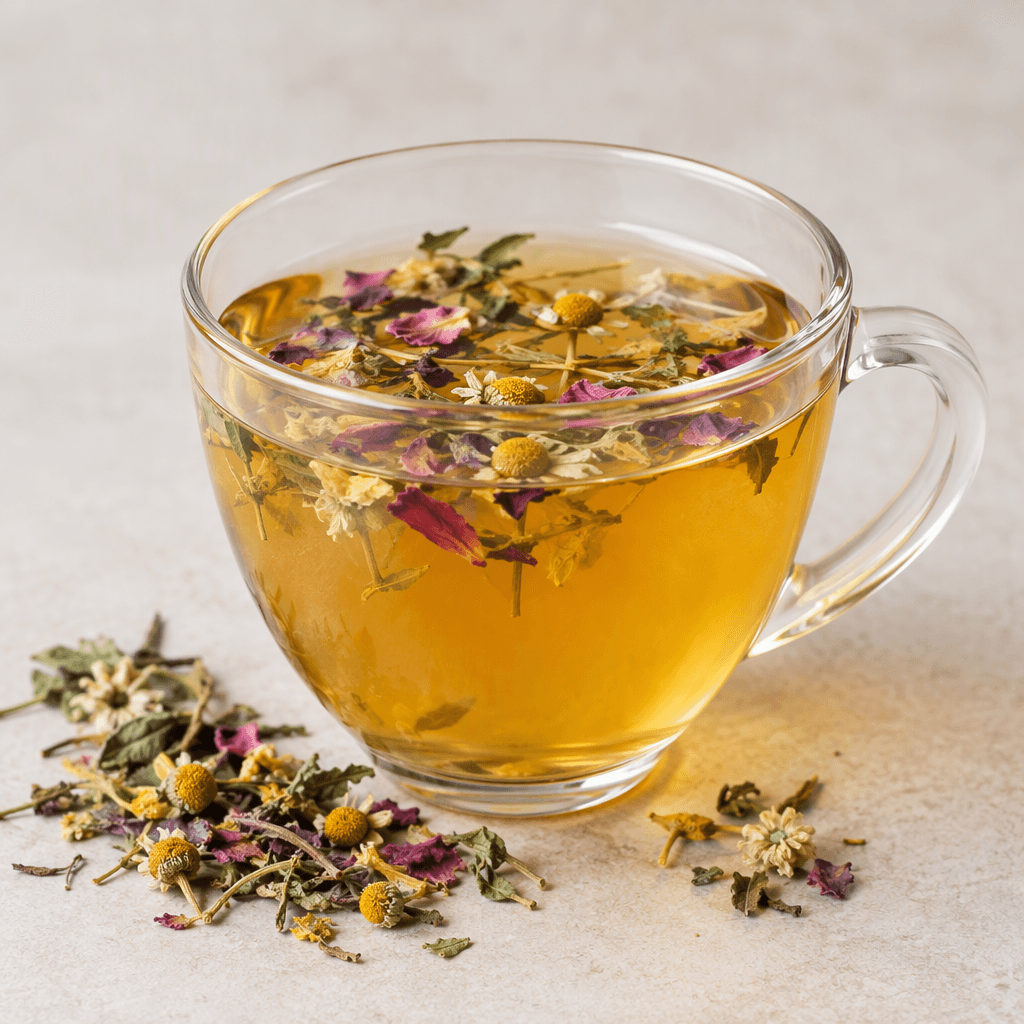
Herbal tea Calories
Caffeine-free, antioxidant source, relaxing
In season: Spring · Summer · Autumn · Winter
CALORIES
GI
POTASSIUM
FIBER
Quick answer
1 cup (medium) of Herbal tea (240 g) has 2 calories. That works out to 1 calories per 100 g. It contains 0.5 g of carbs, 0 g of protein, 0 g of fat and 0 g of fiber. Its 0.1 mg of Manganese covers 5% of the Daily Value. Its glycemic index is 0 (low), so it raises blood sugar slowly.
What is Herbal tea?
Herbal tea is an infusion made by steeping leaves, flowers, or other parts of plants in hot water. It has no single recipe: mint, chamomile, hibiscus, and many other herbs each bring a different aroma, colour, and flavour.
Across the world it is served hot or chilled, often after a meal or as an evening drink; in Turkey, familiar choices include linden and mint. Most herbal infusions are naturally caffeine-free, and an unsweetened cup contributes very little energy. If you want a more refreshing drink, serve it chilled with lemon; for a gentler flavour, steep the herbs briefly and adjust to taste.
Herbal tea Nutrition Facts
Selected: 100 g
1
KCAL / 100G
Carbs
0.2g
· 0% DV
Protein
0g
· 0% DV
Fat
0g
· 0% DV
Fiber
0g
· 0% DV
DV is the share of the daily value covered, on a 2,000 kcal reference diet.
Calories come from: Carbs 100% · Protein 0% · Fat 0%

Log this food in EatBetter
100,000+ people use it
- Get your daily calorie target
- Snap your meal, log it in seconds
- See every vitamin and mineral

📸 Scan the code to get the app free.

Herbal tea Vitamins & Minerals
Vitamins
Biotin
0.1µg · 0% DV
Vitamin C
0.2mg · 0% DV
Folate
0.5µg · 0% DV
B1
0mg · 0% DV
Minerals
Manganese
0mg · 0% DV
Copper
0mg · 0% DV
Magnesium
1mg · 0% DV
Potassium ⭐
8mg · 0% DV
How Nutritious Is Herbal tea?
Nutrient density
Low
How many vitamins, minerals and how much fiber this food carries per calorie. A high score means a lot of nutrition for few calories.
Satiety score
Medium
An EatBetter score computed from fiber, protein and calorie density. A high score means staying full longer on the same calories.
Both scores are calculated per 100 g and do not change with the selected portion. The satiety score is EatBetter's own calculation, not a clinical measure.
Herbal tea Glycemic Index
GLYCEMIC INDEX
GLYCEMIC LOAD
Accounts for portion size — a more realistic measure than GI alone.
How to Burn Off Herbal tea
To burn the 1 calories in 100 g:
🚶
Walking (5 km/h)
🏃
Running (8 km/h)
🚴
Cycling
🏊
Swimming
Times are calculated with the MET equation for a 70 kg adult. Actual burn varies with your weight, age and pace.
Is Herbal tea Processed?
NOVA 2
Minimally Processed
1. Unprocessed
2. Minimally Processed
3. Processed
4. Ultra-Processed
NOVA classifies foods into 4 groups by industrial processing. NOVA 1 (unprocessed) is the healthiest.
Does Herbal tea Contain Allergens?
No known major allergens
Which Diets Is Herbal tea Good For?
Vegan
✓ Suitable
Vegetarian
✓ Suitable
Gluten-Free
✓ Suitable
Dairy-Free
— Not suitable
Mediterranean
✓ Suitable
Paleo
✓ Suitable
Whole30
— Not suitable
DASH
— Not suitable
Keto
— Not suitable
Low FODMAP
— Not suitable
Herbal tea Fat Profile
SATURATED
0g
MONOUNSATURATED
0g
POLYUNSATURATED
0g
Compare Herbal tea
Foods Similar to Herbal tea
Frequently Asked Questions About Herbal tea
What is herbal tea?
Herbal tea is an infusion made by steeping herbs, flowers, spices, or other plants in water. Unlike black or green tea, it does not have to come from the tea plant, Camellia sinensis; blends can contain several ingredients.
Does herbal tea have caffeine?
Pure herbal tea is usually caffeine-free because it is made from plants other than the tea plant. Blends containing black tea, green tea, yerba mate, or guarana can have caffeine, so the ingredients matter.
What is the best herbal tea to drink before bed?
Caffeine-free chamomile tea is a popular choice before bed, while peppermint is another caffeine-free option. Herbal tea is not a sleep treatment, and drinking a large mug right before bed may wake you for a bathroom trip.
How do you make herbal tea?
Pour hot water over the herbs and cover the cup while they steep. A few minutes is a useful starting point, but flowers, leaves, roots, and commercial blends can need different steeping times; follow the package directions when available.
Can you drink herbal tea every day?
Yes, many people can drink a familiar herbal tea daily. The ingredients matter: blends vary, and frequent or high-dose use of some herbs may cause side effects or interact with medicines.
Can herbal tea help with bloating?
Peppermint herbal tea may ease mild bloating for some people, but results vary and it does not treat the underlying cause. Peppermint can aggravate reflux, so it may not suit everyone.
How is herbal tea different from green tea?
Herbal tea is an infusion of herbs, flowers, or other plants, while green tea is made from leaves of the tea plant. Green tea naturally contains caffeine; pure herbal infusions generally do not.
Can you drink herbal tea while pregnant?
Some herbal teas may be suitable during pregnancy, but others have not been shown to be safe, and blends can contain multiple herbs. Ask your doctor or midwife before drinking herbal teas regularly while pregnant.
Does herbal tea count toward your daily water intake?
Yes, caffeine-free herbal tea contributes to fluid intake. It hydrates much like water, although it should not replace plain water entirely if you prefer water or have been given specific fluid advice.
Can you make herbal tea with cold water?
Yes, you can cold-steep herbal tea by placing the herbs in water in a covered container and refrigerating it for several hours. Strain it before drinking; the steeping time depends on the blend and desired strength.
Have another question about Herbal tea?
Ask the AI nutrition coach — calories, portions, alternatives and more, answered in seconds in the app.

Scan calories with your camera
Instant AI nutrition analysis

Nutrition data compiled from USDA FoodData Central and scientific sources.