

Ready & Packaged Foods
All →Vegetables & Legumes
All →Desserts & Confectionery
All →Meat & Protein
All →Grains & Bakery
All →Beverages
All →Milk & Dairy
All →

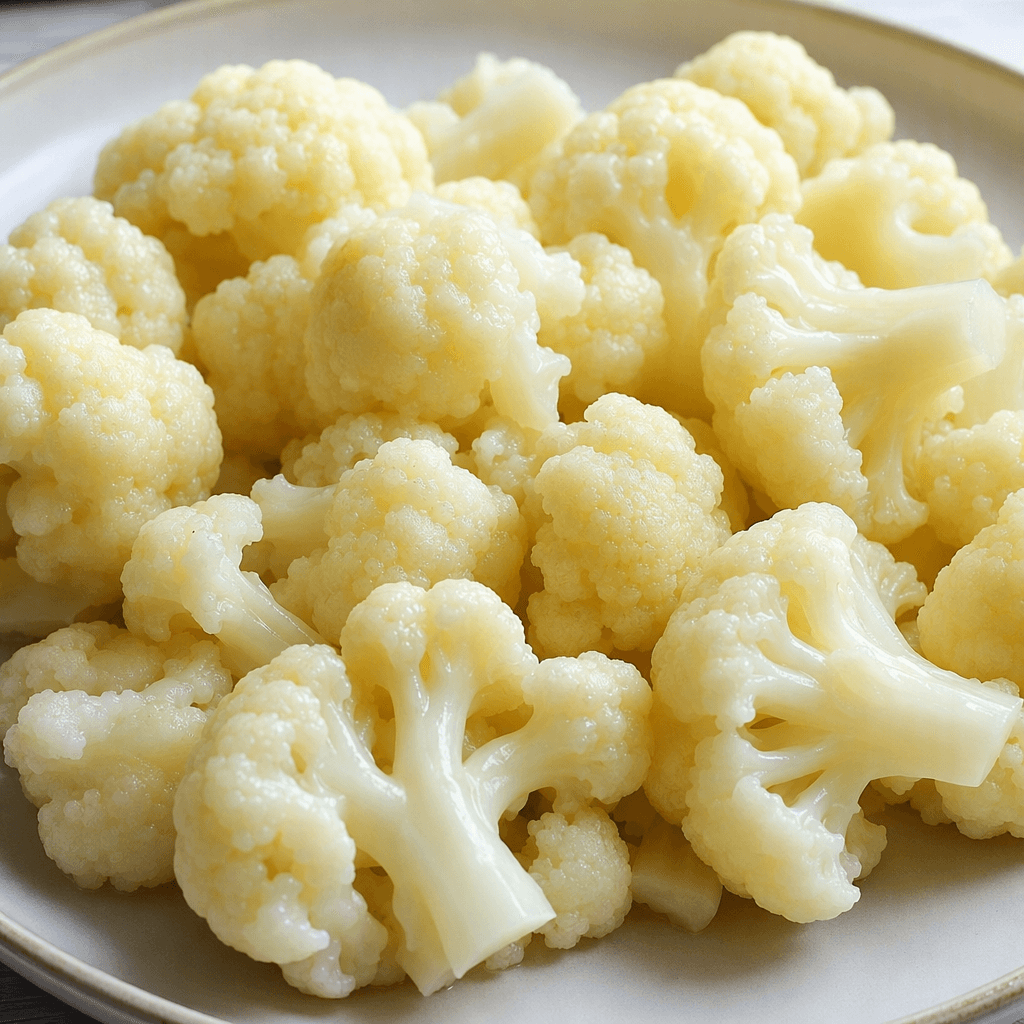
Boiled Cauliflower Calories
Low calorie, source of fiber and vitamin C, boiled vegetable
In season: Autumn · Winter · Spring
CALORIES
GI
POTASSIUM
FIBER
Quick answer
1 cup (medium) of Boiled Cauliflower (125 g) has 29 calories. That works out to 23 calories per 100 g. It contains 5.1 g of carbs, 2.3 g of protein, 0.4 g of fat and 2.9 g of fiber. Its 55 mg of Vitamin C covers 61% of the Daily Value. Its glycemic index is 15 (low), so it raises blood sugar slowly.
What is Boiled Cauliflower?
Boiled Cauliflower is cauliflower florets cooked in water until tender, a simple preparation rather than a dish tied to one particular region. Cauliflower is eaten around the world, and boiling is an easy way to serve it as a side or use it in salads and other home-cooked meals. Its mild, slightly sweet flavour softens with cooking; the florets should be tender but can still hold their shape.
Serve it warm or chilled with herbs, lemon and olive oil, or alongside a main dish. It is low in calories and provides fibre; a 100 g portion has 23 calories. For a lighter plate, drain it well and finish with lemon instead of a rich sauce, or pair it with beans or grains to make the meal more filling.
Boiled Cauliflower Nutrition Facts
Selected: 100 g
23
KCAL / 100G
Carbs
4.1g
· 1% DV
Protein
1.8g
· 4% DV
Fat
0.3g
· 0% DV
Fiber
2.3g
· 8% DV
DV is the share of the daily value covered, on a 2,000 kcal reference diet.
Calories come from: Carbs 62% · Protein 27% · Fat 11%
Boiled Cauliflower Vitamins & Minerals
Vitamins
Vitamin C
44mg · 49% DV
B5
0.7mg · 14% DV
B6
0.18mg · 11% DV
Folate
44µg · 11% DV
Minerals
Phosphorus
44mg · 6% DV
Magnesium
15mg · 4% DV
Potassium ⭐
142mg · 4% DV
Calcium
22mg · 2% DV
How Nutritious Is Boiled Cauliflower?
Nutrient density
Very high
How many vitamins, minerals and how much fiber this food carries per calorie. A high score means a lot of nutrition for few calories.
Satiety score
Medium
An EatBetter score computed from fiber, protein and calorie density. A high score means staying full longer on the same calories.
Both scores are calculated per 100 g and do not change with the selected portion. The satiety score is EatBetter's own calculation, not a clinical measure.
Boiled Cauliflower Glycemic Index
GLYCEMIC INDEX
GLYCEMIC LOAD
Accounts for portion size — a more realistic measure than GI alone.
How to Burn Off Boiled Cauliflower
To burn the 23 calories in 100 g:
🚶
Walking (5 km/h)
🏃
Running (8 km/h)
🚴
Cycling
🏊
Swimming
Times are calculated with the MET equation for a 70 kg adult. Actual burn varies with your weight, age and pace.
Is Boiled Cauliflower Processed?
NOVA 2
Minimally Processed
1. Unprocessed
2. Minimally Processed
3. Processed
4. Ultra-Processed
NOVA classifies foods into 4 groups by industrial processing. NOVA 1 (unprocessed) is the healthiest.
Does Boiled Cauliflower Contain Allergens?
No known major allergens
Which Diets Is Boiled Cauliflower Good For?
Vegan
✓ Suitable
Vegetarian
✓ Suitable
Gluten-Free
✓ Suitable
Dairy-Free
— Not suitable
Mediterranean
✓ Suitable
Paleo
✓ Suitable
Whole30
— Not suitable
DASH
— Not suitable
Keto
✓ Suitable
Low FODMAP
— Not suitable
Boiled Cauliflower Fat Profile
SATURATED
0.07g
MONOUNSATURATED
0.03g
POLYUNSATURATED
0.06g
Omega 6:3 ratio 0.7:1
Below the ideal 4:1 — a good omega balance.
Compare Boiled Cauliflower
Foods Similar to Boiled Cauliflower
Frequently Asked Questions About Boiled Cauliflower
How long should you boil cauliflower?
Boil cauliflower florets for about 5–7 minutes, checking them with a fork near the end. They are ready when tender but still hold their shape; larger pieces or a whole head take longer.
How do you keep boiled cauliflower from getting soggy?
To keep boiled cauliflower from getting soggy, add evenly sized florets to already boiling water and drain them as soon as they are fork-tender. Leaving them in hot water, even after turning off the heat, makes them softer.
Why does boiled cauliflower smell strong?
Boiled cauliflower can smell sulfurous because heat releases naturally occurring sulfur compounds. Avoiding a long boil and cooking with the lid partly open can reduce the lingering smell; the odor alone does not mean the cauliflower has spoiled.
Does boiling cauliflower destroy its nutrients?
Boiling can reduce some water-soluble nutrients, including vitamin C, especially when cauliflower is cooked for a long time. A brief boil and using the cooking water in soup or sauce helps avoid discarding everything that leaches into it.
Can you freeze boiled cauliflower?
Yes, you can freeze boiled cauliflower, though it may be softer after thawing. Drain and cool it thoroughly, pack it in an airtight freezer container, and use it in soups, casseroles, or purées where a firmer texture is not essential.
What can you put on boiled cauliflower to make it taste better?
Boiled cauliflower pairs well with butter, black pepper, lemon, grated cheese, or a mustard sauce. Add seasoning after draining so the florets do not become waterlogged, or toss them briefly in a pan with the sauce.
Can you make mashed cauliflower with boiled cauliflower?
Yes, boiled cauliflower works well for mash. Drain it very thoroughly, then blend or mash it with butter or olive oil; excess cooking water is the main reason cauliflower mash turns thin rather than creamy.
How long does boiled cauliflower last in the fridge?
Boiled cauliflower keeps for about 3–4 days in a covered container in the refrigerator. Cool it promptly before storing, and discard it if it develops an off smell, a slimy surface, or visible mold.
Why is my boiled cauliflower watery?
Boiled cauliflower turns watery when it absorbs too much water or is not drained well. Cook florets only until tender, then let them steam-dry in a colander for a few minutes before adding sauce or mashing.
Is boiled cauliflower better than steamed cauliflower?
Steaming usually preserves more water-soluble nutrients because the cauliflower does not sit in cooking water. Boiling is still a practical way to cook it, particularly if you keep the cooking brief or reuse the water in another dish.
Have another question about Boiled Cauliflower?
Ask the AI nutrition coach — calories, portions, alternatives and more, answered in seconds in the app.

Scan calories with your camera
Instant AI nutrition analysis

Nutrition data compiled from USDA FoodData Central and scientific sources.