

Ready & Packaged Foods
All →Vegetables & Legumes
All →Desserts & Confectionery
All →Meat & Protein
All →Grains & Bakery
All →Beverages
All →Milk & Dairy
All →

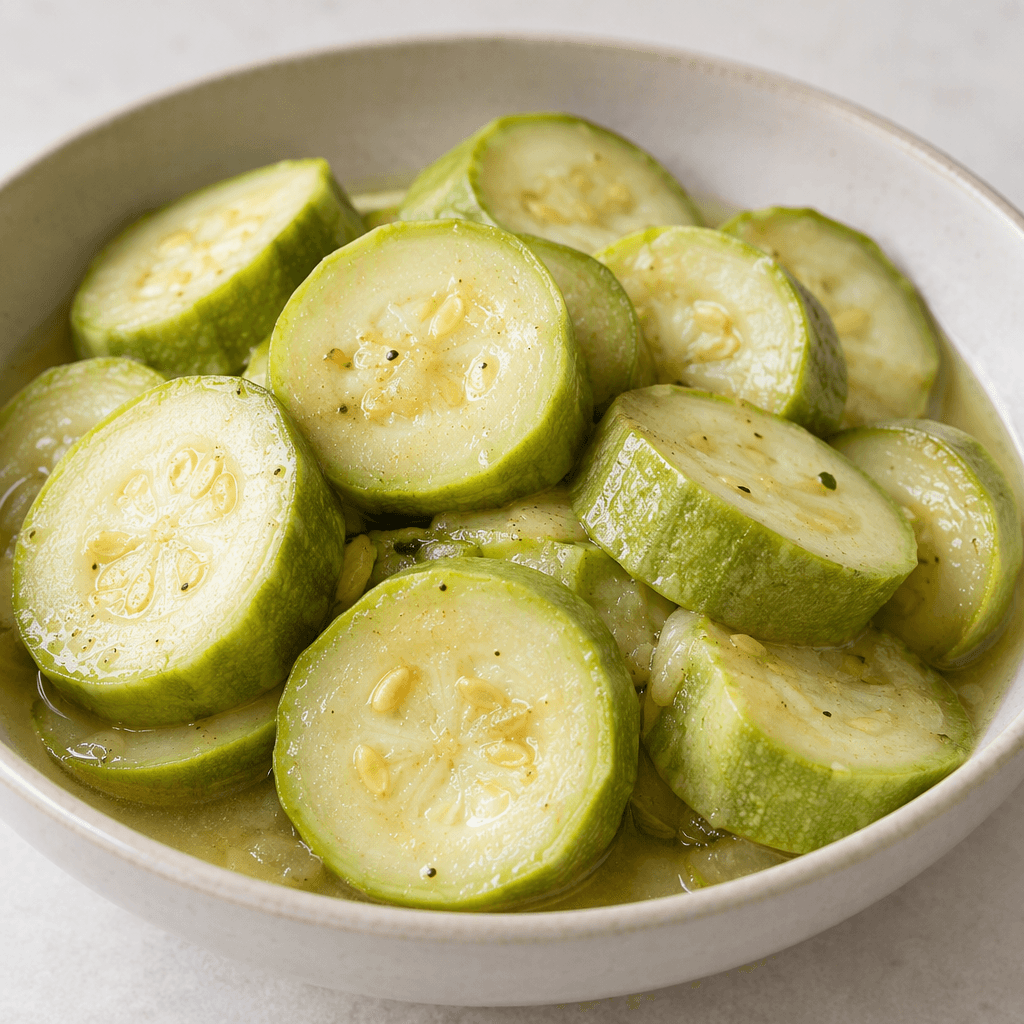
Boiled Zucchini Calories
Low-calorie, fiber-rich, vitamin and mineral dense vegetable
In season: Spring · Summer · Autumn
CALORIES
GI
POTASSIUM
FIBER
Quick answer
1 cup (medium) of Boiled Zucchini (180 g) has 31 calories. That works out to 17 calories per 100 g. It contains 5.6 g of carbs, 2.2 g of protein, 0.4 g of fat and 1.8 g of fiber. Its 32.2 mg of Vitamin C covers 36% of the Daily Value. Its glycemic index is 15 (low), so it raises blood sugar slowly.
What is Boiled Zucchini?
Boiled zucchini is simply zucchini simmered in water until tender. Zucchini is widely used in Mediterranean cooking, and boiling is an easy way to prepare it without adding much fat. The slices become soft and mild, with a delicate sweetness and a creamy centre.
Serve it warm or chilled, seasoned with lemon, herbs, or a little olive oil; it also works alongside a main dish or folded into a simple vegetable plate. Its high water content and modest amount of fibre make it a light choice, with 17 calories per 100 g. For a more filling meal, pair it with beans, grains, eggs, or yogurt.
Boiled Zucchini Nutrition Facts
Selected: 100 g
17
KCAL / 100G
Carbs
3.1g
· 1% DV
Protein
1.2g
· 2% DV
Fat
0.2g
· 0% DV
Fiber
1g
· 4% DV
DV is the share of the daily value covered, on a 2,000 kcal reference diet.
Calories come from: Carbs 65% · Protein 25% · Fat 10%
Boiled Zucchini Vitamins & Minerals
Vitamins
Vitamin C
17.9mg · 20% DV
B6
0.16mg · 9% DV
B2
0.09mg · 7% DV
Folate
24µg · 6% DV
Minerals
Potassium ⭐
261mg · 8% DV
Phosphorus
38mg · 5% DV
Magnesium
18mg · 4% DV
Calcium
16mg · 2% DV
How Nutritious Is Boiled Zucchini?
Nutrient density
High
How many vitamins, minerals and how much fiber this food carries per calorie. A high score means a lot of nutrition for few calories.
Satiety score
Medium
An EatBetter score computed from fiber, protein and calorie density. A high score means staying full longer on the same calories.
Both scores are calculated per 100 g and do not change with the selected portion. The satiety score is EatBetter's own calculation, not a clinical measure.
Boiled Zucchini Glycemic Index
GLYCEMIC INDEX
GLYCEMIC LOAD
Accounts for portion size — a more realistic measure than GI alone.
How to Burn Off Boiled Zucchini
To burn the 17 calories in 100 g:
🚶
Walking (5 km/h)
🏃
Running (8 km/h)
🚴
Cycling
🏊
Swimming
Times are calculated with the MET equation for a 70 kg adult. Actual burn varies with your weight, age and pace.
Is Boiled Zucchini Processed?
NOVA 2
Minimally Processed
1. Unprocessed
2. Minimally Processed
3. Processed
4. Ultra-Processed
NOVA classifies foods into 4 groups by industrial processing. NOVA 1 (unprocessed) is the healthiest.
Does Boiled Zucchini Contain Allergens?
No known major allergens
Which Diets Is Boiled Zucchini Good For?
Vegan
✓ Suitable
Vegetarian
✓ Suitable
Gluten-Free
✓ Suitable
Dairy-Free
— Not suitable
Mediterranean
✓ Suitable
Paleo
✓ Suitable
Whole30
— Not suitable
DASH
— Not suitable
Keto
✓ Suitable
Low FODMAP
— Not suitable
Boiled Zucchini Fat Profile
SATURATED
0.04g
MONOUNSATURATED
0.01g
POLYUNSATURATED
0.05g
Omega 6:3 ratio 3:1
Below the ideal 4:1 — a good omega balance.
Compare Boiled Zucchini
Foods Similar to Boiled Zucchini
Frequently Asked Questions About Boiled Zucchini
How do you boil zucchini?
To make boiled zucchini, wash it, slice it, and add the pieces to boiling water. Cook until a fork passes through easily, then drain. Keep the cooking time short if you want the slices to hold their shape.
How long should you boil zucchini?
Boiled zucchini usually takes about 5–7 minutes when cut into thick slices. Check it with a fork and remove it as soon as it is tender; smaller pieces cook faster and can turn mushy quickly.
Is boiled zucchini healthy?
Yes, boiled zucchini is a nutritious vegetable that can add variety to a meal. Boiling makes it soft and easy to eat; pair it with a source of protein or healthy fat to make a more satisfying dish.
Does boiling zucchini destroy its nutrients?
No, boiling zucchini does not destroy all of its nutrients, but some water-soluble vitamins can move into the cooking water. Use that water in soup or a sauce instead of pouring it away to retain more of what leaches out.
Can you eat zucchini skin after boiling it?
Yes, zucchini skin is edible after boiling and does not need to be peeled. Wash the zucchini well under running water before slicing, and trim away any damaged areas.
How long does boiled zucchini last in the fridge?
Boiled zucchini keeps for about 3–4 days in a covered container in the refrigerator. Refrigerate it promptly after it cools, and discard it if it develops an off smell or a slimy texture.
Can you freeze boiled zucchini?
Yes, you can freeze boiled zucchini, but thawed pieces are softer and may release water. Freeze it in portions in an airtight container, then use it in soups, sauces, or purées rather than dishes where firm slices matter.
Can you eat boiled zucchini cold?
Yes, boiled zucchini can be eaten cold once it has been chilled safely. Toss the cooled slices with lemon juice, herbs, and olive oil, or add them to a grain or pasta salad.
What can you make with boiled zucchini?
Boiled zucchini works well in purées, soups, vegetable salads, and pasta sauces. Mash it with herbs and a little olive oil for a simple side, or combine it with yogurt for a cool dip.
Can boiled zucchini be served to a baby?
Yes, boiled zucchini can be mashed or puréed for a baby who is ready for solid foods. Leave out added salt and prepare it soft enough for the baby’s stage; offer a small amount when introducing it.
Have another question about Boiled Zucchini?
Ask the AI nutrition coach — calories, portions, alternatives and more, answered in seconds in the app.

Scan calories with your camera
Instant AI nutrition analysis

Nutrition data compiled from USDA FoodData Central and scientific sources.