

Ready & Packaged Foods
All →Vegetables & Legumes
All →Desserts & Confectionery
All →Meat & Protein
All →Grains & Bakery
All →Beverages
All →Milk & Dairy
All →

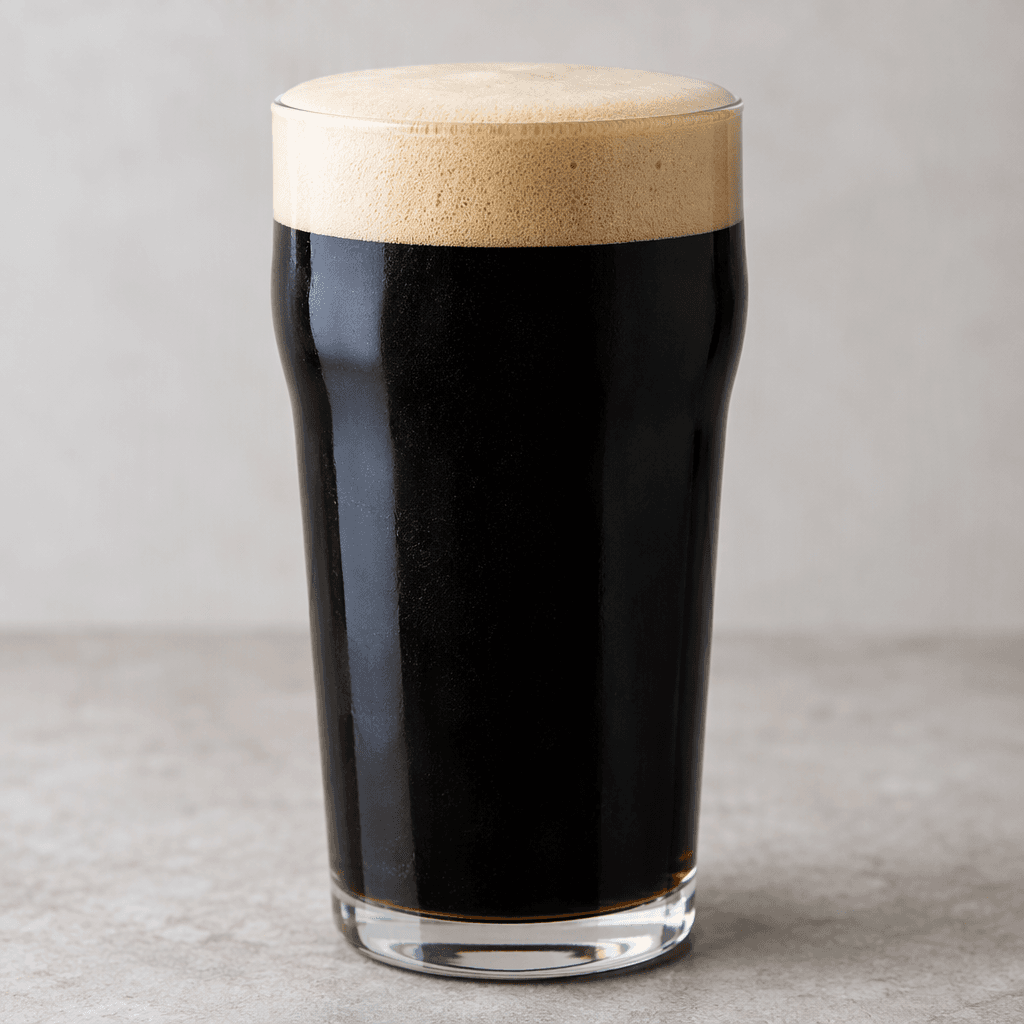
Guinness Calories
Ireland's famous dark stout, low alcohol and calories
In season: Spring · Summer · Autumn · Winter
CALORIES · 100 G
GI
POTASSIUM · 100 G
FIBER · 100 G
Quick answer
1 bottle (medium) of Guinness (330 g) has 116 calories. That works out to 35 calories per 100 g. It contains 11.9 g of carbs, 1.3 g of protein, 0 g of fat and 0 g of fiber. Its 0.1 mg of B1 covers 6% of the Daily Value. Its glycemic index is 60 (medium), so it raises blood sugar at a moderate pace.
Guinness Nutrition Facts
Selected: 1 bottle (medium) · 330 g
116
KCAL / 330G
Carbs
11.9g
· 4% DV
Protein
1.3g
· 3% DV
Fat
0g
· 0% DV
Fiber
0g
· 0% DV
DV is the share of the daily value covered, on a 2,000 kcal reference diet.
Calories come from: Carbs 90% · Protein 10% · Fat 0%
Guinness nutrition facts table · 1 bottle (medium) (330 g)
| Nutrient | Amount | % DV |
|---|---|---|
| Calories | 116 kcal | |
| Total fat | 0 g | 0% |
| Saturated fat | 0 g | 0% |
| Trans fat | 0 g | |
| Sodium | 13 mg | 1% |
| Total carbohydrate | 11.9 g | 4% |
| Fiber | 0 g | 0% |
| Protein | 1.3 g | 3% |
Calories: Calories measure energy. Average daily need is 2,000 kcal. Excess calories are stored as fat, too few cause weight loss.
Carbs: Your body's primary energy source. The brain runs exclusively on carbs. Daily need: 275g.
Protein: Essential for muscle repair and cell growth. Daily need: 50g. Keeps you full and boosts metabolism.
Fat: Needed for hormone production and vitamin absorption. Daily need: 78g. Limit saturated fats, choose unsaturated.
Fiber: Critical for digestive health and satiety. Daily need: 28g. Stabilizes blood sugar, lowers cholesterol.

Log this food in EatBetter
100,000+ people use it
- Get your daily calorie target
- Snap your meal, log it in seconds
- See every vitamin and mineral

📸 Scan the code to get the app free.

How Many Calories in 1 Bottle of Guinness?
| Serving | Amount | Calories |
|---|---|---|
| 1 bottle (medium) | 330 g | 116 kcal |
| 100 g | 100 g | 35 kcal |
| 1 cup (small) | 250 g | 88 kcal |
| 1 can (medium) | 330 g | 116 kcal |
| 1 cup (medium) | 330 g | 116 kcal |
| 1 serving (medium) | 330 g | 116 kcal |
| 1 can (large) | 440 g | 154 kcal |
| 1 serving (large) | 500 g | 175 kcal |
| 1 bottle (large) | 500 g | 175 kcal |
| 1 piece (jumbo) | 568 g | 199 kcal |
Calculated from 35 calories per 100 g.
Frequently Asked Questions About Guinness
What is Guinness made from?
Guinness is a stout brewed with water, malted barley, roasted barley, hops and yeast. The roasted barley gives it its signature dark colour and coffee-like bitterness; exact ingredients can vary between Guinness products.
How much alcohol is in Guinness?
Guinness Draught is typically 4.2% alcohol by volume. Other Guinness varieties, including Extra Stout, can have a different strength, so check the label on the specific bottle or can.
Why does Guinness look black if it is a beer?
Guinness looks nearly black because it is brewed with roasted barley, which darkens the beer and contributes roasted, coffee-like flavours. It is technically a very dark ruby red when held up to strong light.
Why does Guinness have a creamy head?
Guinness Draught gets its smooth, creamy head from a mix of nitrogen and carbon dioxide. Nitrogen forms smaller bubbles than carbon dioxide alone, giving the foam its dense texture and the beer its soft mouthfeel.
What is the difference between Guinness Draught and Guinness Extra Stout?
Guinness Draught is known for its smooth, creamy texture and nitro-foam, while Guinness Extra Stout is more sharply carbonated with a firmer, more pronounced roasted taste. Their alcohol strengths can also differ, so compare the labels.
What does the widget in a can of Guinness do?
The widget is a small plastic device that releases nitrogen when you open a can of Guinness Draught. It helps create the cascading bubbles and creamy head associated with a freshly poured pint.
Is Guinness 0.0 completely alcohol-free?
Guinness 0.0 is made as an alcohol-free alternative to Guinness Draught. If you need to avoid even trace amounts of alcohol, read the product label and local guidance, since labelling rules can vary.
Does Guinness contain caffeine?
No, Guinness does not contain caffeine. Its roasted, coffee-like flavour comes from the barley, not coffee; Guinness Draught is still an alcoholic drink, so caffeine-free does not mean alcohol-free.
Can Guinness be used in cooking?
Yes, Guinness can add roasted, slightly bitter depth to dishes such as beef stew, gravy and chocolate cake. Add it during cooking so its flavour blends into the dish, and remember that cooking does not always remove all the alcohol.
Does Guinness really contain a lot of iron?
No, Guinness is not a meaningful source of iron and should not be used to prevent or treat iron deficiency. The belief that it is rich in iron is a persistent myth, not a reason to drink it.
Guinness Vitamins & Minerals
Vitamins
B1
0.07mg · 6% DV
B2
0.07mg · 5% DV
B3
0.33mg · 2% DV
B6
0.03mg · 2% DV
Minerals
Phosphorus
26mg · 4% DV
Copper
0.03mg · 3% DV
Calcium
20mg · 2% DV
Iron
0.33mg · 2% DV
Potassium ⭐
43mg · 1% DV
Sodium
13mg · 1% DV
Guinness Glycemic Index
GLYCEMIC INDEX
GLYCEMIC LOAD
Accounts for portion size — a more realistic measure than GI alone.
How to Burn Off Guinness
To burn the 116 calories in 1 bottle (medium) (330 g):
🚶
Walking (5 km/h)
🏃
Running (8 km/h)
🚴
Cycling
🏊
Swimming
Times are calculated with the MET equation for a 70 kg adult. Actual burn varies with your weight, age and pace.
What is Guinness?
Guinness is an Irish stout brewed with water, malted barley, hops and yeast. Its dark colour and roasted-malt flavour bring to mind coffee and a gentle bitterness, while the creamy head and relatively smooth finish make it an easy beer to sip. It is closely associated with Ireland, where it is commonly poured in pubs and enjoyed alongside a meal.
For drinkers elsewhere, it is often served chilled in a pub or at home, and pairs well with savoury dishes such as grilled food or a hearty stew. Nutritionally, it is mainly a source of carbohydrate, with 35 calories per 100 g. It contains alcohol, so enjoy it in moderation and have water alongside.
How Nutritious Is Guinness?
Nutrient density
Low
How many vitamins, minerals and how much fiber this food carries per calorie. A high score means a lot of nutrition for few calories.
Satiety score
Medium
An EatBetter score computed from fiber, protein and calorie density. A high score means staying full longer on the same calories.
Both scores are calculated per 100 g and do not change with the selected portion. The satiety score is EatBetter's own calculation, not a clinical measure.
Is Guinness Processed?
NOVA 3
Processed
1. Unprocessed
2. Minimally Processed
3. Processed
4. Ultra-Processed
NOVA classifies foods into 4 groups by industrial processing. NOVA 1 (unprocessed) is the healthiest.
Does Guinness Contain Allergens?
Contains these allergens:
Which Diets Is Guinness Good For?
Vegan
— Not suitable
Vegetarian
✓ Suitable
Gluten-Free
— Not suitable
Dairy-Free
— Not suitable
Mediterranean
— Not suitable
Paleo
— Not suitable
Whole30
— Not suitable
DASH
— Not suitable
Keto
— Not suitable
Low FODMAP
— Not suitable
Guinness Fat Profile
SATURATED
0g
MONOUNSATURATED
0g
POLYUNSATURATED
0g
Compare Guinness
Foods Similar to Guinness
Have another question about Guinness?
Ask the AI nutrition coach — calories, portions, alternatives and more, answered in seconds in the app.

Scan calories with your camera
Instant AI nutrition analysis

Nutrition data compiled from USDA FoodData Central and scientific sources.