

Ready & Packaged Foods
All →Vegetables & Legumes
All →Desserts & Confectionery
All →Meat & Protein
All →Grains & Bakery
All →Beverages
All →Milk & Dairy
All →

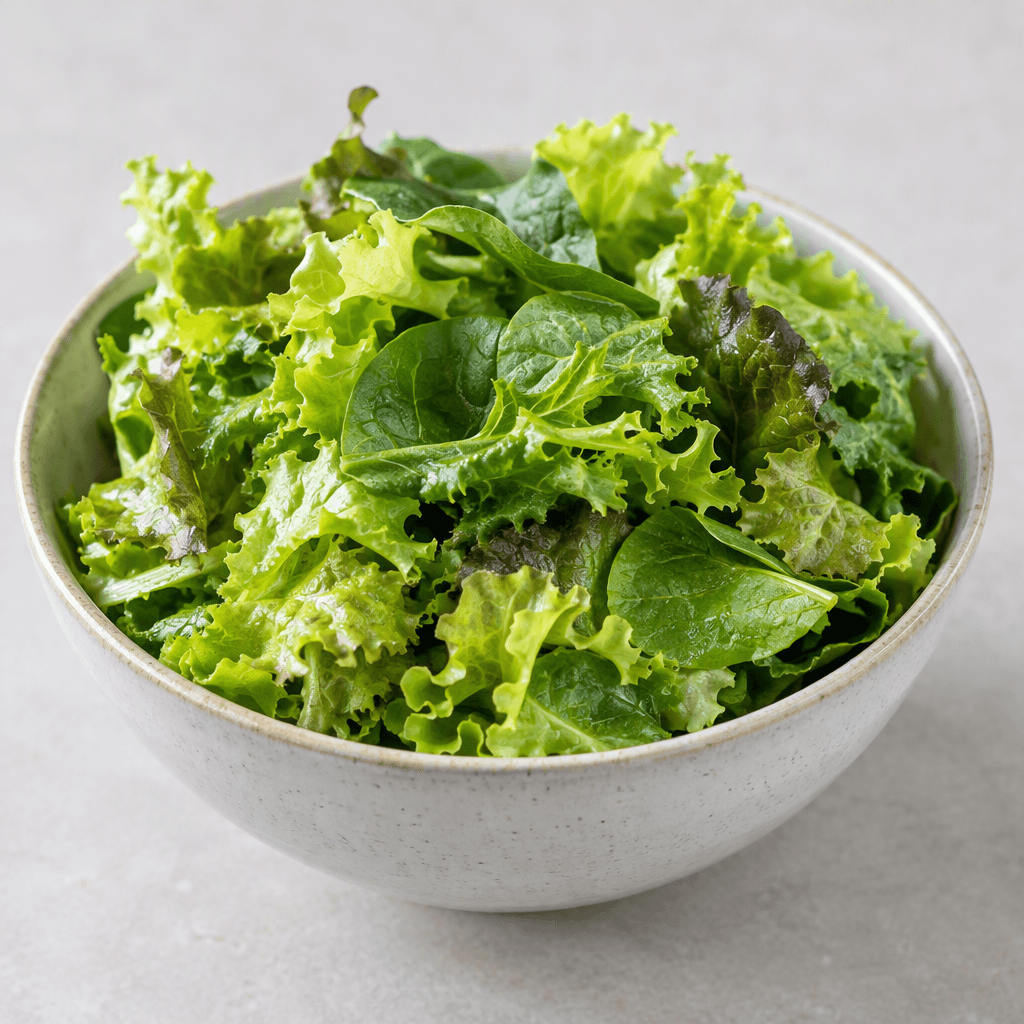
Greens Salad Calories
Light and nutritious salad made from fresh greens.
In season: Spring · Summer · Autumn · Winter
CALORIES
GI
POTASSIUM
FIBER
Quick answer
1 cup (medium) of Greens Salad (40 g) has 8 calories. That works out to 19 calories per 100 g. It contains 1.1 g of carbs, 0.6 g of protein, 0.1 g of fat and 0.7 g of fiber. Its 72 µg of Vitamin K covers 60% of the Daily Value. Its glycemic index is 15 (low), so it raises blood sugar slowly.
What is Greens Salad?
Greens Salad is a simple bowl of fresh leafy greens, such as lettuce, rocket or parsley; the mix varies with the season and what is available. It is served in many places as a side dish, and can be adapted easily to local greens and tastes.
The leaves bring a crisp, tender texture and a fresh, mildly vegetal flavour. A light dressing of lemon and olive oil is a natural match, while tomatoes or cucumber can make it more substantial. Mostly water and fibre, it is a light accompaniment rather than a filling main course on its own. Dress it just before serving to keep the leaves lively, and pair it with beans, grains or a protein-rich dish for a more complete meal.
Greens Salad Nutrition Facts
Selected: 100 g
19
KCAL / 100G
Carbs
2.8g
· 1% DV
Protein
1.6g
· 3% DV
Fat
0.3g
· 0% DV
Fiber
1.7g
· 6% DV
DV is the share of the daily value covered, on a 2,000 kcal reference diet.
Calories come from: Carbs 55% · Protein 32% · Fat 13%
Greens Salad Vitamins & Minerals
Vitamins
Vitamin K
180µg · 150% DV
Vitamin A
370µg · 41% DV
Vitamin C
18mg · 20% DV
Folate
70µg · 18% DV
Minerals
Calcium
65mg · 7% DV
Iron
1mg · 6% DV
Potassium ⭐
210mg · 6% DV
Magnesium
22mg · 5% DV
How Nutritious Is Greens Salad?
Nutrient density
Very high
How many vitamins, minerals and how much fiber this food carries per calorie. A high score means a lot of nutrition for few calories.
Satiety score
Medium
An EatBetter score computed from fiber, protein and calorie density. A high score means staying full longer on the same calories.
Both scores are calculated per 100 g and do not change with the selected portion. The satiety score is EatBetter's own calculation, not a clinical measure.
Greens Salad Glycemic Index
GLYCEMIC INDEX
GLYCEMIC LOAD
Accounts for portion size — a more realistic measure than GI alone.
How to Burn Off Greens Salad
To burn the 19 calories in 100 g:
🚶
Walking (5 km/h)
🏃
Running (8 km/h)
🚴
Cycling
🏊
Swimming
Times are calculated with the MET equation for a 70 kg adult. Actual burn varies with your weight, age and pace.
Is Greens Salad Processed?
NOVA 1
Unprocessed
1. Unprocessed
2. Minimally Processed
3. Processed
4. Ultra-Processed
NOVA classifies foods into 4 groups by industrial processing. NOVA 1 (unprocessed) is the healthiest.
Does Greens Salad Contain Allergens?
No known major allergens
Which Diets Is Greens Salad Good For?
Vegan
✓ Suitable
Vegetarian
✓ Suitable
Gluten-Free
✓ Suitable
Dairy-Free
— Not suitable
Mediterranean
✓ Suitable
Paleo
✓ Suitable
Whole30
— Not suitable
DASH
— Not suitable
Keto
— Not suitable
Low FODMAP
— Not suitable
Greens Salad Fat Profile
SATURATED
0.05g
MONOUNSATURATED
0.02g
POLYUNSATURATED
0.1g
Omega 6:3 ratio 0.4:1
Below the ideal 4:1 — a good omega balance.
Compare Greens Salad
Foods Similar to Greens Salad
Frequently Asked Questions About Greens Salad
How do you make Greens Salad?
Greens Salad is made by combining washed, thoroughly dried leafy greens and dressing them just before serving. Use a mix such as lettuce, arugula, and tender herbs, then add olive oil, lemon juice, and salt for a simple, crisp salad.
What goes in Greens Salad?
Greens Salad usually combines leafy vegetables such as lettuce, spinach, arugula, or mixed salad leaves. Herbs like parsley or dill add freshness, while cucumber or radishes bring crunch; choose leaves with different textures rather than adding every ingredient available.
How do you wash greens for Greens Salad?
Wash greens for Greens Salad by separating the leaves and swishing them in a bowl of cold water so grit sinks to the bottom. Lift the leaves out rather than pouring the water over them, repeat if needed, and dry them thoroughly before dressing.
How do you keep Greens Salad fresh?
Keep Greens Salad leaves dry and refrigerated in a covered container, with a clean paper towel to absorb excess moisture. Store the dressing separately and remove any bruised leaves; dressed greens wilt quickly, so combine them shortly before serving.
Can you make Greens Salad ahead of time?
Yes, you can prepare Greens Salad ahead by washing and drying the leaves and storing them separately from the dressing. Add dressing and watery ingredients such as cut tomatoes just before serving to keep the leaves crisp rather than limp.
What dressing goes best with Greens Salad?
A simple olive-oil and lemon dressing works well with Greens Salad because it complements leafy flavors without overwhelming them. Whisk in a little vinegar or mustard for more sharpness, and dress the leaves lightly so they stay crisp.
Why does Greens Salad get soggy?
Greens Salad gets soggy when wet leaves are dressed too early or sit with salty, watery ingredients. Dry the leaves completely, add salt and dressing at the last minute, and keep ingredients such as tomatoes separate until you are ready to toss the salad.
Which greens are best for Greens Salad?
A mix of tender and sturdy leaves is best for Greens Salad: lettuce gives a mild crunch, while arugula or spinach adds a more distinct flavor. Choose fresh leaves without slimy spots, and remove tough stems before mixing.
What should you serve with Greens Salad?
Greens Salad pairs well with grilled chicken, fish, eggs, beans, or a hearty grain dish. Its fresh leaves balance richer meals, and adding a protein-rich topping can make the salad a more substantial main course.
Can you eat Greens Salad every day?
Yes, Greens Salad can be part of everyday meals, and varying the leaves gives you different flavors and textures. Wash produce carefully and include other foods alongside it, since a bowl of greens alone is not a complete meal.
Have another question about Greens Salad?
Ask the AI nutrition coach — calories, portions, alternatives and more, answered in seconds in the app.

Scan calories with your camera
Instant AI nutrition analysis

Nutrition data compiled from USDA FoodData Central and scientific sources.