

Ready & Packaged Foods
All →Vegetables & Legumes
All →Desserts & Confectionery
All →Meat & Protein
All →Grains & Bakery
All →Beverages
All →Milk & Dairy
All →

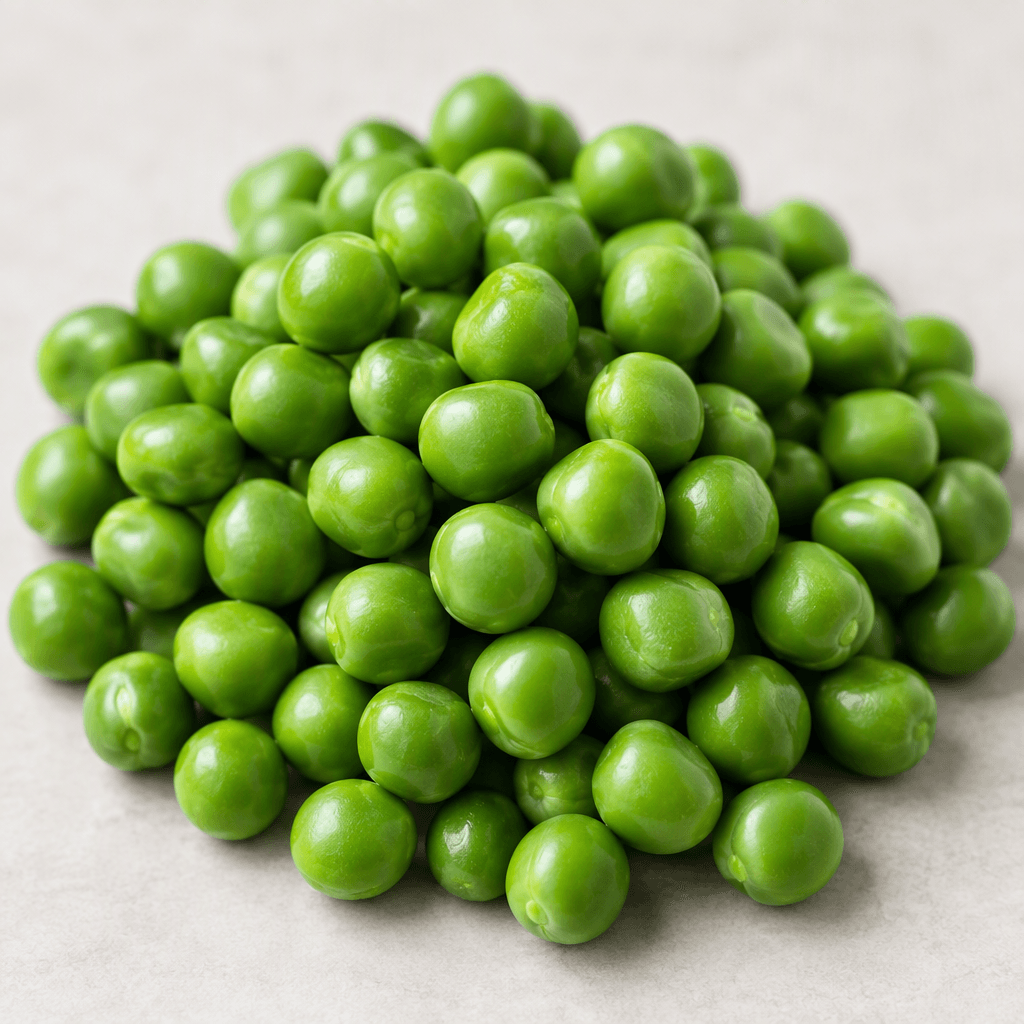
Green Peas Calories
High in fiber, plant protein, vitamins and minerals
In season: Spring
CALORIES
GI
POTASSIUM
FIBER
Quick answer
1 cup (medium) of Green Peas (145 g) has 117 calories. That works out to 81 calories per 100 g. It contains 21 g of carbs, 7.8 g of protein, 0.6 g of fat and 7.4 g of fiber. Its 58 mg of Vitamin C covers 64% of the Daily Value. Its glycemic index is 48 (low), so it raises blood sugar slowly.
What is Green Peas?
Green peas are the young, tender seeds of the pea plant, sold fresh, frozen or canned. Their gently sweet flavour and soft, slightly starchy texture make them easy to add to everyday meals. They are commonly served as a side dish, stirred into soups and stews, or mixed through salads, rice and pasta; in many cuisines, they also feature in curries and savoury pies. Cook them just until tender to keep their colour and a little bite.
With fibre and plant protein, green peas make a useful, filling addition to a vegetable-based meal. For a lighter serving, pair them with herbs and lemon, or use them in place of some of a dish’s richer ingredients.
Green Peas Nutrition Facts
Selected: 100 g
81
KCAL / 100G
Carbs
14.5g
· 5% DV
Protein
5.4g
· 11% DV
Fat
0.4g
· 1% DV
Fiber
5.1g
· 18% DV
DV is the share of the daily value covered, on a 2,000 kcal reference diet.
Calories come from: Carbs 70% · Protein 26% · Fat 4%
Green Peas Vitamins & Minerals
Vitamins
Vitamin C
40mg · 44% DV
B1
0.27mg · 23% DV
Vitamin K
24.8µg · 21% DV
Folate
65µg · 16% DV
Minerals
Phosphorus
108mg · 15% DV
Iron
2mg · 11% DV
Zinc
1mg · 9% DV
Magnesium
33mg · 8% DV
How Nutritious Is Green Peas?
Nutrient density
Very high
How many vitamins, minerals and how much fiber this food carries per calorie. A high score means a lot of nutrition for few calories.
Satiety score
High
An EatBetter score computed from fiber, protein and calorie density. A high score means staying full longer on the same calories.
Both scores are calculated per 100 g and do not change with the selected portion. The satiety score is EatBetter's own calculation, not a clinical measure.
Green Peas Glycemic Index
GLYCEMIC INDEX
GLYCEMIC LOAD
Accounts for portion size — a more realistic measure than GI alone.
How to Burn Off Green Peas
To burn the 81 calories in 100 g:
🚶
Walking (5 km/h)
🏃
Running (8 km/h)
🚴
Cycling
🏊
Swimming
Times are calculated with the MET equation for a 70 kg adult. Actual burn varies with your weight, age and pace.
Is Green Peas Processed?
NOVA 1
Unprocessed
1. Unprocessed
2. Minimally Processed
3. Processed
4. Ultra-Processed
NOVA classifies foods into 4 groups by industrial processing. NOVA 1 (unprocessed) is the healthiest.
Does Green Peas Contain Allergens?
No known major allergens
Which Diets Is Green Peas Good For?
Vegan
✓ Suitable
Vegetarian
✓ Suitable
Gluten-Free
✓ Suitable
Dairy-Free
— Not suitable
Mediterranean
✓ Suitable
Paleo
✓ Suitable
Whole30
— Not suitable
DASH
— Not suitable
Keto
— Not suitable
Low FODMAP
— Not suitable
Green Peas Fat Profile
SATURATED
0.07g
MONOUNSATURATED
0.03g
POLYUNSATURATED
0.18g
Omega 6:3 ratio 4.3:1
Above the ideal 4:1 (4.3:1).
Compare Green Peas
Foods Similar to Green Peas
Frequently Asked Questions About Green Peas
Are green peas legumes or vegetables?
Green peas are legumes botanically, because they grow in pods, but they are commonly cooked and served as a starchy vegetable. That is why recipes and nutrition advice may classify them differently depending on whether the focus is botany or meals.
What is the difference between green peas and snow peas?
Green peas are usually shelled and eaten as round individual seeds, while snow peas have flat, tender pods that are eaten whole. Sugar snap peas are another type, with plump edible pods and a sweeter crunch.
How do you cook green peas without making them mushy?
Cook green peas briefly in a small amount of boiling water or steam them just until tender, then drain promptly. Frozen peas can go straight into a hot pan or pot; prolonged cooking makes their texture soft and dulls their fresh flavor.
Do green peas need to be shelled?
Yes, ordinary garden green peas need to be shelled before eating; the pod is usually too fibrous and tough. Snow peas and sugar snap peas are exceptions because their tender pods are meant to be eaten whole.
Can you eat green peas raw?
Yes, fresh green peas can be eaten raw after rinsing, and their sweet, crisp texture works well in salads. Cooking softens them and may make them easier to digest, especially for people who find raw vegetables uncomfortable.
How do you freeze fresh green peas?
To freeze fresh green peas, shell and rinse them, blanch them briefly in boiling water, then cool them quickly in ice water. Drain thoroughly, pack into airtight freezer-safe containers, and freeze; blanching helps preserve their color and texture.
Do green peas cause gas?
Green peas can cause gas or bloating in some people because their fiber and fermentable carbohydrates are broken down by gut bacteria. Cooking them thoroughly and starting with a smaller serving may help if they tend to bother your digestion.
How long do fresh green peas last in the fridge?
Fresh green peas keep best refrigerated in a breathable bag or container and are tastiest soon after purchase. Leave them in their pods until you are ready to cook them; shelled peas lose freshness more quickly, so use or freeze them promptly.
Can dogs eat green peas?
Yes, most dogs can eat plain, cooked green peas in small amounts as an occasional treat. Avoid peas prepared with salt, butter, onion, garlic, or sauces, and ask your veterinarian before offering them to a dog with a medical condition.
Are green peas good for weight loss?
Green peas can fit into a weight-loss eating plan because their fiber and plant protein can help make a meal more filling. Pair them with other vegetables and a protein source, and consider how the whole meal is prepared rather than relying on peas alone.
Have another question about Green Peas?
Ask the AI nutrition coach — calories, portions, alternatives and more, answered in seconds in the app.

Scan calories with your camera
Instant AI nutrition analysis

Nutrition data compiled from USDA FoodData Central and scientific sources.