

Ready & Packaged Foods
All →Vegetables & Legumes
All →Desserts & Confectionery
All →Meat & Protein
All →Grains & Bakery
All →Beverages
All →Milk & Dairy
All →

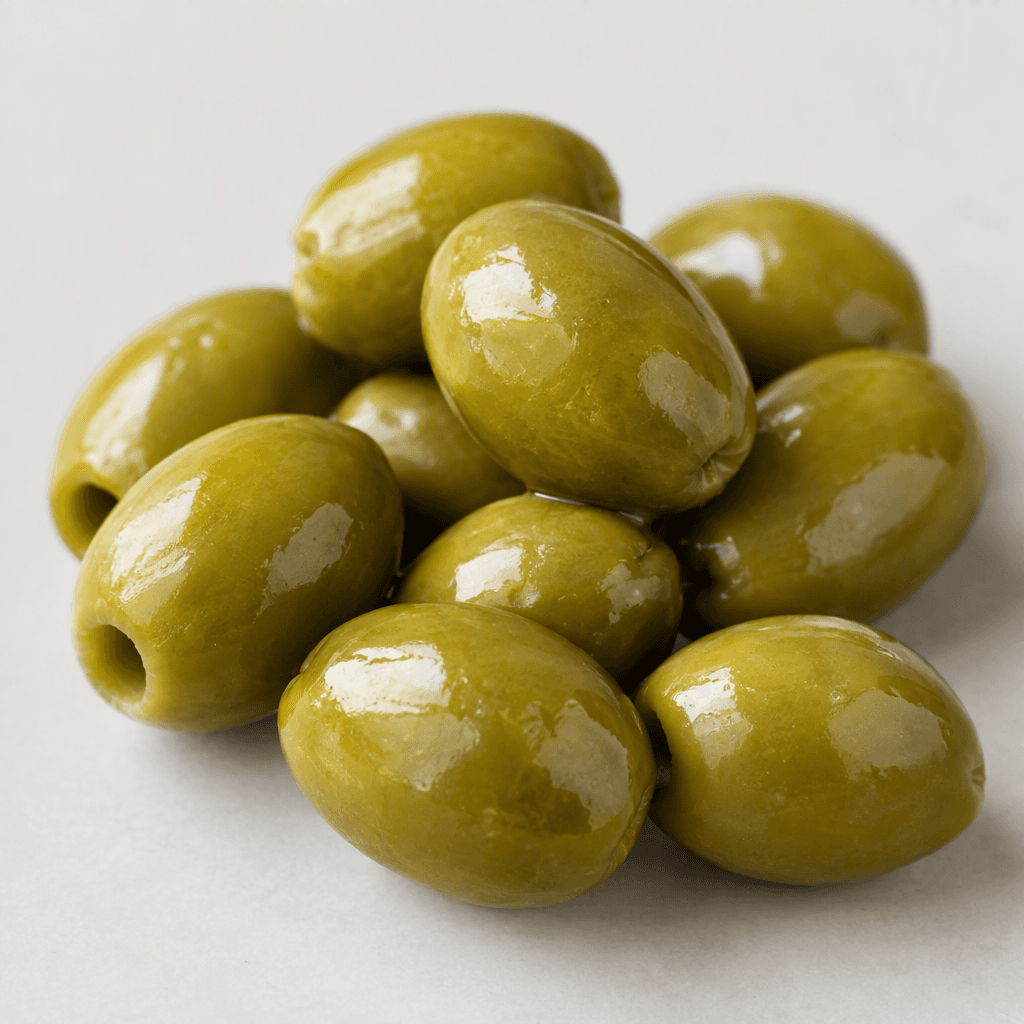
Green Olive Calories
Healthy fats, antioxidants, Mediterranean cuisine
In season: Summer · Autumn
CALORIES
GI
POTASSIUM
FIBER
Quick answer
10 piece (medium) of Green Olive (35 g) has 51 calories. That works out to 145 calories per 100 g. It contains 1.3 g of carbs, 0.4 g of protein, 5.4 g of fat and 1.2 g of fiber. Its 542.5 mg of Sodium covers 24% of the Daily Value. Its glycemic index is 15 (low), so it raises blood sugar slowly.
What is Green Olive?
Green olives are the fruit of the olive tree picked before fully ripening, then cured to mellow their natural bitterness. They are common around the Mediterranean, with varieties differing in size, firmness and flavour; curing may involve brine, herbs or citrus.
Their firm bite and savoury, briny taste make them popular as a snack, on antipasti boards, and in salads, pasta dishes and pizzas. They are rich in fat, mostly the unsaturated kind, and provide some fibre, while remaining low in carbohydrates. If they taste too salty, rinse them briefly before serving; they pair well with bread, cheese, tomatoes and fresh herbs.
Green Olive Nutrition Facts
Selected: 100 g
145
KCAL / 100G
Carbs
3.8g
· 1% DV
Protein
1g
· 2% DV
Fat
15.3g
· 20% DV
Fiber
3.3g
· 12% DV
DV is the share of the daily value covered, on a 2,000 kcal reference diet.
Calories come from: Carbs 10% · Protein 3% · Fat 87%
Green Olive Vitamins & Minerals
Vitamins
Vitamin E
3.8mg · 25% DV
B5
0.3mg · 6% DV
B1
0.03mg · 3% DV
Vitamin A
20µg · 2% DV
Minerals
Sodium
1550mg · 67% DV
Iron
1mg · 6% DV
Calcium
52mg · 5% DV
Magnesium
11mg · 3% DV
How Nutritious Is Green Olive?
Nutrient density
High
How many vitamins, minerals and how much fiber this food carries per calorie. A high score means a lot of nutrition for few calories.
Satiety score
Medium
An EatBetter score computed from fiber, protein and calorie density. A high score means staying full longer on the same calories.
Both scores are calculated per 100 g and do not change with the selected portion. The satiety score is EatBetter's own calculation, not a clinical measure.
Green Olive Glycemic Index
GLYCEMIC INDEX
GLYCEMIC LOAD
Accounts for portion size — a more realistic measure than GI alone.
How to Burn Off Green Olive
To burn the 145 calories in 100 g:
🚶
Walking (5 km/h)
🏃
Running (8 km/h)
🚴
Cycling
🏊
Swimming
Times are calculated with the MET equation for a 70 kg adult. Actual burn varies with your weight, age and pace.
Is Green Olive Processed?
NOVA 2
Minimally Processed
1. Unprocessed
2. Minimally Processed
3. Processed
4. Ultra-Processed
NOVA classifies foods into 4 groups by industrial processing. NOVA 1 (unprocessed) is the healthiest.
Does Green Olive Contain Allergens?
No known major allergens
Which Diets Is Green Olive Good For?
Vegan
✓ Suitable
Vegetarian
✓ Suitable
Gluten-Free
✓ Suitable
Dairy-Free
— Not suitable
Mediterranean
✓ Suitable
Paleo
— Not suitable
Whole30
— Not suitable
DASH
— Not suitable
Keto
✓ Suitable
Low FODMAP
— Not suitable
Green Olive Fat Profile
SATURATED
2g
MONOUNSATURATED
11.3g
POLYUNSATURATED
1.3g
Omega 6:3 ratio 10.9:1
Above the ideal 4:1 (10.9:1).
Compare Green Olive
Foods Similar to Green Olive
Frequently Asked Questions About Green Olive
Are green olives fruit or vegetables?
Green olives are fruits, botanically speaking: they grow from the flower of the olive tree and contain a pit. They are usually grouped with savory foods rather than eaten like sweet fruit because curing gives them their characteristic salty, tangy taste.
What are pimento-stuffed green olives?
Pimento-stuffed green olives are olives with a small piece of sweet red pepper tucked into the center where the pit was removed. Pimentos add a mild, slightly sweet flavor and are a common filling in jars of cocktail olives.
Why are green olives so salty?
Green olives taste salty because they are commonly cured and stored in brine, a saltwater solution. If the flavor is too strong, briefly rinse the olives before eating; rinsing reduces surface brine but does not remove all the salt inside.
Are green olives healthier than black olives?
Neither green olives nor black olives are automatically healthier; they differ mainly in ripeness and processing, which affect their taste and texture. Compare the saltiness of the particular products if that is a concern, since curing methods vary.
How are green olives cured?
Green olives are cured to remove their naturally intense bitterness, commonly by soaking them in brine or water and sometimes by using an alkaline treatment. The olives are then fermented or seasoned, with the exact method varying by style and producer.
Can you eat green olives straight off the tree?
No, green olives straight off the tree are intensely bitter and are not usually eaten as they are. They need curing to make them palatable; avoid assuming an unprocessed olive will taste like the brined olives sold in jars.
Do green olives need to stay in their brine?
Yes, keep green olives covered by their brine after opening and refrigerate them in a closed container. The brine helps preserve their texture and flavor; if the olives are no longer submerged, use them promptly rather than storing them dry.
Can you cook with green olives?
Yes, green olives work well in stews, braises, pasta sauces, and baked dishes, where their salty, tangy flavor seasons the rest of the ingredients. Add them toward the end of cooking if you want them to keep more of their shape.
Can green olives be frozen?
Yes, green olives can be frozen, but freezing may soften their texture when they thaw. Drain them first and freeze them in a sealed container; thawed olives are usually better for cooked dishes than for serving on a snack board.
Are green olives good for you?
Yes, green olives can be part of a balanced diet and provide unsaturated fats and antioxidant compounds. Because many are cured in salty brine, choose portions that fit your needs, especially if you have been advised to limit sodium.
Have another question about Green Olive?
Ask the AI nutrition coach — calories, portions, alternatives and more, answered in seconds in the app.

Scan calories with your camera
Instant AI nutrition analysis

Nutrition data compiled from USDA FoodData Central and scientific sources.