

Ready & Packaged Foods
All →Vegetables & Legumes
All →Desserts & Confectionery
All →Meat & Protein
All →Grains & Bakery
All →Beverages
All →Milk & Dairy
All →

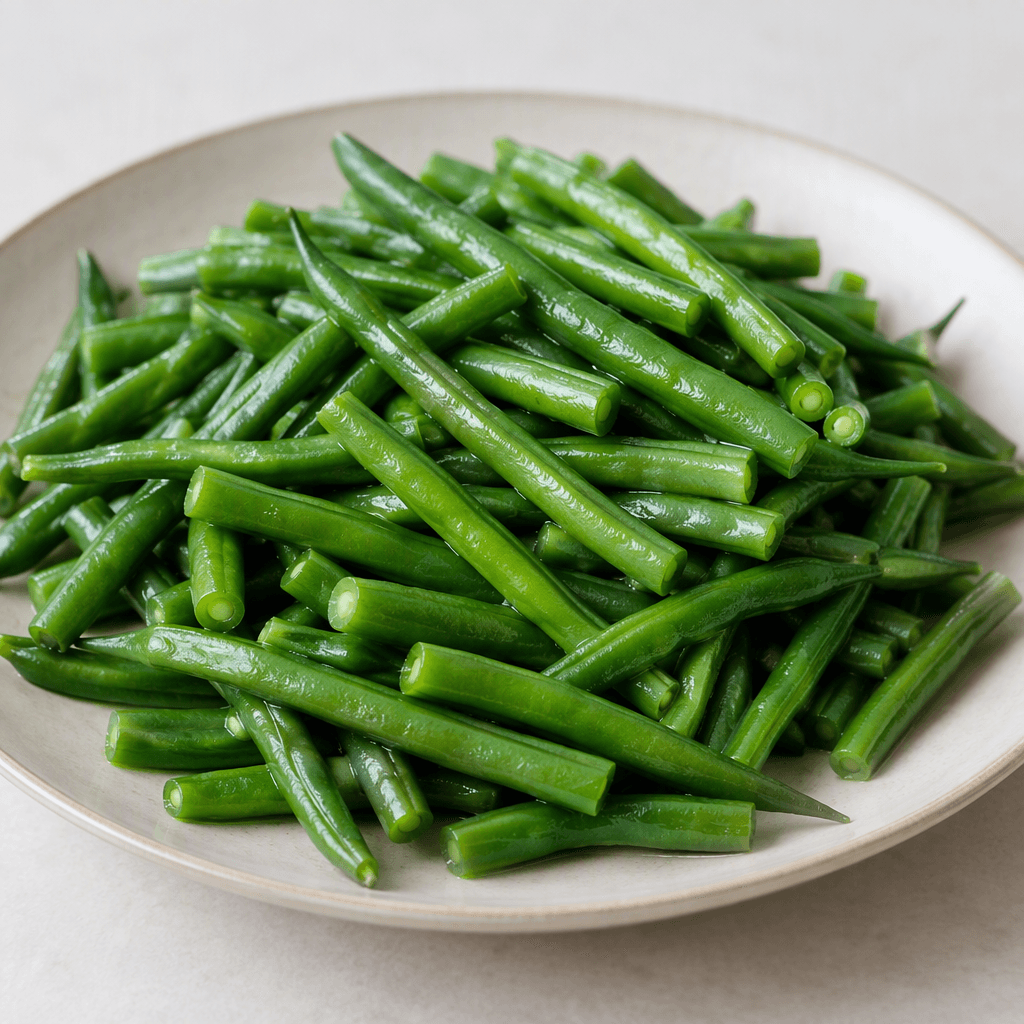
Cooked Green Beans Calories
Low calorie, high fiber, rich in vitamins and minerals
In season: Spring · Summer · Autumn
CALORIES
GI
POTASSIUM
FIBER
Quick answer
1 cup (medium) of Cooked Green Beans (125 g) has 44 calories. That works out to 35 calories per 100 g. It contains 8.8 g of carbs, 2.4 g of protein, 0.3 g of fat and 4.3 g of fiber. Its 53.8 µg of Vitamin K covers 45% of the Daily Value. Its glycemic index is 30 (low), so it raises blood sugar slowly.
What is Cooked Green Beans?
Cooked green beans are fresh green bean pods boiled or steamed until tender. They are a familiar vegetable in many cuisines: in the United States and elsewhere, they may be served simply as a side, tossed into salads, or added to casseroles, while Mediterranean cooking often pairs them with olive oil, tomato, and herbs.
Their mild, grassy flavour and soft, sometimes lightly crisp texture make them easy to serve warm or chilled. They are mostly water with some fibre, and provide a light base for a meal; 100 g has 35 calories and 3.4 g of fibre. Pair them with grains, eggs, or beans for a more substantial plate, or dress them with lemon and a little olive oil when you want a simple side.
Cooked Green Beans Nutrition Facts
Selected: 100 g
35
KCAL / 100G
Carbs
7g
· 3% DV
Protein
1.9g
· 4% DV
Fat
0.2g
· 0% DV
Fiber
3.4g
· 12% DV
DV is the share of the daily value covered, on a 2,000 kcal reference diet.
Calories come from: Carbs 75% · Protein 20% · Fat 5%
Cooked Green Beans Vitamins & Minerals
Vitamins
Vitamin K
43µg · 36% DV
Vitamin C
12mg · 13% DV
B2
0.1mg · 8% DV
B6
0.14mg · 8% DV
Minerals
Iron
1mg · 6% DV
Magnesium
25mg · 6% DV
Phosphorus
38mg · 5% DV
Calcium
37mg · 4% DV
How Nutritious Is Cooked Green Beans?
Nutrient density
Very high
How many vitamins, minerals and how much fiber this food carries per calorie. A high score means a lot of nutrition for few calories.
Satiety score
Medium
An EatBetter score computed from fiber, protein and calorie density. A high score means staying full longer on the same calories.
Both scores are calculated per 100 g and do not change with the selected portion. The satiety score is EatBetter's own calculation, not a clinical measure.
Cooked Green Beans Glycemic Index
GLYCEMIC INDEX
GLYCEMIC LOAD
Accounts for portion size — a more realistic measure than GI alone.
How to Burn Off Cooked Green Beans
To burn the 35 calories in 100 g:
🚶
Walking (5 km/h)
🏃
Running (8 km/h)
🚴
Cycling
🏊
Swimming
Times are calculated with the MET equation for a 70 kg adult. Actual burn varies with your weight, age and pace.
Is Cooked Green Beans Processed?
NOVA 2
Minimally Processed
1. Unprocessed
2. Minimally Processed
3. Processed
4. Ultra-Processed
NOVA classifies foods into 4 groups by industrial processing. NOVA 1 (unprocessed) is the healthiest.
Does Cooked Green Beans Contain Allergens?
No known major allergens
Which Diets Is Cooked Green Beans Good For?
Vegan
✓ Suitable
Vegetarian
✓ Suitable
Gluten-Free
✓ Suitable
Dairy-Free
— Not suitable
Mediterranean
✓ Suitable
Paleo
✓ Suitable
Whole30
— Not suitable
DASH
— Not suitable
Keto
— Not suitable
Low FODMAP
— Not suitable
Cooked Green Beans Fat Profile
SATURATED
0.05g
MONOUNSATURATED
0.01g
POLYUNSATURATED
0.06g
Omega 6:3 ratio 1.5:1
Below the ideal 4:1 — a good omega balance.
Compare Cooked Green Beans
Foods Similar to Cooked Green Beans
Frequently Asked Questions About Cooked Green Beans
How long do cooked green beans last in the fridge?
Cooked green beans generally keep for 3–4 days in the refrigerator when stored in a covered container. Refrigerate them promptly after cooking rather than leaving them out for hours, and discard them if they develop an unusual smell or slimy texture.
Can you freeze cooked green beans?
Yes, cooked green beans can be frozen in an airtight container or freezer bag. Let them cool first and freeze in portions; thawed beans may be softer, so they work especially well in soups, casseroles, and stews.
How do you make cooked green beans taste better?
Season cooked green beans with olive oil or butter, black pepper, garlic, and a squeeze of lemon. Add toasted almonds for crunch, or stir them into a tomato-based sauce; add delicate herbs at the end to keep their flavor fresh.
Can you eat cooked green beans cold?
Yes, cooked green beans are safe to eat cold once they have been properly refrigerated. Toss them into a salad with vinaigrette, herbs, and feta, or serve them chilled as a side dish instead of reheating.
Why are my cooked green beans mushy?
Cooked green beans usually turn mushy because they have been boiled or steamed too long. Start checking them before they are fully tender and stop cooking when they still have a little bite; carryover heat softens them further.
How do you keep cooked green beans bright green?
Cooked green beans stay brighter when cooked briefly rather than simmered for a long time. For a salad, transfer them straight from boiling water to ice water to stop the cooking; this helps preserve both their color and crisp texture.
Can dogs eat cooked green beans?
Yes, dogs can eat plain cooked green beans in modest amounts. Avoid beans cooked with salt, onion, garlic, butter, or rich sauces, and cut them into bite-sized pieces to make them easier to eat.
Can you reheat cooked green beans in the microwave?
Yes, you can reheat cooked green beans in the microwave. Put a serving in a microwave-safe dish, cover it loosely, and heat until steaming, stirring partway through so it warms evenly without drying out.
Do cooked green beans need to be blanched before freezing?
No, cooked green beans do not need blanching before freezing because cooking has already softened them. Cool them quickly, drain off excess liquid, and pack them airtight; blanching them again can make their texture even softer after thawing.
Can cooked green beans go in an air fryer?
Yes, cooked green beans can be crisped in an air fryer, though they are already tender and need less cooking than raw beans. Pat them dry, toss lightly with oil and seasoning, and cook in a single layer until the edges are browned.
Have another question about Cooked Green Beans?
Ask the AI nutrition coach — calories, portions, alternatives and more, answered in seconds in the app.

Scan calories with your camera
Instant AI nutrition analysis

Nutrition data compiled from USDA FoodData Central and scientific sources.