

Ready & Packaged Foods
All →Vegetables & Legumes
All →Desserts & Confectionery
All →Meat & Protein
All →Grains & Bakery
All →Beverages
All →Milk & Dairy
All →

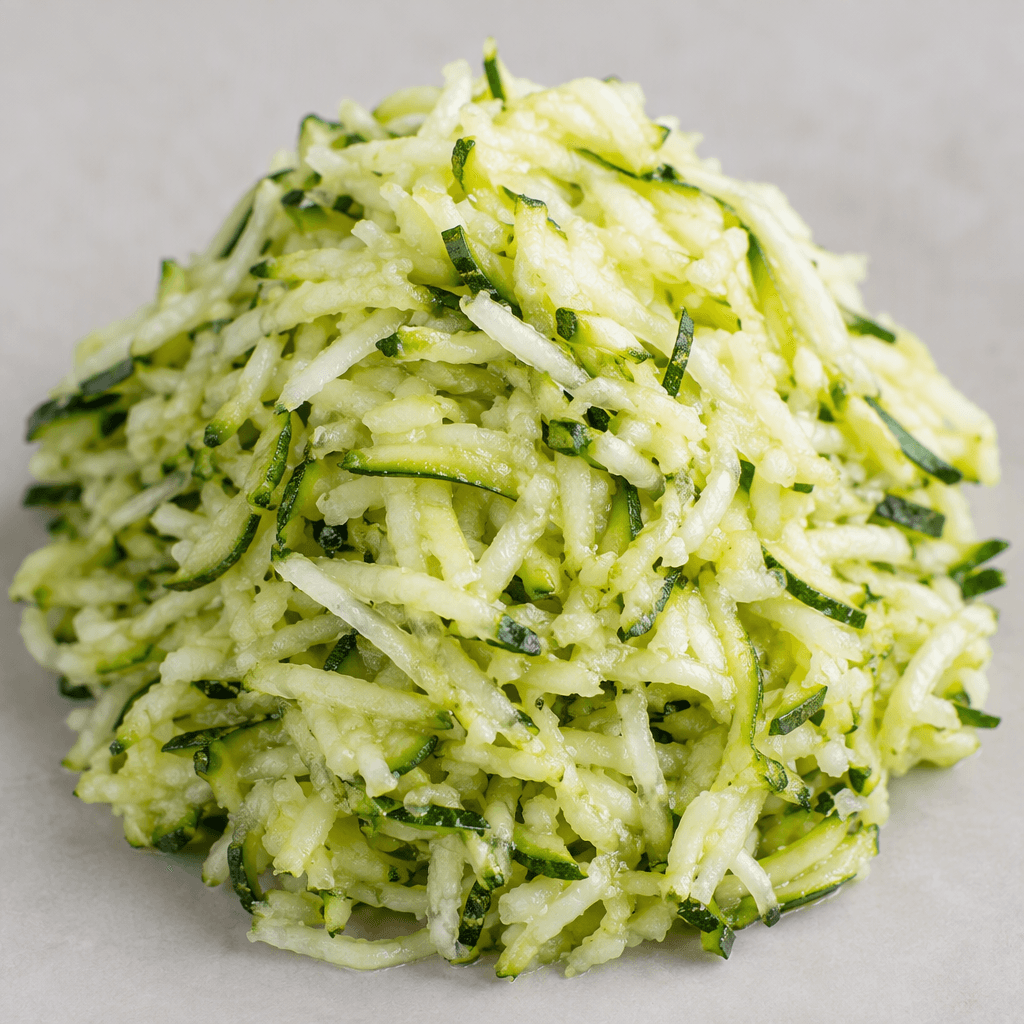
Grated Zucchini Calories
Low calorie, high fiber, rich in vitamins and minerals
In season: Summer
CALORIES
GI
POTASSIUM
FIBER
Quick answer
1 cup (medium) of Grated Zucchini (120 g) has 20 calories. That works out to 17 calories per 100 g. It contains 3.7 g of carbs, 1.4 g of protein, 0.4 g of fat and 1.2 g of fiber. Its 21.5 mg of Vitamin C covers 24% of the Daily Value. Its glycemic index is 15 (low), so it raises blood sugar slowly.
What is Grated Zucchini?
Grated zucchini is fresh zucchini shredded into fine, moist strands. It is an ingredient rather than a dish, used in home cooking across the Mediterranean and in kitchens worldwide. Its mild flavour and tender texture make it easy to fold into other foods; it softens quickly when cooked and can also be eaten raw in salads.
In the US and UK, it often goes into fritters, quick breads, pasta sauces or omelettes; around the Mediterranean, it is also sautéed or mixed into savoury bakes. Zucchini is mostly water, with some fibre, and is low in calories: 100 g has 17 calories. For a less watery fritter or bake, squeeze out excess liquid before mixing.
Grated Zucchini Nutrition Facts
Selected: 100 g
17
KCAL / 100G
Carbs
3.1g
· 1% DV
Protein
1.2g
· 2% DV
Fat
0.3g
· 0% DV
Fiber
1g
· 4% DV
DV is the share of the daily value covered, on a 2,000 kcal reference diet.
Calories come from: Carbs 62% · Protein 24% · Fat 14%
Grated Zucchini Vitamins & Minerals
Vitamins
Vitamin C
17.9mg · 20% DV
B6
0.16mg · 9% DV
B2
0.09mg · 7% DV
Folate
24µg · 6% DV
Minerals
Potassium ⭐
261mg · 8% DV
Phosphorus
38mg · 5% DV
Magnesium
18mg · 4% DV
Calcium
16mg · 2% DV
How Nutritious Is Grated Zucchini?
Nutrient density
High
How many vitamins, minerals and how much fiber this food carries per calorie. A high score means a lot of nutrition for few calories.
Satiety score
Medium
An EatBetter score computed from fiber, protein and calorie density. A high score means staying full longer on the same calories.
Both scores are calculated per 100 g and do not change with the selected portion. The satiety score is EatBetter's own calculation, not a clinical measure.
Grated Zucchini Glycemic Index
GLYCEMIC INDEX
GLYCEMIC LOAD
Accounts for portion size — a more realistic measure than GI alone.
How to Burn Off Grated Zucchini
To burn the 17 calories in 100 g:
🚶
Walking (5 km/h)
🏃
Running (8 km/h)
🚴
Cycling
🏊
Swimming
Times are calculated with the MET equation for a 70 kg adult. Actual burn varies with your weight, age and pace.
Is Grated Zucchini Processed?
NOVA 2
Minimally Processed
1. Unprocessed
2. Minimally Processed
3. Processed
4. Ultra-Processed
NOVA classifies foods into 4 groups by industrial processing. NOVA 1 (unprocessed) is the healthiest.
Does Grated Zucchini Contain Allergens?
No known major allergens
Which Diets Is Grated Zucchini Good For?
Vegan
✓ Suitable
Vegetarian
✓ Suitable
Gluten-Free
✓ Suitable
Dairy-Free
— Not suitable
Mediterranean
✓ Suitable
Paleo
✓ Suitable
Whole30
— Not suitable
DASH
— Not suitable
Keto
✓ Suitable
Low FODMAP
— Not suitable
Grated Zucchini Fat Profile
SATURATED
0.06g
MONOUNSATURATED
0.03g
POLYUNSATURATED
0.08g
Omega 6:3 ratio 3:1
Below the ideal 4:1 — a good omega balance.
Compare Grated Zucchini
Foods Similar to Grated Zucchini
Frequently Asked Questions About Grated Zucchini
Can you use grated zucchini in zucchini bread?
Yes, grated zucchini works well in zucchini bread and adds moisture to the loaf. Most recipes use it without squeezing, but drain it if it is unusually wet or the recipe specifically calls for squeezed zucchini.
How do you stop grated zucchini from making fritters soggy?
Squeeze grated zucchini firmly in a clean towel before mixing the fritter batter. Zucchini releases plenty of moisture, and removing the excess helps the fritters brown and hold together instead of turning soft.
Can grated zucchini be frozen?
Yes, grated zucchini can be frozen, though it becomes softer and releases more water after thawing. Drain or squeeze it first, freeze it in recipe-sized portions, and use it in cooked dishes such as bread, soup, or fritters.
How should you store grated zucchini?
Keep grated zucchini in a covered container in the refrigerator and use it promptly. It tends to release water and soften after grating, so drain off any liquid before adding it to a recipe.
Do you peel zucchini before grating it?
No, you usually do not need to peel zucchini before grating it. The skin is edible and helps the shreds keep their shape; rinse and dry the whole zucchini first, and peel only if the skin is unusually tough.
Can you eat grated zucchini raw?
Yes, grated zucchini can be eaten raw in salads, slaws, or cold grain dishes. Wash the whole zucchini before grating, and serve the shreds soon after preparation because they soften and release water as they sit.
Why is grated zucchini so watery?
Grated zucchini is watery because grating breaks its cells and releases their moisture. Salt and resting time draw out even more liquid, so grate it just before use or drain it when a recipe needs a firmer texture.
What is the best way to grate zucchini without making it mushy?
Use the large holes of a box grater and apply gentle pressure to keep grated zucchini in distinct strands. A food processor can work too, but its grating attachment may make short, finer pieces if you press the zucchini too hard.
Can you put grated zucchini in an omelet?
Yes, grated zucchini is a good addition to an omelet. Cook it briefly in the pan first and let excess moisture evaporate before adding the eggs; otherwise, liquid can collect and make the omelet watery.
What can you use instead of grated zucchini in a recipe?
Grated yellow summer squash is the closest substitute for grated zucchini because it has a similar texture and moisture. Grated carrot can work in baked goods, but it is sweeter and will change the flavor of the recipe.
Have another question about Grated Zucchini?
Ask the AI nutrition coach — calories, portions, alternatives and more, answered in seconds in the app.

Scan calories with your camera
Instant AI nutrition analysis

Nutrition data compiled from USDA FoodData Central and scientific sources.