

Ready & Packaged Foods
All →Vegetables & Legumes
All →Desserts & Confectionery
All →Meat & Protein
All →Grains & Bakery
All →Beverages
All →Milk & Dairy
All →

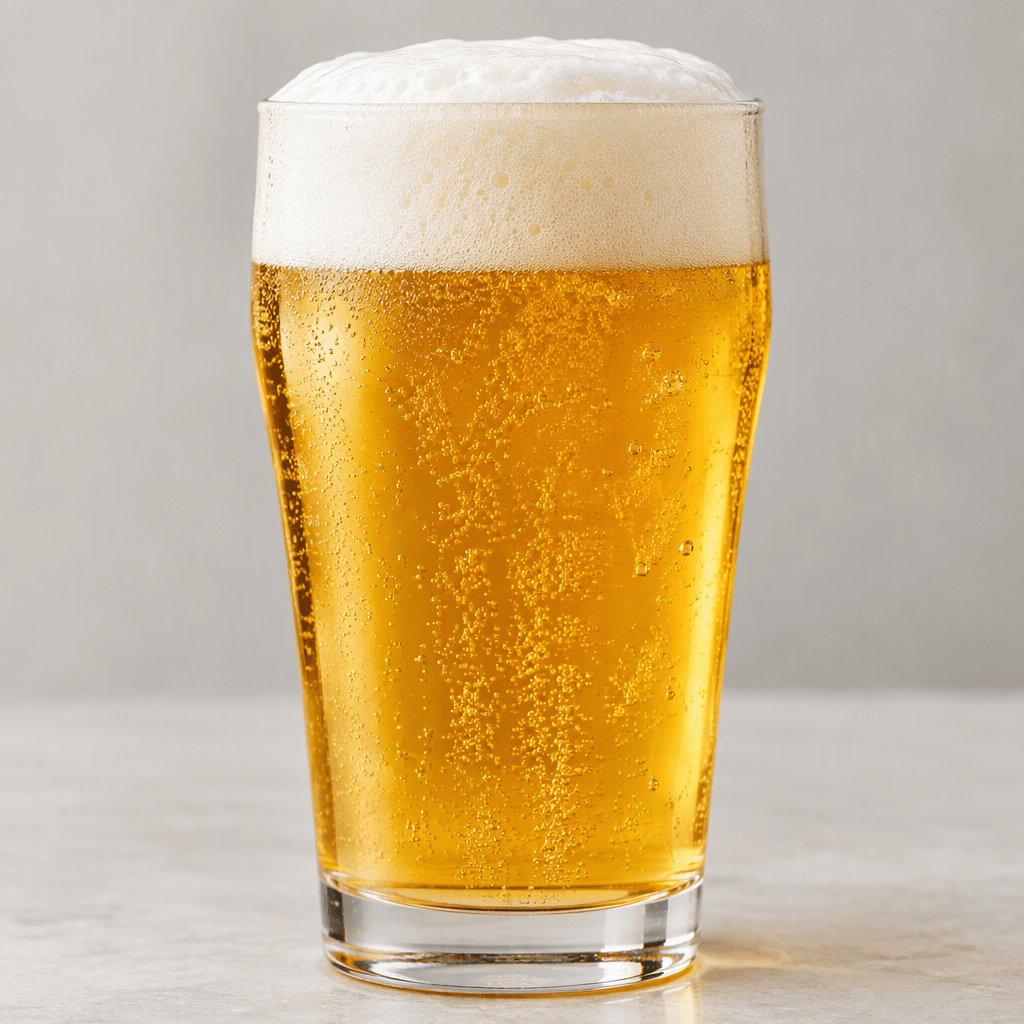
Gluten-Free Beer Calories
Gluten-free, alcoholic, fermented beverage
In season: Spring · Summer · Autumn · Winter
CALORIES
GI
POTASSIUM
FIBER
Quick answer
1 bottle (medium) of Gluten-Free Beer (330 g) has 142 calories. That works out to 43 calories per 100 g. It contains 10.6 g of carbs, 1.3 g of protein, 0 g of fat and 0 g of fiber. Its 1.7 µg of Biotin covers 6% of the Daily Value. Its glycemic index is 100 (high), so it raises blood sugar quickly.
What is Gluten-Free Beer?
Gluten-free beer is brewed either with grains such as rice, corn or millet in place of the barley malt used in many conventional beers, or by reducing gluten in the finished brew. It is still a fermented, alcoholic beer, and can range in colour from pale gold to amber.
Serve it chilled in a glass to bring out its foam and fine bubbles. Depending on the grains and brewing method, the flavour may be light, gently malty or slightly sweet. It works well with grilled food, savoury snacks and casual meals. Nutritionally, it is low in protein and contains some carbohydrate: 100 g provides 3.2 g. If you avoid gluten, check the product’s label, and remember that gluten-free does not mean alcohol-free.
Gluten-Free Beer Nutrition Facts
Selected: 100 g
43
KCAL / 100G
Carbs
3.2g
· 1% DV
Protein
0.4g
· 1% DV
Fat
0g
· 0% DV
Fiber
0g
· 0% DV
DV is the share of the daily value covered, on a 2,000 kcal reference diet.
Calories come from: Carbs 89% · Protein 11% · Fat 0%
Gluten-Free Beer Vitamins & Minerals
Vitamins
B2
0.02mg · 2% DV
Biotin
0.5µg · 2% DV
B1
0.01mg · 1% DV
B3
0.2mg · 1% DV
Minerals
Phosphorus
9mg · 1% DV
Potassium ⭐
27mg · 1% DV
Calcium
4mg · 0% DV
Iron
0mg · 0% DV
How Nutritious Is Gluten-Free Beer?
Nutrient density
Low
How many vitamins, minerals and how much fiber this food carries per calorie. A high score means a lot of nutrition for few calories.
Satiety score
Medium
An EatBetter score computed from fiber, protein and calorie density. A high score means staying full longer on the same calories.
Both scores are calculated per 100 g and do not change with the selected portion. The satiety score is EatBetter's own calculation, not a clinical measure.
Gluten-Free Beer Glycemic Index
GLYCEMIC INDEX
GLYCEMIC LOAD
Accounts for portion size — a more realistic measure than GI alone.
How to Burn Off Gluten-Free Beer
To burn the 43 calories in 100 g:
🚶
Walking (5 km/h)
🏃
Running (8 km/h)
🚴
Cycling
🏊
Swimming
Times are calculated with the MET equation for a 70 kg adult. Actual burn varies with your weight, age and pace.
Is Gluten-Free Beer Processed?
NOVA 3
Processed
1. Unprocessed
2. Minimally Processed
3. Processed
4. Ultra-Processed
NOVA classifies foods into 4 groups by industrial processing. NOVA 1 (unprocessed) is the healthiest.
Does Gluten-Free Beer Contain Allergens?
No known major allergens
Which Diets Is Gluten-Free Beer Good For?
Vegan
✓ Suitable
Vegetarian
✓ Suitable
Gluten-Free
✓ Suitable
Dairy-Free
— Not suitable
Mediterranean
— Not suitable
Paleo
— Not suitable
Whole30
— Not suitable
DASH
— Not suitable
Keto
— Not suitable
Low FODMAP
— Not suitable
Gluten-Free Beer Fat Profile
SATURATED
0g
MONOUNSATURATED
0g
POLYUNSATURATED
0g
Compare Gluten-Free Beer
Foods Similar to Gluten-Free Beer
Frequently Asked Questions About Gluten-Free Beer
Is gluten-free beer safe for people with celiac disease?
It can be, if it is specifically labeled gluten-free and meets the rules where it is sold. Some beers are brewed with barley and then have gluten reduced, so people with celiac disease should rely on verified labeling rather than assuming every “gluten-reduced” beer is suitable.
What is gluten-free beer made from?
Gluten-free beer may be brewed with rice, corn, sorghum, millet, or other gluten-free grains. Some products use barley followed by a gluten-reduction step instead. Ingredients vary by brand, so the label is the best way to identify the grains used.
Does gluten-free beer taste different from regular beer?
It can taste different because the grain and brewing method affect the flavor. Rice- or sorghum-based beers may have lighter or distinct grain notes, while some gluten-free beers are designed to taste much like conventional beer.
Can gluten-free beer still be made with barley?
Yes. Some brewers make beer with barley and use enzymes to reduce gluten during production. Other gluten-free beers are brewed from grains that naturally contain no gluten. Check the product’s label and brewing information if you need to know which kind it is.
How is gluten-free beer brewed?
Brewers either ferment naturally gluten-free grains, such as rice or sorghum, or treat a barley-based beer with enzymes that break down gluten. The finished beer may then be tested against the applicable gluten-free standard.
What is the difference between gluten-free and gluten-reduced beer?
Gluten-free beer meets the applicable requirements for a gluten-free product; gluten-reduced beer describes beer made from gluten-containing grains that undergo a reduction process. The terms are not interchangeable everywhere, so check the exact claim and local labeling rules.
Does gluten-free beer contain alcohol?
Yes, most gluten-free beer contains alcohol; removing or avoiding gluten does not make beer alcohol-free. If you want a non-alcoholic option, look for a separate alcohol-free claim and check the stated alcohol content.
Is gluten-free beer lower in carbohydrates than regular beer?
Not necessarily. Gluten-free beer can have a similar, lower, or higher carbohydrate content than regular beer, depending on its ingredients and brewing method. Compare the nutrition information on the specific products rather than judging by the gluten-free label.
How should you store gluten-free beer after opening?
Keep opened gluten-free beer covered in the refrigerator and drink it soon. Like other beer, it loses carbonation and freshness once opened; discard it if it has been left out for a long time or develops an unusual smell or taste.
Can you make gluten-free beer at home?
Yes, home brewers can ferment gluten-free grains such as rice, millet, or sorghum. Use equipment that has not been contaminated by gluten-containing ingredients; homemade beer is not automatically safe for someone with celiac disease.
Have another question about Gluten-Free Beer?
Ask the AI nutrition coach — calories, portions, alternatives and more, answered in seconds in the app.

Scan calories with your camera
Instant AI nutrition analysis

Nutrition data compiled from USDA FoodData Central and scientific sources.