

Ready & Packaged Foods
All →Vegetables & Legumes
All →Desserts & Confectionery
All →Meat & Protein
All →Grains & Bakery
All →Beverages
All →Milk & Dairy
All →

Fruit Tea Calories
Caffeine-free, antioxidant, low calorie
In season: Spring · Summer · Autumn · Winter
CALORIES
GI
POTASSIUM
FIBER
Quick answer
1 cup (medium) of Fruit Tea (240 g) has 5 calories. That works out to 2 calories per 100 g. It contains 1 g of carbs, 0.2 g of protein, 0 g of fat and 0 g of fiber. Its glycemic index is 0 (low), so it raises blood sugar slowly.
What is Fruit Tea?
Fruit tea is an infusion made by steeping dried fruit, often with ingredients such as hibiscus or rosehip, rather than tea leaves. Blends vary by region: apple, berry and citrus are common, and some versions include herbs or spices. Check the blend if you want to avoid caffeine, since products sold as fruit tea can sometimes contain actual tea leaves.
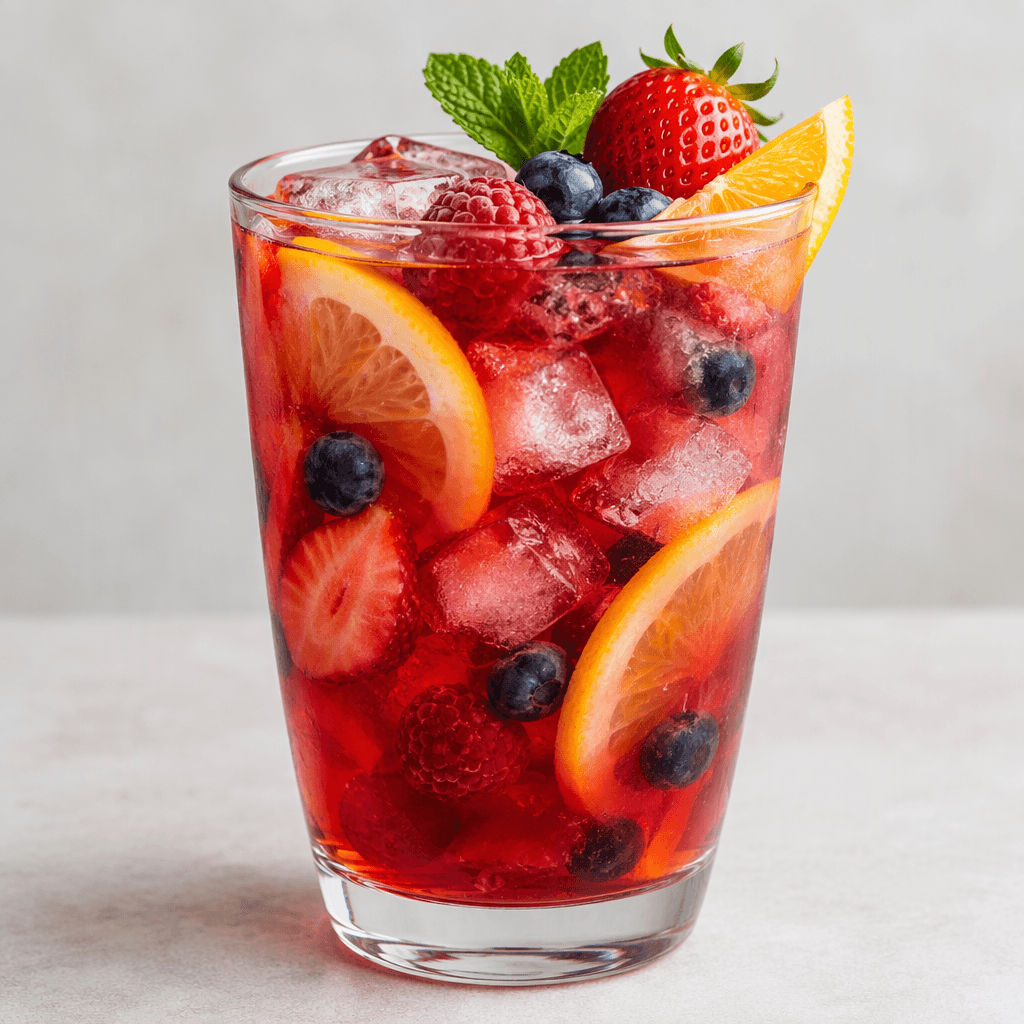
It tastes fruity and often pleasantly tart, and can be served hot or chilled over ice with fresh fruit. In Turkey, it is commonly enjoyed as a caffeine-free alternative to tea; elsewhere, it also makes an easy iced drink. Unsweetened fruit tea is very low in calories, so it suits a light drink alongside a meal or as a refreshing option between meals.
Fruit Tea Nutrition Facts
Selected: 100 g
2
KCAL / 100G
Carbs
0.4g
· 0% DV
Protein
0.1g
· 0% DV
Fat
0g
· 0% DV
Fiber
0g
· 0% DV
DV is the share of the daily value covered, on a 2,000 kcal reference diet.
Calories come from: Carbs 80% · Protein 20% · Fat 0%
Fruit Tea Vitamins & Minerals
Vitamins
Vitamin C
0.5mg · 1% DV
Vitamin A
0µg · 0% DV
B1
0mg · 0% DV
B2
0mg · 0% DV
Minerals
Calcium
2mg · 0% DV
Iron
0mg · 0% DV
Magnesium
1mg · 0% DV
Zinc
0mg · 0% DV
How Nutritious Is Fruit Tea?
Nutrient density
Low
How many vitamins, minerals and how much fiber this food carries per calorie. A high score means a lot of nutrition for few calories.
Satiety score
Medium
An EatBetter score computed from fiber, protein and calorie density. A high score means staying full longer on the same calories.
Both scores are calculated per 100 g and do not change with the selected portion. The satiety score is EatBetter's own calculation, not a clinical measure.
Fruit Tea Glycemic Index
GLYCEMIC INDEX
GLYCEMIC LOAD
Accounts for portion size — a more realistic measure than GI alone.
How to Burn Off Fruit Tea
To burn the 2 calories in 100 g:
🚶
Walking (5 km/h)
🏃
Running (8 km/h)
🚴
Cycling
🏊
Swimming
Times are calculated with the MET equation for a 70 kg adult. Actual burn varies with your weight, age and pace.
Is Fruit Tea Processed?
NOVA 2
Minimally Processed
1. Unprocessed
2. Minimally Processed
3. Processed
4. Ultra-Processed
NOVA classifies foods into 4 groups by industrial processing. NOVA 1 (unprocessed) is the healthiest.
Does Fruit Tea Contain Allergens?
No known major allergens
Which Diets Is Fruit Tea Good For?
Vegan
✓ Suitable
Vegetarian
✓ Suitable
Gluten-Free
✓ Suitable
Dairy-Free
— Not suitable
Mediterranean
✓ Suitable
Paleo
✓ Suitable
Whole30
— Not suitable
DASH
— Not suitable
Keto
— Not suitable
Low FODMAP
— Not suitable
Fruit Tea Fat Profile
SATURATED
0g
MONOUNSATURATED
0g
POLYUNSATURATED
0g
Compare Fruit Tea
Foods Similar to Fruit Tea
Frequently Asked Questions About Fruit Tea
Does fruit tea have caffeine?
Pure fruit tea is caffeine-free because it is usually an infusion of fruit rather than leaves from the tea plant. Some blends include black or green tea, though, so check the ingredients if you are avoiding caffeine.
What is fruit tea made from?
Fruit tea is usually made by steeping dried fruit, fruit pieces, or fruit peel in hot water. Common blends combine ingredients such as apple, hibiscus, rosehip, citrus peel, and berries; some also contain actual tea leaves.
Is fruit tea good for you?
Unsweetened fruit tea is a low-calorie way to enjoy a flavoured drink, and fruit ingredients can provide antioxidant compounds. Its benefits depend on the blend, and it should not be treated as a remedy or a substitute for eating whole fruit.
How do you make fruit tea with dried fruit?
Put dried fruit or a fruit-tea blend in a mug or pot, pour over hot water, and let it steep until the flavour is strong enough for you. Strain it before serving if you prefer a clear drink.
Can you make fruit tea with fresh fruit?
Yes, fresh fruit works well in fruit tea. Add sliced citrus, berries, or apple to hot water and let them infuse; gently crushing berries releases more flavour. Fresh fruit gives a lighter infusion than many dried blends.
Can fruit tea be served iced?
Yes, fruit tea makes a refreshing iced drink. Brew it hot and chill it, or infuse the fruit in cold water for longer; add ice and fresh citrus or berries just before serving for extra flavour.
Why does my fruit tea taste bitter?
Fruit tea can taste bitter if it steeps too long or contains peel, seeds, or strongly flavoured ingredients such as hibiscus. Shorten the steeping time, remove the fruit pieces, or balance the tartness with a naturally sweet fruit.
Is fruit tea the same as herbal tea?
Fruit tea is one kind of herbal infusion, but the terms are not identical. Fruit tea is centred on fruit ingredients, while herbal tea may be made mainly from herbs, flowers, or spices; either type can include tea leaves.
Can you add milk to fruit tea?
You can add milk to fruit tea, but it is not a common pairing and the drink’s acidity may cause dairy milk to curdle. Fruit tea is usually served plain, chilled, or with a little sweetener instead.
How long does brewed fruit tea last in the fridge?
Keep brewed fruit tea covered in the refrigerator and drink it within a few days. Remove fresh fruit pieces after steeping rather than leaving them in the pitcher, since they can soften and affect the drink’s flavour.
Have another question about Fruit Tea?
Ask the AI nutrition coach — calories, portions, alternatives and more, answered in seconds in the app.

Scan calories with your camera
Instant AI nutrition analysis

Nutrition data compiled from USDA FoodData Central and scientific sources.