

Ready & Packaged Foods
All →Vegetables & Legumes
All →Desserts & Confectionery
All →Meat & Protein
All →Grains & Bakery
All →Beverages
All →Milk & Dairy
All →

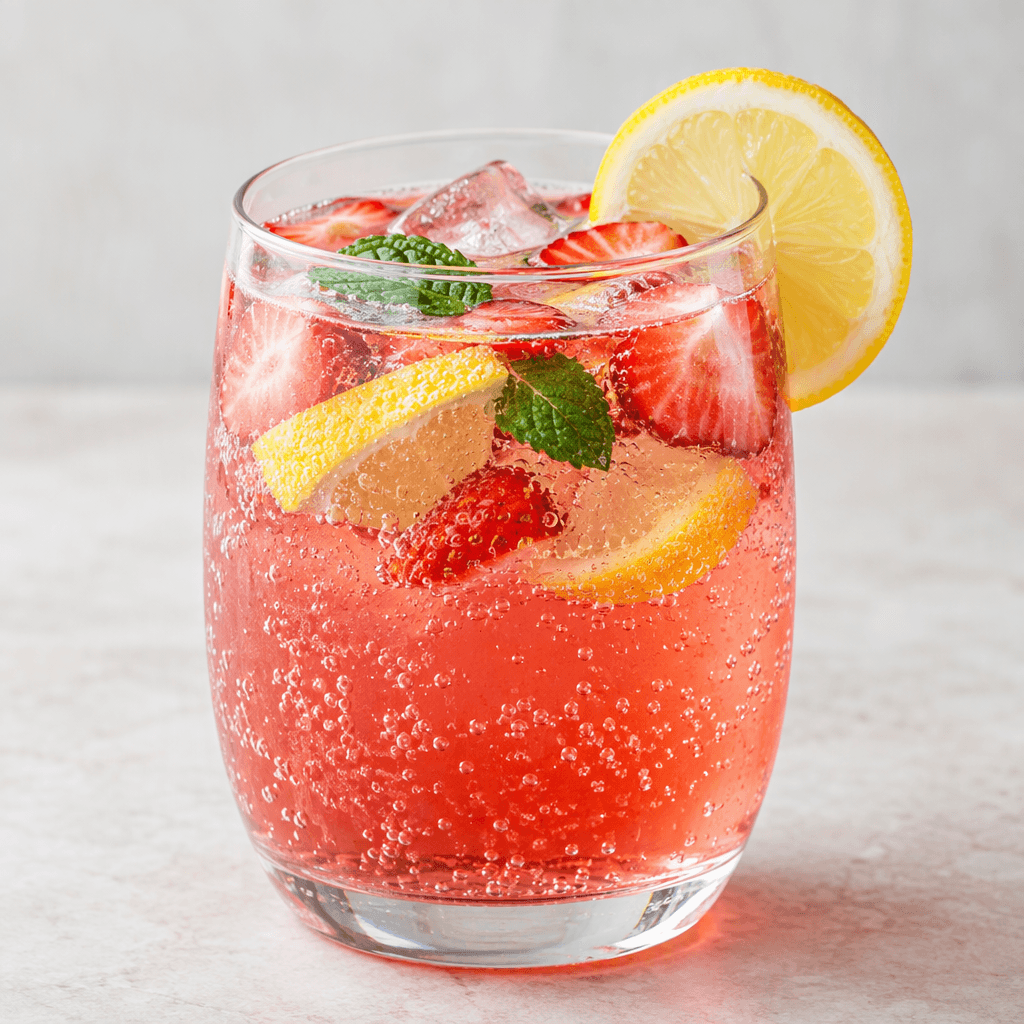
Fruit soda Calories
Carbonated, sweet, fruit-flavored beverage
In season: Spring · Summer · Autumn · Winter
CALORIES
GI
POTASSIUM
FIBER
Quick answer
1 bottle (medium) of Fruit soda (330 g) has 139 calories. That works out to 42 calories per 100 g. It contains 34.7 g of carbs, 0 g of protein, 0 g of fat and 0 g of fiber. Its glycemic index is 65 (medium), so it raises blood sugar at a moderate pace.
What is Fruit soda?
Fruit soda is a sweet, carbonated drink flavoured with fruit. It is sold in a range of flavours and is distinct from fruit juice; its fruity taste does not necessarily mean it contains much real fruit.
It is commonly served chilled, sometimes over ice with a citrus slice, as a casual refreshment or alongside a meal. Its nutritional character is mainly carbohydrate from the sweetness, with no protein or fibre; it provides 42 calories per 100 g. For a less-sweet drink, pour a smaller glass or mix it with plain sparkling water. Pairing it with a meal rather than treating it as a thirst-quencher can also help keep the portion modest.
Fruit soda Nutrition Facts
Selected: 100 g
42
KCAL / 100G
Carbs
10.5g
· 4% DV
Protein
0g
· 0% DV
Fat
0g
· 0% DV
Fiber
0g
· 0% DV
DV is the share of the daily value covered, on a 2,000 kcal reference diet.
Calories come from: Carbs 100% · Protein 0% · Fat 0%
Fruit soda Vitamins & Minerals
Vitamins
B1
0.01mg · 1% DV
B2
0.01mg · 1% DV
B6
0.01mg · 1% DV
Vitamin C
1mg · 1% DV
Minerals
Calcium
2mg · 0% DV
Iron
0mg · 0% DV
Magnesium
1mg · 0% DV
Zinc
0mg · 0% DV
How Nutritious Is Fruit soda?
Nutrient density
Low
How many vitamins, minerals and how much fiber this food carries per calorie. A high score means a lot of nutrition for few calories.
Satiety score
Medium
An EatBetter score computed from fiber, protein and calorie density. A high score means staying full longer on the same calories.
Both scores are calculated per 100 g and do not change with the selected portion. The satiety score is EatBetter's own calculation, not a clinical measure.
Fruit soda Glycemic Index
GLYCEMIC INDEX
GLYCEMIC LOAD
Accounts for portion size — a more realistic measure than GI alone.
How to Burn Off Fruit soda
To burn the 42 calories in 100 g:
🚶
Walking (5 km/h)
🏃
Running (8 km/h)
🚴
Cycling
🏊
Swimming
Times are calculated with the MET equation for a 70 kg adult. Actual burn varies with your weight, age and pace.
Is Fruit soda Processed?
NOVA 3
Processed
1. Unprocessed
2. Minimally Processed
3. Processed
4. Ultra-Processed
NOVA classifies foods into 4 groups by industrial processing. NOVA 1 (unprocessed) is the healthiest.
Does Fruit soda Contain Allergens?
No known major allergens
Which Diets Is Fruit soda Good For?
Vegan
✓ Suitable
Vegetarian
✓ Suitable
Gluten-Free
— Not suitable
Dairy-Free
— Not suitable
Mediterranean
— Not suitable
Paleo
— Not suitable
Whole30
— Not suitable
DASH
— Not suitable
Keto
— Not suitable
Low FODMAP
— Not suitable
Fruit soda Fat Profile
SATURATED
0g
MONOUNSATURATED
0g
POLYUNSATURATED
0g
Compare Fruit soda
Foods Similar to Fruit soda
Frequently Asked Questions About Fruit soda
Is fruit soda good for you?
Fruit soda is a sweetened fizzy drink, not a substitute for water or whole fruit. Having it occasionally is reasonable, but making it a daily drink can add a lot of sugar to your routine.
Does fruit soda contain real fruit juice?
Some fruit sodas contain fruit juice, while others get their flavor from added flavorings. The fruit pictured on the bottle does not prove juice is present, so check the ingredient list for juice and its amount.
Does fruit soda have caffeine?
Most fruit sodas are caffeine-free, but recipes vary by brand and flavor. If you avoid caffeine, check the ingredients, especially for drinks blended with cola or energy-drink ingredients.
Is fruit soda the same as sparkling water?
No. Fruit soda is typically sweetened and fruit-flavored, while plain sparkling water is carbonated water without added sugar. Some flavored sparkling waters are unsweetened, so compare the ingredient lists rather than relying on the flavor name.
Can fruit soda cause weight gain?
Fruit soda can contribute to weight gain when it is consumed often because its sugar provides extra energy without the fullness of solid food. Choosing water or unsweetened sparkling water more often can reduce that intake.
Can people with diabetes drink fruit soda?
Sugared fruit soda can raise blood glucose and is usually not a good everyday choice for people with diabetes. Your response depends on your care plan, so ask your diabetes clinician or dietitian how to fit it in.
Does fruit soda hydrate you?
Fruit soda provides fluid, but it is not the best everyday hydration choice because it is usually sweetened. Choose water for thirst and use fruit soda as an occasional drink.
Can fruit soda damage your teeth?
Yes, frequent exposure to the sugar and acids in fruit soda can raise the risk of tooth decay and enamel erosion. Drink it with a meal rather than sipping it over hours, and rinse your mouth with water afterward.
How long does fruit soda last after opening?
Keep opened fruit soda tightly capped in the refrigerator and drink it soon for the best fizz and flavor. It may lose carbonation after opening, and it should be discarded if its smell or appearance changes.
How do you make fruit soda at home?
Mix chilled sparkling water with mashed fresh fruit or a small amount of fruit purée to make fruit soda at home. Add sweetener only if needed; using whole fruit gives flavor without relying on a bottled soda.
Have another question about Fruit soda?
Ask the AI nutrition coach — calories, portions, alternatives and more, answered in seconds in the app.

Scan calories with your camera
Instant AI nutrition analysis

Nutrition data compiled from USDA FoodData Central and scientific sources.