

Ready & Packaged Foods
All →Vegetables & Legumes
All →Desserts & Confectionery
All →Meat & Protein
All →Grains & Bakery
All →Beverages
All →Milk & Dairy
All →

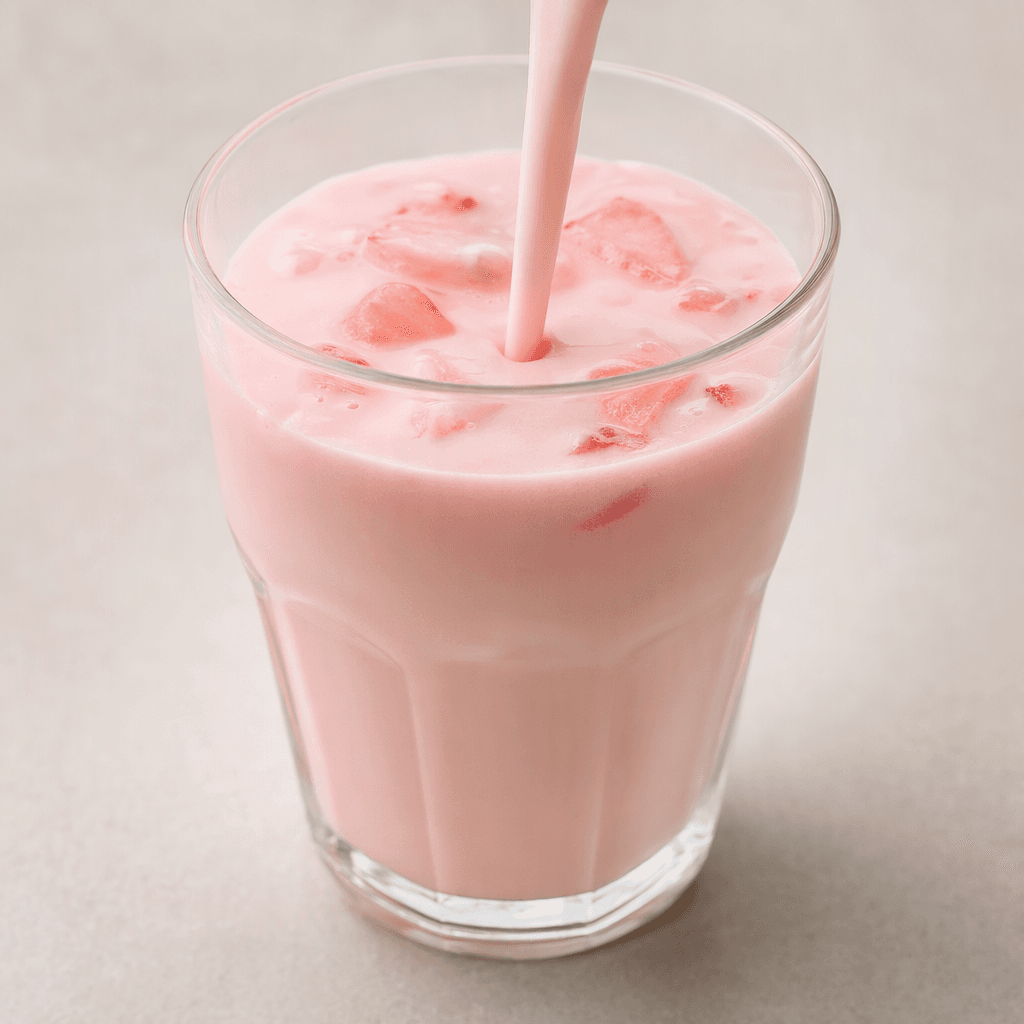
Fruit probiotic drink Calories
Fruit-flavored probiotic cultured dairy drink
CALORIES
GI
POTASSIUM
FIBER
Quick answer
1 bottle (small) of Fruit probiotic drink (250 g) has 190 calories. That works out to 76 calories per 100 g. It contains 30.3 g of carbs, 7 g of protein, 4.5 g of fat and 0.5 g of fiber. Its 0.8 µg of B12 covers 33% of the Daily Value. Its glycemic index is 38 (low), so it raises blood sugar slowly.
What is Fruit probiotic drink?
Fruit probiotic drink is a fruit-flavoured, cultured dairy drink, sometimes with small pieces of fruit. It pours smoothly, with a lightly creamy texture and a taste that is usually sweet with a gentle tang. Serve it chilled for breakfast or as a convenient snack between meals; its ready-to-drink format also makes it easy to take along. The exact fruit flavour and sweetness vary by product.
Nutritionally, it gets much of its energy from carbohydrates and offers some protein from the dairy, while providing little fibre. For a more filling snack, pair it with oats, nuts or a piece of whole fruit. If you prefer a less sweet taste, check the label for an unsweetened or lower-sugar option.
Fruit probiotic drink Nutrition Facts
Selected: 100 g
76
KCAL / 100G
Carbs
12.1g
· 4% DV
Protein
2.8g
· 6% DV
Fat
1.8g
· 2% DV
Fiber
0.2g
· 1% DV
DV is the share of the daily value covered, on a 2,000 kcal reference diet.
Calories come from: Carbs 64% · Protein 15% · Fat 21%
Fruit probiotic drink Vitamins & Minerals
Vitamins
B12
0.32µg · 13% DV
B2
0.14mg · 11% DV
B5
0.32mg · 6% DV
Biotin
1.5µg · 5% DV
Minerals
Phosphorus
82mg · 12% DV
Calcium
105mg · 11% DV
Iodine
9µg · 6% DV
Selenium
2.1µg · 4% DV
How Nutritious Is Fruit probiotic drink?
Nutrient density
Low
How many vitamins, minerals and how much fiber this food carries per calorie. A high score means a lot of nutrition for few calories.
Satiety score
Medium
An EatBetter score computed from fiber, protein and calorie density. A high score means staying full longer on the same calories.
Both scores are calculated per 100 g and do not change with the selected portion. The satiety score is EatBetter's own calculation, not a clinical measure.
Fruit probiotic drink Glycemic Index
GLYCEMIC INDEX
GLYCEMIC LOAD
Accounts for portion size — a more realistic measure than GI alone.
How to Burn Off Fruit probiotic drink
To burn the 76 calories in 100 g:
🚶
Walking (5 km/h)
🏃
Running (8 km/h)
🚴
Cycling
🏊
Swimming
Times are calculated with the MET equation for a 70 kg adult. Actual burn varies with your weight, age and pace.
Is Fruit probiotic drink Processed?
NOVA 3
Processed
1. Unprocessed
2. Minimally Processed
3. Processed
4. Ultra-Processed
NOVA classifies foods into 4 groups by industrial processing. NOVA 1 (unprocessed) is the healthiest.
Does Fruit probiotic drink Contain Allergens?
Contains these allergens:
Which Diets Is Fruit probiotic drink Good For?
Vegan
— Not suitable
Vegetarian
✓ Suitable
Gluten-Free
— Not suitable
Dairy-Free
— Not suitable
Mediterranean
✓ Suitable
Paleo
— Not suitable
Whole30
— Not suitable
DASH
— Not suitable
Keto
— Not suitable
Low FODMAP
— Not suitable
Fruit probiotic drink Fat Profile
SATURATED
1.1g
MONOUNSATURATED
0.5g
POLYUNSATURATED
0.07g
Omega 6:3 ratio 2.5:1
Below the ideal 4:1 — a good omega balance.
Compare Fruit probiotic drink
Foods Similar to Fruit probiotic drink
Frequently Asked Questions About Fruit probiotic drink
What is a fruit probiotic drink?
A fruit probiotic drink is a fermented dairy drink blended with fruit or fruit flavoring and, in some products, live cultures. It is usually thinner than yogurt, though its texture and the amount of real fruit vary by product.
Does a fruit probiotic drink contain live cultures?
Some fruit probiotic drinks contain live cultures, but fermentation alone does not guarantee that cultures remain alive in the finished drink. Look for wording such as “live and active cultures” on the packaging; heat treatment after fermentation can reduce them.
Is a fruit probiotic drink good for gut health?
A fruit probiotic drink with live, suitable cultures may support gut health, but the effect depends on the specific cultures and product. It is a food, not a treatment, and claims about probiotics should not be taken to mean it will cure digestive problems.
Does a fruit probiotic drink have added sugar?
Some fruit probiotic drinks contain added sugar, while others get sweetness from fruit or fruit ingredients. Check the ingredients for sugar, syrups, or sweeteners if you want to avoid added sugar; the nutrition panel’s total carbohydrate figure does not show the source by itself.
How long does a fruit probiotic drink last after opening?
Keep a fruit probiotic drink refrigerated after opening, close the container, and follow its on-pack use-by guidance. Do not leave it sitting out for extended periods, and discard it if its smell, appearance, or packaging seems unusual.
Can you drink a fruit probiotic drink before bed?
Yes, you can drink a fruit probiotic drink before bed; there is no established need to take it at a particular time. If dairy tends to cause reflux or discomfort when you lie down, have it earlier or choose a different snack.
Can you use a fruit probiotic drink in a smoothie?
Yes, a fruit probiotic drink works as the liquid base for a smoothie and pairs easily with fresh or frozen fruit. Add it after any cooked ingredients have cooled, since heating may reduce the number of live cultures in a drink that contains them.
Can people with lactose intolerance drink a fruit probiotic drink?
A fruit probiotic drink may still cause symptoms in someone with lactose intolerance because it is usually dairy-based and may contain lactose. Fermentation can make some dairy easier to tolerate, but choose a product specifically labeled lactose-free if you need to avoid it.
Can children have a fruit probiotic drink?
Children who can safely have dairy can generally drink a fruit probiotic drink. Choose portions appropriate for their age and avoid making sweetened drinks an everyday replacement for water or plain milk; infants need age-appropriate feeding instead.
Is a fruit probiotic drink the same as kefir?
No, a fruit probiotic drink is not necessarily the same as kefir. Kefir is made with a characteristic community of bacteria and yeasts, while fruit probiotic drinks may use different cultures and a yogurt-style fermentation; the product name alone does not establish which cultures it contains.
Have another question about Fruit probiotic drink?
Ask the AI nutrition coach — calories, portions, alternatives and more, answered in seconds in the app.

Scan calories with your camera
Instant AI nutrition analysis

Nutrition data compiled from USDA FoodData Central and scientific sources.