

Ready & Packaged Foods
All →Vegetables & Legumes
All →Desserts & Confectionery
All →Meat & Protein
All →Grains & Bakery
All →Beverages
All →Milk & Dairy
All →

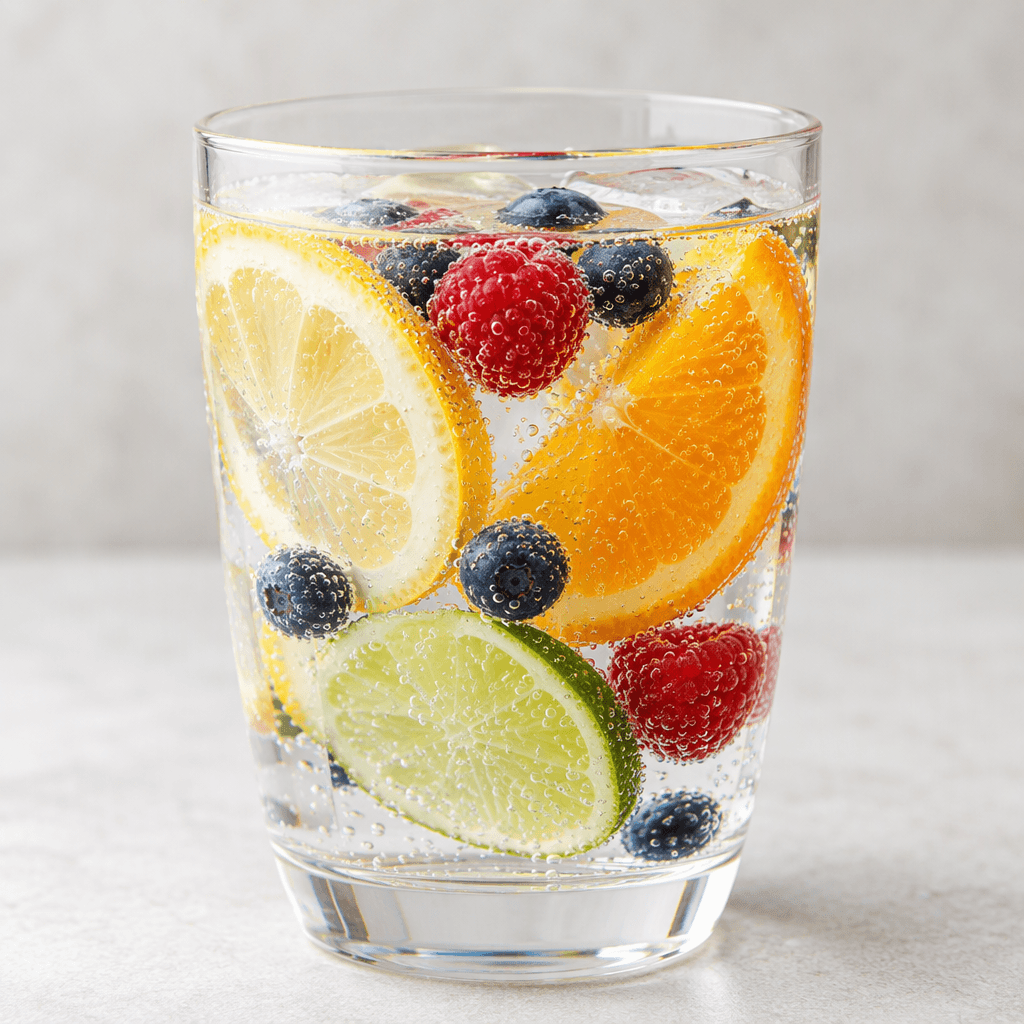
Fruit Mineral Water Calories
Fruit-flavored, mineral-rich, low-calorie beverage
In season: Summer · Spring
CALORIES
GI
POTASSIUM
FIBER
Quick answer
1 bottle (medium) of Fruit Mineral Water (200 g) has 36 calories. That works out to 18 calories per 100 g. It contains 9 g of carbs, 0 g of protein, 0 g of fat and 0 g of fiber. Its 80 mg of Calcium covers 8% of the Daily Value. Its glycemic index is 65 (medium), so it raises blood sugar at a moderate pace.
What is Fruit Mineral Water?
Fruit Mineral Water is bottled sparkling mineral water with fruit flavour, commonly sold in Turkey in options such as lemon, apple or mixed fruit. It is usually served chilled. The fine bubbles and lightly sweet, fruity taste make it an easy accompaniment to a meal, or a refreshing alternative to a fizzy soft drink. In Turkey, you may also see it served with citrus slices or berries, though these are serving additions rather than necessary ingredients.
This version has 18 calories and 4.5 g of carbohydrate per 100 g, so it is a relatively light, fruit-flavoured choice. Sugar content can vary by brand, so check the label if you are comparing bottles. It pairs well with savoury or spicy food, and a squeeze of fresh lemon can brighten the flavour.
Fruit Mineral Water Nutrition Facts
Selected: 100 g
18
KCAL / 100G
Carbs
4.5g
· 2% DV
Protein
0g
· 0% DV
Fat
0g
· 0% DV
Fiber
0g
· 0% DV
DV is the share of the daily value covered, on a 2,000 kcal reference diet.
Calories come from: Carbs 100% · Protein 0% · Fat 0%
Fruit Mineral Water Vitamins & Minerals
Vitamins
Vitamin C
1.2mg · 1% DV
Vitamin A
0µg · 0% DV
B1
0mg · 0% DV
B2
0mg · 0% DV
Minerals
Calcium
40mg · 4% DV
Magnesium
8mg · 2% DV
Sodium
12mg · 1% DV
Potassium ⭐
5mg · 0% DV
How Nutritious Is Fruit Mineral Water?
Nutrient density
Low
How many vitamins, minerals and how much fiber this food carries per calorie. A high score means a lot of nutrition for few calories.
Satiety score
Medium
An EatBetter score computed from fiber, protein and calorie density. A high score means staying full longer on the same calories.
Both scores are calculated per 100 g and do not change with the selected portion. The satiety score is EatBetter's own calculation, not a clinical measure.
Fruit Mineral Water Glycemic Index
GLYCEMIC INDEX
GLYCEMIC LOAD
Accounts for portion size — a more realistic measure than GI alone.
How to Burn Off Fruit Mineral Water
To burn the 18 calories in 100 g:
🚶
Walking (5 km/h)
🏃
Running (8 km/h)
🚴
Cycling
🏊
Swimming
Times are calculated with the MET equation for a 70 kg adult. Actual burn varies with your weight, age and pace.
Is Fruit Mineral Water Processed?
NOVA 3
Processed
1. Unprocessed
2. Minimally Processed
3. Processed
4. Ultra-Processed
NOVA classifies foods into 4 groups by industrial processing. NOVA 1 (unprocessed) is the healthiest.
Does Fruit Mineral Water Contain Allergens?
No known major allergens
Which Diets Is Fruit Mineral Water Good For?
Vegan
✓ Suitable
Vegetarian
✓ Suitable
Gluten-Free
✓ Suitable
Dairy-Free
— Not suitable
Mediterranean
✓ Suitable
Paleo
✓ Suitable
Whole30
— Not suitable
DASH
— Not suitable
Keto
— Not suitable
Low FODMAP
— Not suitable
Fruit Mineral Water Fat Profile
SATURATED
0g
MONOUNSATURATED
0g
POLYUNSATURATED
0g
Compare Fruit Mineral Water
Foods Similar to Fruit Mineral Water
Frequently Asked Questions About Fruit Mineral Water
Is fruit mineral water good for you?
Fruit mineral water can be a lighter alternative to sugary soft drinks, especially when it has no added sugar. Flavoured versions differ, so sweetness and ingredients matter more than the fruit name on the front.
Does fruit mineral water have sugar?
Some fruit mineral waters contain added sugar, while others use flavouring or sweeteners instead. Adding fruit juice or syrup at home also adds sugar, so a drink with fruit slices is not the same as one made with juice.
How do you make fruit mineral water at home?
Add slices of citrus or berries to a glass, then pour in chilled plain mineral water just before serving. Lightly pressing the fruit releases more aroma; adding juice or syrup makes the drink sweeter.
What is the difference between fruit mineral water and sparkling water?
Fruit mineral water is mineral water with fruit flavour or fruit added, while sparkling water describes water with carbonation. Plain sparkling water may not contain the naturally occurring minerals found in mineral water.
Can fruit mineral water help with weight loss?
Fruit mineral water may help replace higher-calorie fizzy drinks, but it does not cause weight loss by itself. Choose an unsweetened version; added sugar can make it less useful as a lower-calorie swap.
Does fruit mineral water hydrate you as well as regular water?
Yes, fruit mineral water contributes to hydration much like still water. Its bubbles do not cancel out its fluid content, though a sweetened version is better treated as a flavoured drink rather than your main source of water.
Can fruit mineral water cause bloating?
Yes, carbonation can cause burping or a bloated feeling, particularly if you drink fruit mineral water quickly or have a large serving. Sip it slowly, or choose still water if bubbles tend to bother you.
Is fruit mineral water bad for your teeth?
Fruit mineral water can be more concerning for teeth when it is acidic or sweetened, since frequent exposure can contribute to enamel wear or decay. Have it with a meal rather than sipping it throughout the day.
Can you use frozen fruit in fruit mineral water?
Yes, frozen berries work well in fruit mineral water and can chill it without ice. They release more colour and flavour as they thaw, so add them shortly before serving if you want the drink to stay clear.
Is fruit mineral water the same as fruit-infused water?
No; fruit-infused water usually means still water steeped with fresh fruit, while fruit mineral water is sparkling and mineral-rich. You can make a homemade version by adding fruit slices to mineral water just before drinking.
Have another question about Fruit Mineral Water?
Ask the AI nutrition coach — calories, portions, alternatives and more, answered in seconds in the app.

Scan calories with your camera
Instant AI nutrition analysis

Nutrition data compiled from USDA FoodData Central and scientific sources.