

Ready & Packaged Foods
All →Vegetables & Legumes
All →Desserts & Confectionery
All →Meat & Protein
All →Grains & Bakery
All →Beverages
All →Milk & Dairy
All →

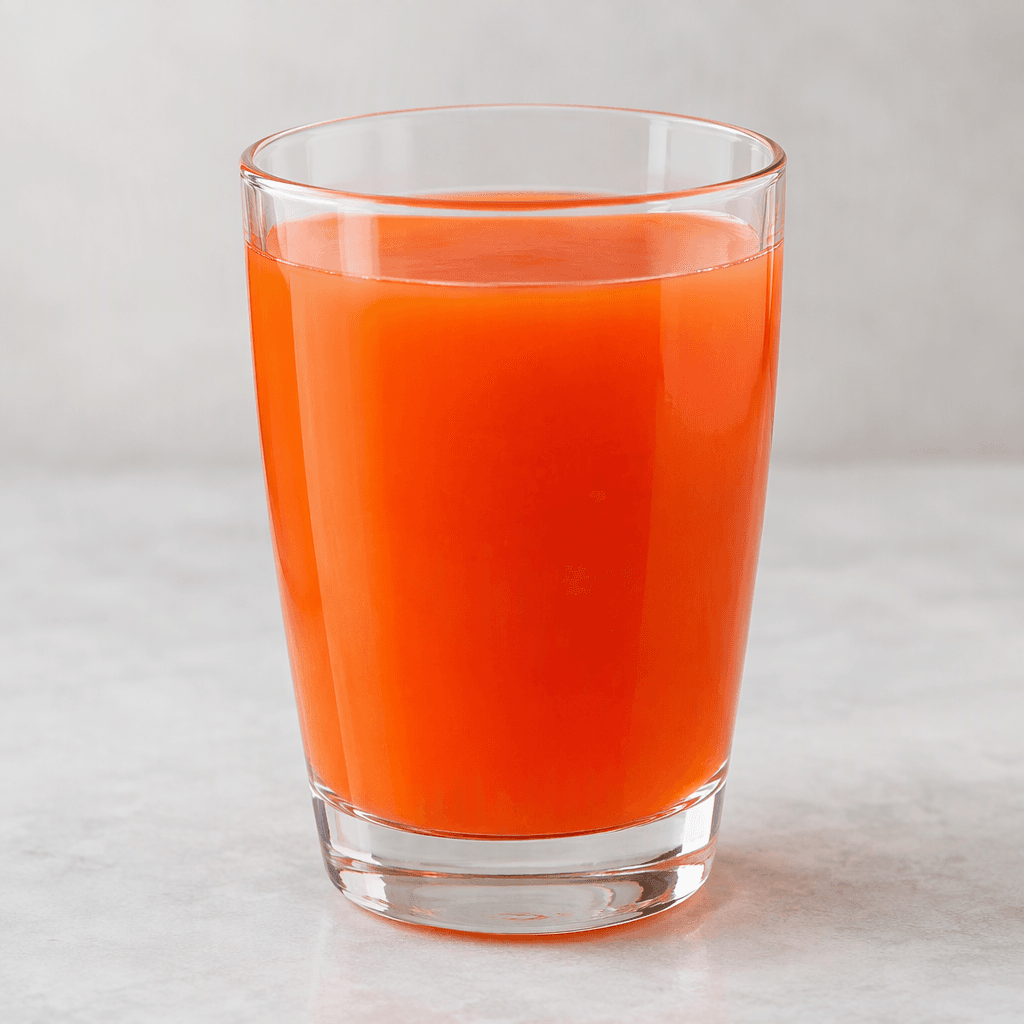
Fruit Drink Calories
Sweetened, fruit-flavored beverage
In season: Spring · Summer · Autumn · Winter
CALORIES
GI
POTASSIUM
FIBER
Quick answer
1 cup (medium) of Fruit Drink (200 g) has 90 calories. That works out to 45 calories per 100 g. It contains 22 g of carbs, 0.2 g of protein, 0 g of fat and 0.4 g of fiber. Its 8 mg of Vitamin C covers 9% of the Daily Value. Its glycemic index is 55 (medium), so it raises blood sugar at a moderate pace.
What is Fruit Drink?
Fruit drink is a sweetened, usually water-based beverage flavoured with fruit or made with some fruit ingredients. Its fruit-juice content can vary, so it is not necessarily the same as fruit juice. Smooth and often brightly coloured, it is commonly served chilled as a refreshing drink alongside a meal or snack. In many places, people also pour it for informal gatherings or choose it when they want a fruity alternative to plain water or fizzy drinks. Its nutrition comes mainly from carbohydrates, with little fibre; it provides 11 g of carbohydrates per 100 g. Serve it cold, or dilute it with water if you prefer a less sweet taste.
Fruit Drink Nutrition Facts
Selected: 100 g
45
KCAL / 100G
Carbs
11g
· 4% DV
Protein
0.1g
· 0% DV
Fat
0g
· 0% DV
Fiber
0.2g
· 1% DV
DV is the share of the daily value covered, on a 2,000 kcal reference diet.
Calories come from: Carbs 99% · Protein 1% · Fat 0%
Fruit Drink Vitamins & Minerals
Vitamins
Vitamin C
4mg · 4% DV
B1
0.01mg · 1% DV
B2
0.01mg · 1% DV
B6
0.01mg · 1% DV
Minerals
Calcium
6mg · 1% DV
Potassium ⭐
25mg · 1% DV
Iron
0mg · 0% DV
Magnesium
2mg · 0% DV
How Nutritious Is Fruit Drink?
Nutrient density
Low
How many vitamins, minerals and how much fiber this food carries per calorie. A high score means a lot of nutrition for few calories.
Satiety score
Medium
An EatBetter score computed from fiber, protein and calorie density. A high score means staying full longer on the same calories.
Both scores are calculated per 100 g and do not change with the selected portion. The satiety score is EatBetter's own calculation, not a clinical measure.
Fruit Drink Glycemic Index
GLYCEMIC INDEX
GLYCEMIC LOAD
Accounts for portion size — a more realistic measure than GI alone.
How to Burn Off Fruit Drink
To burn the 45 calories in 100 g:
🚶
Walking (5 km/h)
🏃
Running (8 km/h)
🚴
Cycling
🏊
Swimming
Times are calculated with the MET equation for a 70 kg adult. Actual burn varies with your weight, age and pace.
Is Fruit Drink Processed?
NOVA 3
Processed
1. Unprocessed
2. Minimally Processed
3. Processed
4. Ultra-Processed
NOVA classifies foods into 4 groups by industrial processing. NOVA 1 (unprocessed) is the healthiest.
Does Fruit Drink Contain Allergens?
No known major allergens
Which Diets Is Fruit Drink Good For?
Vegan
✓ Suitable
Vegetarian
✓ Suitable
Gluten-Free
✓ Suitable
Dairy-Free
— Not suitable
Mediterranean
✓ Suitable
Paleo
— Not suitable
Whole30
— Not suitable
DASH
— Not suitable
Keto
— Not suitable
Low FODMAP
— Not suitable
Fruit Drink Fat Profile
SATURATED
0g
MONOUNSATURATED
0g
POLYUNSATURATED
0g
Compare Fruit Drink
Foods Similar to Fruit Drink
Frequently Asked Questions About Fruit Drink
Is fruit drink the same as fruit juice?
No, fruit drink is not the same as fruit juice. Juice is made from fruit, while a fruit drink may contain added sweeteners and flavouring; its actual fruit content varies by product.
Is fruit drink healthy?
Fruit drink can be enjoyed occasionally, but it is a sweetened beverage rather than a substitute for whole fruit or water. Whole fruit provides fibre, while water is a better everyday choice for hydration.
Does fruit drink contain real fruit?
Some fruit drinks contain fruit juice or purée, while others rely mainly on fruit flavouring. The amount of real fruit varies, so the name “fruit drink” alone does not tell you how much fruit it contains.
How much sugar is in fruit drink?
Fruit drink is sweetened, but the amount of sugar varies between products and serving sizes. Use the package’s sugar figure for the specific drink rather than assuming all fruit drinks contain the same amount.
Does fruit drink count as a serving of fruit?
No, fruit drink does not count as a serving of whole fruit. It is sweetened and typically provides far less fibre than eating fruit, so choose whole fruit when you want a fruit serving.
Can you dilute fruit drink with water?
Yes, you can dilute fruit drink with water to make it less sweet-tasting. The drink will still contain the same total sugar if you drink the entire mixture, but each sip will have a milder flavour.
Can you freeze fruit drink?
Yes, fruit drink can be frozen in a freezer-safe container, leaving room for expansion. Thaw it in the refrigerator and stir or shake it before serving, since the texture or colour may separate slightly.
Should fruit drink be refrigerated after opening?
Yes, refrigerate fruit drink after opening and keep the cap or container closed. Follow the package’s instructions for how soon to finish it, and discard it if its smell or appearance changes.
Can fruit drink affect your teeth?
Yes, frequent sipping of sweetened fruit drink can expose teeth to sugar and increase the risk of tooth decay. Having it with a meal rather than sipping it over a long period limits repeated exposure.
Can fruit drink replace water for hydration?
No, fruit drink should not replace water as your regular source of hydration. It supplies fluid, but it is sweetened; choose water when you are thirsty and keep fruit drink as an occasional beverage.
Have another question about Fruit Drink?
Ask the AI nutrition coach — calories, portions, alternatives and more, answered in seconds in the app.

Scan calories with your camera
Instant AI nutrition analysis

Nutrition data compiled from USDA FoodData Central and scientific sources.