

Ready & Packaged Foods
All →Vegetables & Legumes
All →Desserts & Confectionery
All →Meat & Protein
All →Grains & Bakery
All →Beverages
All →Milk & Dairy
All →

Fresh Garlic Calories
Antioxidant, immune booster, low calorie
In season: Spring · Summer · Autumn · Winter
CALORIES
GI
POTASSIUM
FIBER
Quick answer
1 piece (medium) of Fresh Garlic (5 g) has 7 calories. That works out to 149 calories per 100 g. It contains 1.7 g of carbs, 0.3 g of protein, 0 g of fat and 0.1 g of fiber. Its glycemic index is 30 (low), so it raises blood sugar slowly.
What is Fresh Garlic?
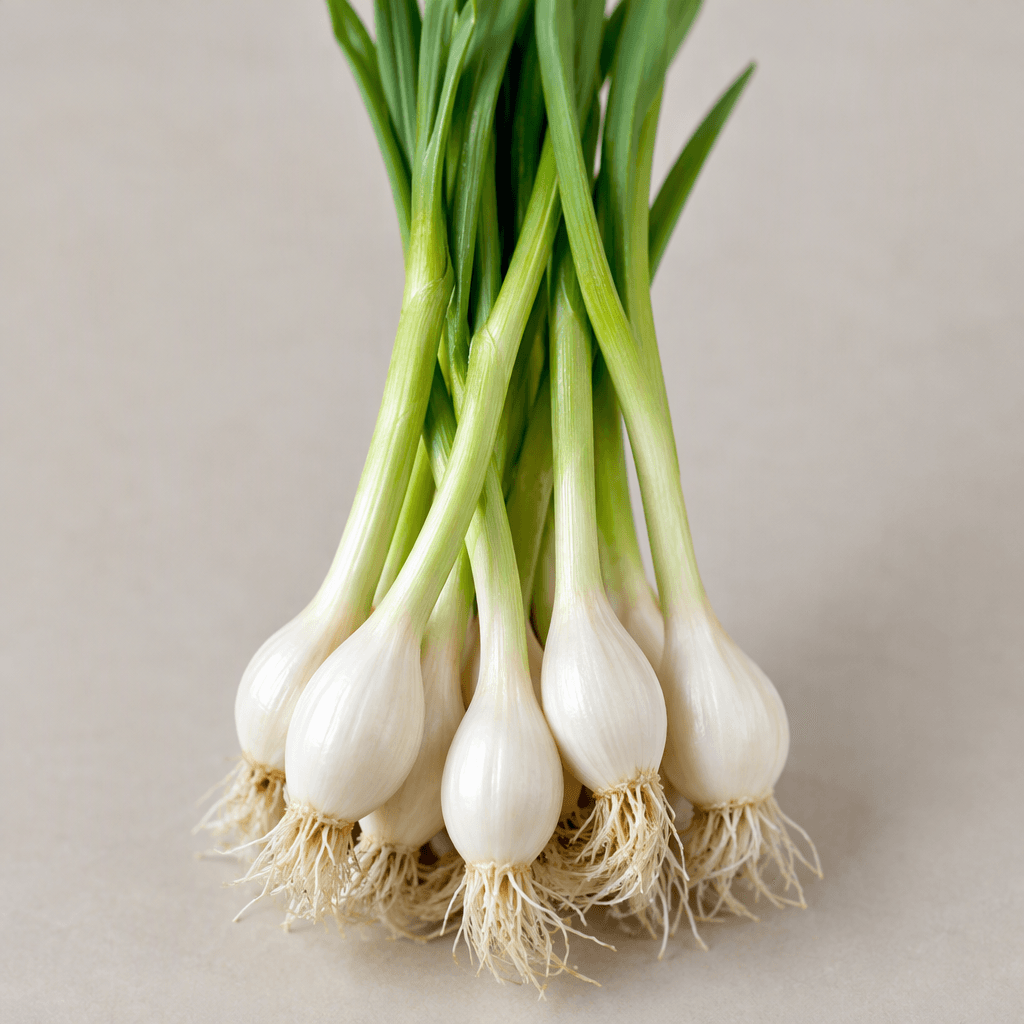
Fresh Garlic is young garlic harvested before its bulb fully matures, with a small white bulb, tender green shoots and roots. Both the white and green parts can be eaten. Its flavour is usually milder and its texture juicier than that of dried garlic, so it works well raw as well as cooked.
Across its growing regions, it is chopped into salads, eggs, soups and vegetable dishes, or cooked whole by sautéing or roasting. English-speaking cooks can use it much like spring onions, while enjoying a gentler garlic note; it also pairs well with olive oil, lemon and herbs. Fresh Garlic is low in fat and provides fibre, with carbohydrates contributing most of its energy. Use the green tops too, and add it near the end of cooking when you want its fresh flavour to remain noticeable.
Fresh Garlic Nutrition Facts
Selected: 100 g
149
KCAL / 100G
Carbs
33.1g
· 12% DV
Protein
6.4g
· 13% DV
Fat
0.5g
· 1% DV
Fiber
2.1g
· 8% DV
DV is the share of the daily value covered, on a 2,000 kcal reference diet.
Calories come from: Carbs 81% · Protein 16% · Fat 3%
Fresh Garlic Vitamins & Minerals
Vitamins
B6
1.2mg · 71% DV
Vitamin C
31.2mg · 35% DV
B1
0.2mg · 17% DV
B5
0.6mg · 12% DV
Minerals
Manganese
2mg · 87% DV
Selenium
14.2µg · 26% DV
Phosphorus
153mg · 22% DV
Calcium
181mg · 18% DV
How Nutritious Is Fresh Garlic?
Nutrient density
Very high
How many vitamins, minerals and how much fiber this food carries per calorie. A high score means a lot of nutrition for few calories.
Satiety score
Medium
An EatBetter score computed from fiber, protein and calorie density. A high score means staying full longer on the same calories.
Both scores are calculated per 100 g and do not change with the selected portion. The satiety score is EatBetter's own calculation, not a clinical measure.
Fresh Garlic Glycemic Index
GLYCEMIC INDEX
GLYCEMIC LOAD
Accounts for portion size — a more realistic measure than GI alone.
How to Burn Off Fresh Garlic
To burn the 149 calories in 100 g:
🚶
Walking (5 km/h)
🏃
Running (8 km/h)
🚴
Cycling
🏊
Swimming
Times are calculated with the MET equation for a 70 kg adult. Actual burn varies with your weight, age and pace.
Is Fresh Garlic Processed?
NOVA 1
Unprocessed
1. Unprocessed
2. Minimally Processed
3. Processed
4. Ultra-Processed
NOVA classifies foods into 4 groups by industrial processing. NOVA 1 (unprocessed) is the healthiest.
Does Fresh Garlic Contain Allergens?
No known major allergens
Which Diets Is Fresh Garlic Good For?
Vegan
✓ Suitable
Vegetarian
✓ Suitable
Gluten-Free
✓ Suitable
Dairy-Free
— Not suitable
Mediterranean
✓ Suitable
Paleo
✓ Suitable
Whole30
— Not suitable
DASH
— Not suitable
Keto
✓ Suitable
Low FODMAP
— Not suitable
Fresh Garlic Fat Profile
SATURATED
0.09g
MONOUNSATURATED
0.01g
POLYUNSATURATED
0.13g
Omega 6:3 ratio 4.5:1
Above the ideal 4:1 (4.5:1).
Compare Fresh Garlic
Foods Similar to Fresh Garlic
Frequently Asked Questions About Fresh Garlic
Is Fresh Garlic the same as green garlic?
Usually, yes: Fresh Garlic commonly refers to young garlic harvested before its bulb and stalks dry, also called green garlic. Names can vary by seller, so look for an undeveloped bulb with tender green leaves rather than a mature, papery head.
How do you use Fresh Garlic?
Use Fresh Garlic much like a mild allium: slice the bulb into sautés, soups, egg dishes, or sauces, and chop the tender stalks into salads or dressings. Its milder flavor works well in spring dishes where mature garlic might dominate.
Can you eat the green parts of Fresh Garlic?
Yes, the tender green leaves of Fresh Garlic are edible. Slice them into soups, omelets, salads, or stir-fries, and trim away any yellowed or tough ends. They have a mild garlic flavor and can be used much like scallion greens.
How should you store Fresh Garlic?
Store Fresh Garlic in the refrigerator in a breathable bag or container, keeping excess moisture away with a paper towel. Its green leaves wilt faster than a dry garlic bulb, so use it promptly while the stalks are still crisp.
Can you freeze Fresh Garlic?
Yes, Fresh Garlic can be frozen. Wash and dry the bulb and leaves thoroughly, chop them, and seal them in a freezer-safe container. Freezing softens the texture, so use thawed garlic in cooked dishes rather than expecting crisp leaves for salads.
How do you clean Fresh Garlic?
Trim the roots and remove any loose or dirty outer layers, then rinse the bulb and stalks under running water. Check where the leaves meet the bulb, since soil can collect in those folds, and dry the garlic before storing or chopping it.
Can you eat Fresh Garlic raw?
Yes, Fresh Garlic can be eaten raw, finely sliced into salads, dips, or dressings. Its flavor is generally gentler than mature garlic but can still taste sharp; start with a small amount if raw garlic tends to upset your stomach.
Can Fresh Garlic replace regular garlic in recipes?
Yes, Fresh Garlic can replace mature garlic, but its flavor is usually milder and its green stalks add a fresh, leafy note. Add it to taste rather than relying on a fixed conversion, and include the chopped leaves when they suit the dish.
When is Fresh Garlic in season?
Fresh Garlic is most commonly available in spring, when young garlic is harvested with its green stalks still attached. Availability varies by growing region, and farmers’ markets and produce shops are good places to look for locally grown bunches.
Does Fresh Garlic boost your immune system?
Fresh Garlic can be part of a varied diet, but it has not been shown to reliably boost immunity or prevent illness on its own. Enjoy it as a vegetable and seasoning rather than treating it as a substitute for medical care.
Have another question about Fresh Garlic?
Ask the AI nutrition coach — calories, portions, alternatives and more, answered in seconds in the app.

Scan calories with your camera
Instant AI nutrition analysis

Nutrition data compiled from USDA FoodData Central and scientific sources.