

Ready & Packaged Foods
All →Vegetables & Legumes
All →Desserts & Confectionery
All →Meat & Protein
All →Grains & Bakery
All →Beverages
All →Milk & Dairy
All →

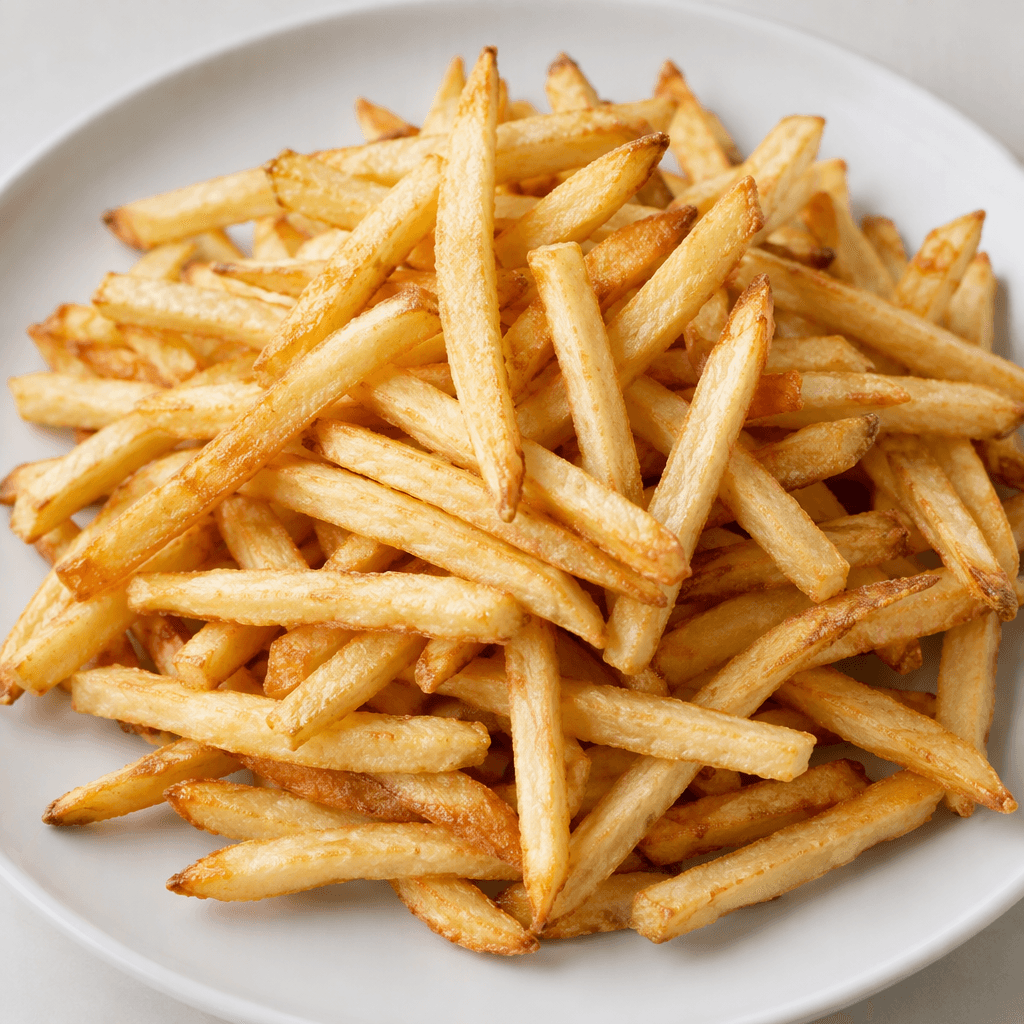
French fries (fat-free) Calories
Fat-free, low fat, French fries
In season: Spring · Summer · Autumn · Winter
CALORIES
GI
POTASSIUM
FIBER
Quick answer
100 g of French fries (fat-free) has 130 calories. It contains 29 g of carbs, 2.5 g of protein, 0.3 g of fat and 2.5 g of fiber. Its 0.2 mg of B6 covers 11% of the Daily Value. Its glycemic index is 75 (high), so it raises blood sugar quickly.
What is French fries (fat-free)?
Fat-free French fries are potato sticks cooked without added oil, commonly baked in an oven or made in an air fryer. They can be less rich than deep-fried fries, with lightly crisp edges and a soft centre when cooked well. Season them simply with salt, pepper or spices, or serve with a dip.
They are familiar alongside burgers and sandwiches, but also work as a side for grilled vegetables, eggs or a main meal. Most of their energy comes from carbohydrates: a 100 g portion contains 29 g. Skipping added oil keeps the fat content low, though the potatoes are still a starchy choice. For a more rounded plate, pair them with vegetables and a protein-rich food.
French fries (fat-free) Nutrition Facts
Selected: 100 g
130
KCAL / 100G
Carbs
29g
· 11% DV
Protein
2.5g
· 5% DV
Fat
0.3g
· 0% DV
Fiber
2.5g
· 9% DV
DV is the share of the daily value covered, on a 2,000 kcal reference diet.
Calories come from: Carbs 90% · Protein 8% · Fat 2%
French fries (fat-free) Vitamins & Minerals
Vitamins
B6
0.18mg · 11% DV
Vitamin C
8mg · 9% DV
B1
0.09mg · 8% DV
B3
1.2mg · 8% DV
Minerals
Potassium ⭐
370mg · 11% DV
Phosphorus
45mg · 6% DV
Magnesium
22mg · 5% DV
Calcium
10mg · 1% DV
How Nutritious Is French fries (fat-free)?
Nutrient density
Medium
How many vitamins, minerals and how much fiber this food carries per calorie. A high score means a lot of nutrition for few calories.
Satiety score
Medium
An EatBetter score computed from fiber, protein and calorie density. A high score means staying full longer on the same calories.
Both scores are calculated per 100 g and do not change with the selected portion. The satiety score is EatBetter's own calculation, not a clinical measure.
French fries (fat-free) Glycemic Index
GLYCEMIC INDEX
GLYCEMIC LOAD
Accounts for portion size — a more realistic measure than GI alone.
How to Burn Off French fries (fat-free)
To burn the 130 calories in 100 g:
🚶
Walking (5 km/h)
🏃
Running (8 km/h)
🚴
Cycling
🏊
Swimming
Times are calculated with the MET equation for a 70 kg adult. Actual burn varies with your weight, age and pace.
Is French fries (fat-free) Processed?
NOVA 3
Processed
1. Unprocessed
2. Minimally Processed
3. Processed
4. Ultra-Processed
NOVA classifies foods into 4 groups by industrial processing. NOVA 1 (unprocessed) is the healthiest.
Does French fries (fat-free) Contain Allergens?
No known major allergens
Which Diets Is French fries (fat-free) Good For?
Vegan
✓ Suitable
Vegetarian
✓ Suitable
Gluten-Free
✓ Suitable
Dairy-Free
— Not suitable
Mediterranean
✓ Suitable
Paleo
— Not suitable
Whole30
— Not suitable
DASH
— Not suitable
Keto
— Not suitable
Low FODMAP
— Not suitable
French fries (fat-free) Fat Profile
SATURATED
0.07g
MONOUNSATURATED
0.03g
POLYUNSATURATED
0.03g
Omega 6:3 ratio 2:1
Below the ideal 4:1 — a good omega balance.
Compare French fries (fat-free)
Foods Similar to French fries (fat-free)
Frequently Asked Questions About French fries (fat-free)
How do you make fat-free French fries crispy in the oven?
To make fat-free French fries crisp in the oven, rinse cut potatoes to remove some surface starch, then dry them thoroughly. Spread them in a single layer on a preheated tray; crowded or damp fries tend to steam instead of brown.
Can you cook fat-free French fries in an air fryer?
Yes, an air fryer cooks fat-free French fries using circulating hot air, without needing added oil. Arrange the fries in a single layer or a loose layer, and shake the basket during cooking so they brown more evenly.
Why do fat-free French fries turn out soggy?
Fat-free French fries often turn soggy when the cut potatoes are wet, packed too closely, or cooked at too low a temperature. Dry the potatoes well and leave space between them so moisture can escape as they cook.
Which potatoes are best for fat-free French fries?
Starchy, relatively dry potatoes usually make the best fat-free French fries because they develop a fluffy centre and brown more readily. Waxy potatoes contain more moisture and can turn soft rather than crisp, especially when baked without oil.
Should you soak potatoes before making fat-free French fries?
Soaking cut potatoes can rinse away some surface starch and help fat-free French fries crisp up. Drain them and dry them completely before cooking; leftover water can make the fries steam and soften.
Can you cook frozen fat-free French fries without adding oil?
Yes, frozen fat-free French fries can usually be cooked straight from frozen in an oven or air fryer without extra oil. Follow the package directions, and avoid piling them up so hot air can reach the pieces evenly.
How do you stop fat-free French fries from sticking to the baking tray?
To keep fat-free French fries from sticking, use parchment paper or a good nonstick tray and arrange the fries in one layer. Turn them only after the undersides have browned; moving them too early can tear their surfaces.
How should you store leftover fat-free French fries?
Refrigerate leftover fat-free French fries in a covered container once they have cooled, rather than leaving them out for hours. Reheat them in an oven or air fryer for a firmer texture; refrigeration will not keep them crisp.
Are fat-free French fries healthier than regular French fries?
Fat-free French fries contain much less added fat than fries cooked by deep-frying, but they are still a starchy potato dish. This product is classified as processed; making fries from fresh potatoes at home gives you more control over the preparation.
Do fat-free French fries raise blood sugar?
Yes, the starch in fat-free French fries can raise blood sugar, even though the fries contain almost no fat. A smaller portion alongside vegetables and a protein-rich food can make a meal more balanced; people managing diabetes should follow their clinician’s advice.
Have another question about French fries (fat-free)?
Ask the AI nutrition coach — calories, portions, alternatives and more, answered in seconds in the app.

Scan calories with your camera
Instant AI nutrition analysis

Nutrition data compiled from USDA FoodData Central and scientific sources.