

Ready & Packaged Foods
All →Vegetables & Legumes
All →Desserts & Confectionery
All →Meat & Protein
All →Grains & Bakery
All →Beverages
All →Milk & Dairy
All →

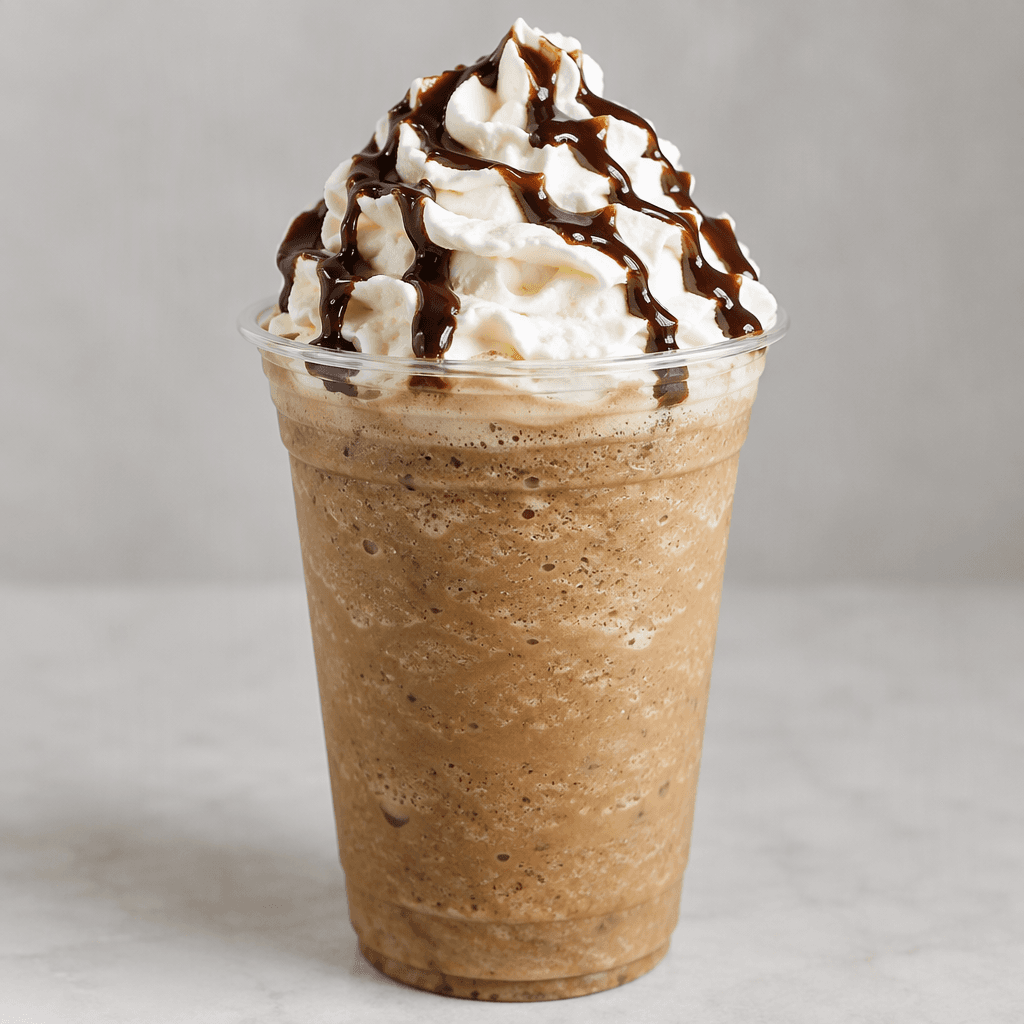
Frappuccino Calories
Sweetened milk-based blended iced coffee drink
In season: Spring · Summer · Autumn · Winter
CALORIES
GI
POTASSIUM
FIBER
Quick answer
1 cup (medium) of Frappuccino (350 g) has 235 calories. That works out to 67 calories per 100 g. It contains 39.2 g of carbs, 6.3 g of protein, 6 g of fat and 0.7 g of fiber. Its 0.8 µg of B12 covers 32% of the Daily Value. Its glycemic index is 48 (medium), so it raises blood sugar at a moderate pace.
What is Frappuccino?
A Frappuccino is a cold, blended coffee drink made with ice, milk and sweetener. The name is closely associated with Starbucks, where the drink became popular; recipes vary, with some versions leaning more on coffee and others tasting closer to a sweet milkshake.
Its smooth, frothy texture and sweet coffee flavour make it a common café order, especially in warm weather. In the US and elsewhere, it is often served in a takeaway cup, sometimes topped with whipped cream, and enjoyed as a treat or an afternoon pick-me-up. Nutritionally, it is a sweetened milk-based drink rather than a substantial source of protein or fibre. For a less rich option, ask for fewer pumps of syrup, skip the topping, or choose a smaller size.
Frappuccino Nutrition Facts
Selected: 100 g
67
KCAL / 100G
Carbs
11.2g
· 4% DV
Protein
1.8g
· 4% DV
Fat
1.7g
· 2% DV
Fiber
0.2g
· 1% DV
DV is the share of the daily value covered, on a 2,000 kcal reference diet.
Calories come from: Carbs 67% · Protein 11% · Fat 22%
Frappuccino Vitamins & Minerals
Vitamins
B12
0.22µg · 9% DV
B2
0.09mg · 7% DV
B5
0.28mg · 6% DV
Biotin
1.2µg · 4% DV
Minerals
Phosphorus
52mg · 7% DV
Calcium
64mg · 6% DV
Iodine
6µg · 4% DV
Magnesium
11mg · 3% DV
How Nutritious Is Frappuccino?
Nutrient density
Low
How many vitamins, minerals and how much fiber this food carries per calorie. A high score means a lot of nutrition for few calories.
Satiety score
Medium
An EatBetter score computed from fiber, protein and calorie density. A high score means staying full longer on the same calories.
Both scores are calculated per 100 g and do not change with the selected portion. The satiety score is EatBetter's own calculation, not a clinical measure.
Frappuccino Glycemic Index
GLYCEMIC INDEX
GLYCEMIC LOAD
Accounts for portion size — a more realistic measure than GI alone.
How to Burn Off Frappuccino
To burn the 67 calories in 100 g:
🚶
Walking (5 km/h)
🏃
Running (8 km/h)
🚴
Cycling
🏊
Swimming
Times are calculated with the MET equation for a 70 kg adult. Actual burn varies with your weight, age and pace.
Is Frappuccino Processed?
NOVA 3
Processed
1. Unprocessed
2. Minimally Processed
3. Processed
4. Ultra-Processed
NOVA classifies foods into 4 groups by industrial processing. NOVA 1 (unprocessed) is the healthiest.
Does Frappuccino Contain Allergens?
Contains these allergens:
Which Diets Is Frappuccino Good For?
Vegan
— Not suitable
Vegetarian
✓ Suitable
Gluten-Free
✓ Suitable
Dairy-Free
— Not suitable
Mediterranean
— Not suitable
Paleo
— Not suitable
Whole30
— Not suitable
DASH
— Not suitable
Keto
— Not suitable
Low FODMAP
— Not suitable
Frappuccino Fat Profile
SATURATED
1.05g
MONOUNSATURATED
0.45g
POLYUNSATURATED
0.11g
Omega 6:3 ratio 2.7:1
Below the ideal 4:1 — a good omega balance.
Compare Frappuccino
Foods Similar to Frappuccino
Frequently Asked Questions About Frappuccino
What is a Frappuccino made of?
A Frappuccino is a blended iced drink, usually made with ice and a sweetened base. Coffee versions may include coffee, milk and syrups, while crème versions are made without coffee; whipped cream may be added.
Does every Frappuccino contain coffee?
No, not every Frappuccino contains coffee. Coffee-based varieties do, but crème-based varieties are made without it. If you want to avoid caffeine, ask which base is used rather than relying on the drink's flavor.
What is the difference between a Frappuccino and a frappe?
A Frappuccino is a blended iced drink sold in coffee-based and crème-based varieties. A frappe is a separate style of cold coffee drink, often made by shaking or blending coffee with ice; recipes and naming vary by country.
How much caffeine is in a Frappuccino?
The caffeine in a Frappuccino varies by recipe, size and whether it is coffee-based. Crème-based varieties generally contain no coffee, while coffee versions do; check the current menu for the exact drink you plan to order.
How can I order a Frappuccino with less sugar?
You can ask for less syrup and skip the whipped cream when ordering a Frappuccino. Some locations offer other ways to customize it, but bottled Frappuccinos cannot be adjusted, so compare their ingredient labels if choosing one.
Can you make a Frappuccino at home?
Yes, you can make a Frappuccino-style drink at home by blending chilled coffee, milk, ice and a sweetener. Adjust the ice to get the thickness you want, and leave out the coffee for a crème-style version.
Can you get a decaf Frappuccino?
Yes, some coffee-based Frappuccinos can be made with decaffeinated coffee, depending on the store and recipe. Crème-based varieties do not need coffee, but ask about the ingredients because toppings or add-ins can vary.
Is a bottled Frappuccino the same as a blended Frappuccino?
No, a bottled Frappuccino is not the same as a freshly blended one. The bottled version is ready to drink and does not have the same ice-blended texture; the ingredients and serving style can also differ.
Can you keep a Frappuccino in the fridge?
You can refrigerate leftover Frappuccino briefly, but it is best enjoyed freshly blended. As the ice melts, the drink becomes watery and may separate; shaking or stirring can mix it again, but will not restore its original texture.
Can a Frappuccino keep you awake at night?
Yes, a coffee-based Frappuccino can make it harder to fall asleep because it contains caffeine. If you are sensitive to caffeine or drinking it near bedtime, choose a crème-based option or ask whether decaf is available.
Have another question about Frappuccino?
Ask the AI nutrition coach — calories, portions, alternatives and more, answered in seconds in the app.

Scan calories with your camera
Instant AI nutrition analysis

Nutrition data compiled from USDA FoodData Central and scientific sources.