

Ready & Packaged Foods
All →Vegetables & Legumes
All →Desserts & Confectionery
All →Meat & Protein
All →Grains & Bakery
All →Beverages
All →Milk & Dairy
All →

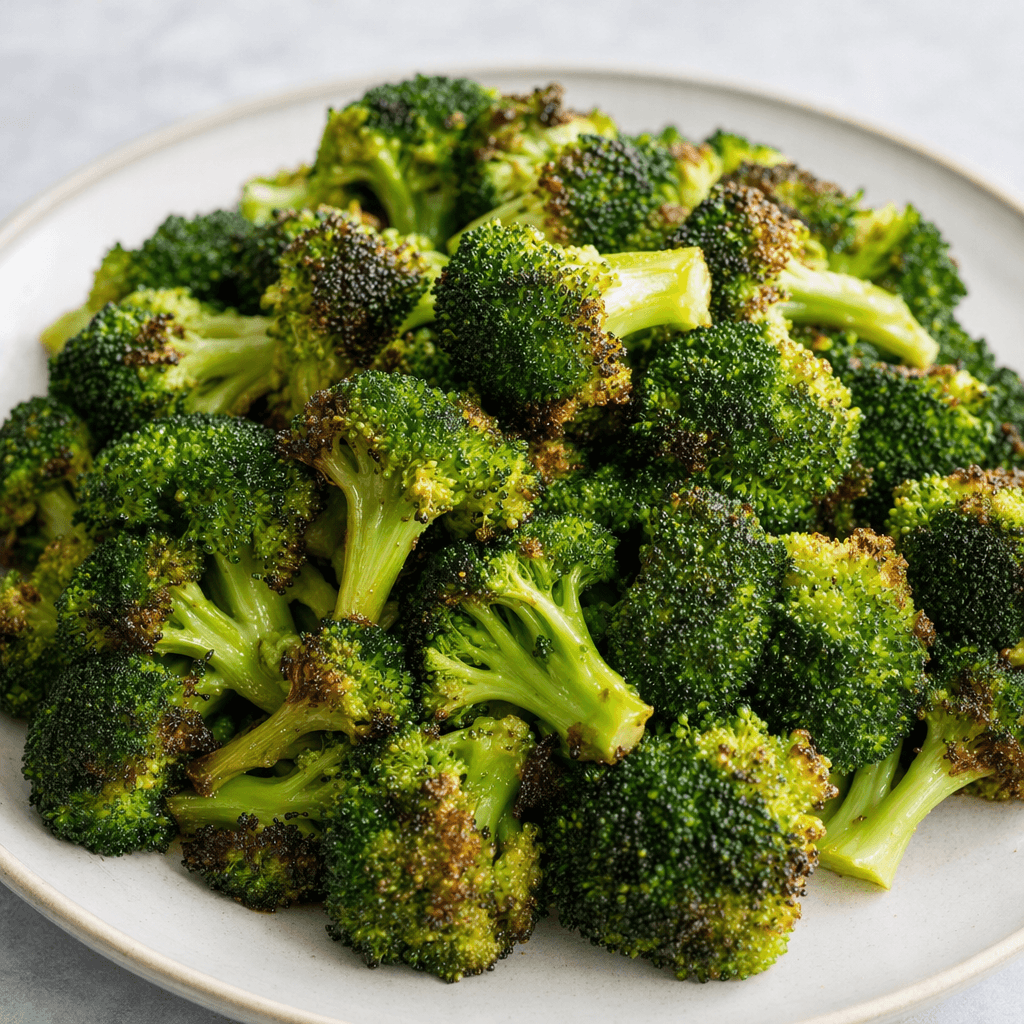
Roasted Broccoli Calories
Roasted broccoli is rich in fiber and vitamin C, low in calories, and high in antioxidants.
In season: Spring · Summer · Autumn · Winter
CALORIES
GI
POTASSIUM
FIBER
Quick answer
100 g of Roasted Broccoli has 44 calories. It contains 7.2 g of carbs, 3.2 g of protein, 0.7 g of fat and 3.3 g of fiber. Its 110 µg of Vitamin K covers 92% of the Daily Value. Its glycemic index is 15 (low), so it raises blood sugar slowly.
What is Roasted Broccoli?
Roasted broccoli is made by separating broccoli into florets and cooking them in the oven until tender, with lightly browned tips. A little oil and simple seasonings such as salt and pepper are common, though the florets can also be roasted plainly.
The contrast of soft centres and crisp edges makes it an easy side for weeknight meals, or a topping for salads and grain bowls. It is naturally low in calories and provides fibre and vitamin C; a 100 g serving has 3.3 g of fibre. Use oil sparingly for a lighter tray, and finish with lemon or garlic to bring out its savoury, slightly sweet flavour.
Roasted Broccoli Nutrition Facts
Selected: 100 g
44
KCAL / 100G
Carbs
7.2g
· 3% DV
Protein
3.2g
· 6% DV
Fat
0.7g
· 1% DV
Fiber
3.3g
· 12% DV
DV is the share of the daily value covered, on a 2,000 kcal reference diet.
Calories come from: Carbs 60% · Protein 27% · Fat 13%
Roasted Broccoli Vitamins & Minerals
Vitamins
Vitamin K
110µg · 92% DV
Vitamin C
80mg · 89% DV
Folate
55µg · 14% DV
B5
0.6mg · 12% DV
Minerals
Potassium ⭐
310mg · 9% DV
Phosphorus
55mg · 8% DV
Iron
1mg · 6% DV
Calcium
45mg · 5% DV
How Nutritious Is Roasted Broccoli?
Nutrient density
Very high
How many vitamins, minerals and how much fiber this food carries per calorie. A high score means a lot of nutrition for few calories.
Satiety score
Medium
An EatBetter score computed from fiber, protein and calorie density. A high score means staying full longer on the same calories.
Both scores are calculated per 100 g and do not change with the selected portion. The satiety score is EatBetter's own calculation, not a clinical measure.
Roasted Broccoli Glycemic Index
GLYCEMIC INDEX
GLYCEMIC LOAD
Accounts for portion size — a more realistic measure than GI alone.
How to Burn Off Roasted Broccoli
To burn the 44 calories in 100 g:
🚶
Walking (5 km/h)
🏃
Running (8 km/h)
🚴
Cycling
🏊
Swimming
Times are calculated with the MET equation for a 70 kg adult. Actual burn varies with your weight, age and pace.
Is Roasted Broccoli Processed?
NOVA 2
Minimally Processed
1. Unprocessed
2. Minimally Processed
3. Processed
4. Ultra-Processed
NOVA classifies foods into 4 groups by industrial processing. NOVA 1 (unprocessed) is the healthiest.
Does Roasted Broccoli Contain Allergens?
No known major allergens
Which Diets Is Roasted Broccoli Good For?
Vegan
✓ Suitable
Vegetarian
✓ Suitable
Gluten-Free
✓ Suitable
Dairy-Free
— Not suitable
Mediterranean
✓ Suitable
Paleo
✓ Suitable
Whole30
— Not suitable
DASH
— Not suitable
Keto
— Not suitable
Low FODMAP
— Not suitable
Roasted Broccoli Fat Profile
SATURATED
0.12g
MONOUNSATURATED
0.08g
POLYUNSATURATED
0.18g
Omega 6:3 ratio 1.5:1
Below the ideal 4:1 — a good omega balance.
Compare Roasted Broccoli
Foods Similar to Roasted Broccoli
Frequently Asked Questions About Roasted Broccoli
How do you make roasted broccoli?
To make roasted broccoli, cut it into florets, wash them, and dry them thoroughly. Toss with olive oil and your preferred seasonings, then roast on a preheated tray until the edges are browned. Spread the florets in a single layer for even cooking.
How do you make roasted broccoli crispy?
For crispy roasted broccoli, dry the florets well, preheat the oven, and leave space between pieces on the tray. Crowding traps steam and softens them. Placing the cut sides against the hot tray helps the edges brown.
Can you roast frozen broccoli?
Yes, you can roast frozen broccoli, but it often turns out softer than fresh because it releases moisture. Roast it straight from frozen, shake off loose ice, and spread the pieces out so they are not crowded.
Do you need to blanch broccoli before roasting it?
No, you do not need to blanch broccoli before roasting it. Raw florets soften and brown in the oven, while blanching adds moisture that can make crisp edges harder to achieve. Cut large florets smaller so they cook evenly.
Can you eat the stems of roasted broccoli?
Yes, broccoli stems are edible when roasted. Peel away the tough outer layer, then slice the stem so it cooks at a similar pace to the florets. You can roast the slices on the same tray rather than throwing them away.
What seasonings go well with roasted broccoli?
Garlic, black pepper, chili flakes, and lemon all work well with roasted broccoli. Parmesan or smoked paprika adds a savory finish, while a squeeze of lemon after roasting brightens the flavor without softening the florets during cooking.
Why does roasted broccoli burn before it gets tender?
Roasted broccoli can burn on the outside while staying firm inside if the florets are too large or the oven is excessively hot. Cut them into similar-sized pieces and spread them out; if they darken too quickly, lower the oven heat.
How long does roasted broccoli last in the fridge?
Roasted broccoli keeps in a sealed container in the refrigerator for about three to four days. Let it cool before storing, and refrigerate leftovers promptly. Its browned edges will soften over time, even when it is stored safely.
What is the best way to reheat roasted broccoli?
Reheat roasted broccoli in an oven or air fryer to bring back some crispness. Arrange the florets in a single layer; a microwave works for speed but usually makes them softer. Add a small drizzle of oil if the pieces seem dry.
What goes well with roasted broccoli?
Roasted broccoli pairs well with chicken, fish, steak, or chickpeas. Serve it as a side with a grain and a tangy yogurt or lemon sauce, or add the florets to a bowl or salad for a warm, savory component.
Have another question about Roasted Broccoli?
Ask the AI nutrition coach — calories, portions, alternatives and more, answered in seconds in the app.

Scan calories with your camera
Instant AI nutrition analysis

Nutrition data compiled from USDA FoodData Central and scientific sources.