

Ready & Packaged Foods
All →Vegetables & Legumes
All →Desserts & Confectionery
All →Meat & Protein
All →Grains & Bakery
All →Beverages
All →Milk & Dairy
All →

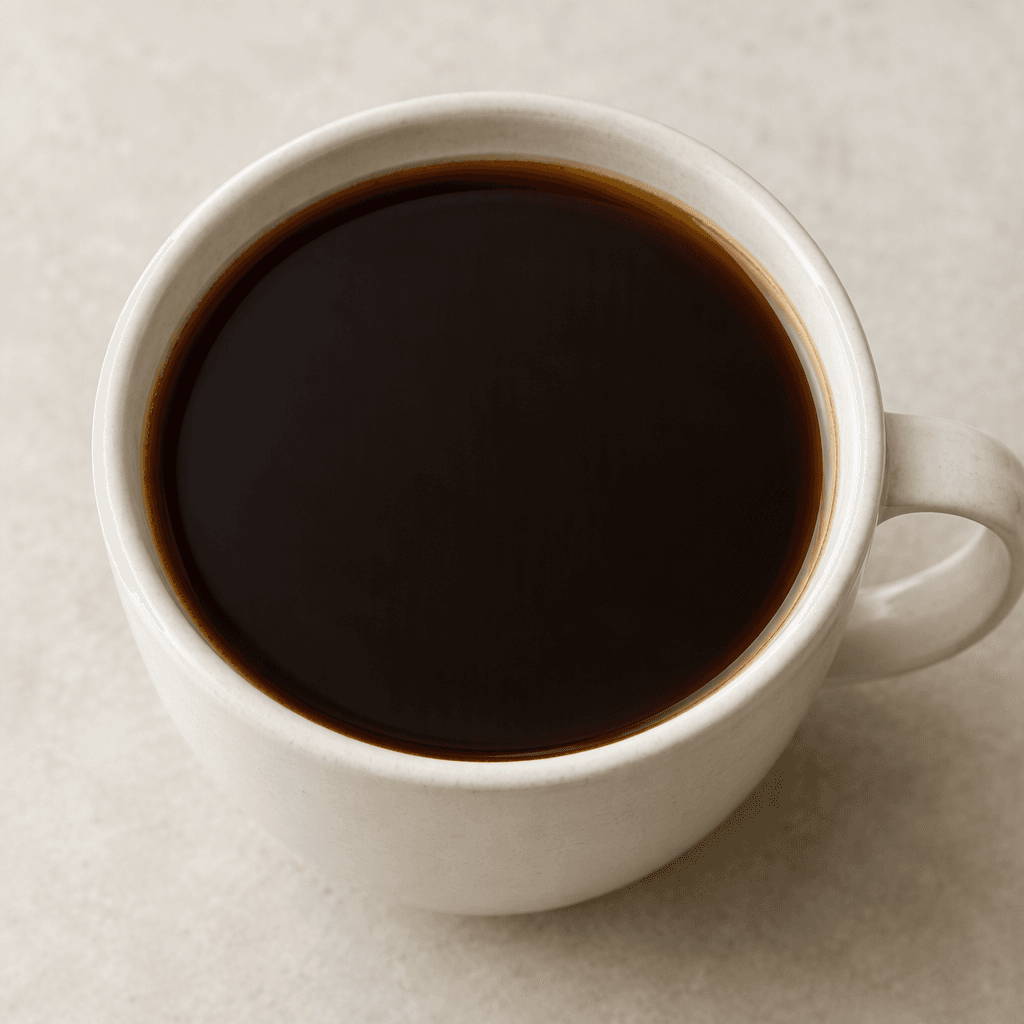
Filter Coffee (Collagen) Calories
Protein-enriched filter coffee
In season: Spring · Summer · Autumn · Winter
CALORIES
GI
POTASSIUM
FIBER
Quick answer
1 cup (medium) of Filter Coffee (Collagen) (240 g) has 60 calories. That works out to 25 calories per 100 g. It contains 1.2 g of carbs, 13.2 g of protein, 0.2 g of fat and 0 g of fiber. Its 36 mg of Phosphorus covers 5% of the Daily Value. Its glycemic index is 0 (low), so it raises blood sugar slowly.
What is Filter Coffee (Collagen)?
Filter coffee with collagen is brewed by pouring hot water through ground coffee and a filter, then stirring collagen powder into the cup. It keeps the familiar roasted, slightly bitter coffee flavour; the added collagen usually blends in without making the drink noticeably thicker.
It fits easily into a morning routine or an afternoon coffee break, whether served black or with a splash of milk. The collagen makes it protein-enriched, while the drink remains low in carbohydrates and fat. Keep it unsweetened for a lighter cup, or pair it with breakfast—such as eggs, yoghurt or fruit—if you want something more substantial.
Filter Coffee (Collagen) Nutrition Facts
Selected: 100 g
25
KCAL / 100G
Carbs
0.5g
· 0% DV
Protein
5.5g
· 11% DV
Fat
0.1g
· 0% DV
Fiber
0g
· 0% DV
DV is the share of the daily value covered, on a 2,000 kcal reference diet.
Calories come from: Carbs 8% · Protein 88% · Fat 4%
Filter Coffee (Collagen) Vitamins & Minerals
Vitamins
B2
0.02mg · 2% DV
B1
0.01mg · 1% DV
B3
0.1mg · 1% DV
B5
0.03mg · 1% DV
Minerals
Magnesium
7mg · 2% DV
Phosphorus
15mg · 2% DV
Calcium
10mg · 1% DV
Sodium
25mg · 1% DV
How Nutritious Is Filter Coffee (Collagen)?
Nutrient density
Medium
How many vitamins, minerals and how much fiber this food carries per calorie. A high score means a lot of nutrition for few calories.
Satiety score
Medium
An EatBetter score computed from fiber, protein and calorie density. A high score means staying full longer on the same calories.
Both scores are calculated per 100 g and do not change with the selected portion. The satiety score is EatBetter's own calculation, not a clinical measure.
Filter Coffee (Collagen) Glycemic Index
GLYCEMIC INDEX
GLYCEMIC LOAD
Accounts for portion size — a more realistic measure than GI alone.
How to Burn Off Filter Coffee (Collagen)
To burn the 25 calories in 100 g:
🚶
Walking (5 km/h)
🏃
Running (8 km/h)
🚴
Cycling
🏊
Swimming
Times are calculated with the MET equation for a 70 kg adult. Actual burn varies with your weight, age and pace.
Is Filter Coffee (Collagen) Processed?
NOVA 2
Minimally Processed
1. Unprocessed
2. Minimally Processed
3. Processed
4. Ultra-Processed
NOVA classifies foods into 4 groups by industrial processing. NOVA 1 (unprocessed) is the healthiest.
Does Filter Coffee (Collagen) Contain Allergens?
No known major allergens
Which Diets Is Filter Coffee (Collagen) Good For?
Vegan
— Not suitable
Vegetarian
✓ Suitable
Gluten-Free
✓ Suitable
Dairy-Free
— Not suitable
Mediterranean
✓ Suitable
Paleo
✓ Suitable
Whole30
— Not suitable
DASH
— Not suitable
Keto
✓ Suitable
Low FODMAP
— Not suitable
Filter Coffee (Collagen) Fat Profile
SATURATED
0.04g
MONOUNSATURATED
0.01g
POLYUNSATURATED
0.01g
Compare Filter Coffee (Collagen)
Foods Similar to Filter Coffee (Collagen)
Frequently Asked Questions About Filter Coffee (Collagen)
Does collagen filter coffee actually work for skin?
Collagen filter coffee is a convenient way to take collagen peptides, but adding them to coffee has not been shown to boost their effects. Studies of collagen supplements suggest possible skin benefits, but findings are still limited and vary.
Can hot filter coffee break down collagen powder?
No, hot filter coffee does not make collagen peptides useless. Heat can change a protein’s structure, but it does not stop the body from digesting collagen into amino acids and peptides.
How do you make collagen filter coffee without lumps?
To make smooth collagen filter coffee, first stir the powder into a small splash of coffee until it forms a paste. Add the rest gradually while stirring, or use a small milk frother.
Does collagen filter coffee taste different from regular coffee?
Collagen filter coffee may taste slightly different, depending on the powder. Unflavoured collagen peptides usually have little taste, while flavoured or sweetened powders can noticeably change the coffee’s aroma and sweetness.
Does collagen filter coffee contain caffeine?
Yes, collagen filter coffee contains caffeine from the brewed coffee; collagen powder itself does not add caffeine. The amount varies with the beans, brewing ratio and preparation method.
When is the best time to drink collagen filter coffee?
You can drink collagen filter coffee whenever you would normally have coffee. Since it contains caffeine, avoid having it close to bedtime if caffeine tends to disrupt your sleep; the collagen does not require a particular time of day.
Can collagen filter coffee replace a protein shake?
No, collagen filter coffee is not a complete substitute for a protein shake. Collagen lacks some essential amino acids found in complete proteins, so it should not be your only source of protein.
Can you add milk to collagen filter coffee?
Yes, milk works in collagen filter coffee. Stir the collagen into the coffee first so it dissolves evenly, then add milk; this also makes it easier to notice whether the powder changes the flavour.
Is collagen filter coffee good for weight loss?
No, collagen filter coffee does not cause weight loss on its own. Adding collagen provides protein, but there is no established evidence that mixing it with coffee speeds up fat loss.
Can you drink collagen filter coffee every day?
Many people can include collagen filter coffee in a daily routine, but keep track of both caffeine and the collagen serving in your product. Drinking extra cups raises caffeine intake even if you do not add more collagen.
Have another question about Filter Coffee (Collagen)?
Ask the AI nutrition coach — calories, portions, alternatives and more, answered in seconds in the app.

Scan calories with your camera
Instant AI nutrition analysis

Nutrition data compiled from USDA FoodData Central and scientific sources.