

Ready & Packaged Foods
All →Vegetables & Legumes
All →Desserts & Confectionery
All →Meat & Protein
All →Grains & Bakery
All →Beverages
All →Milk & Dairy
All →

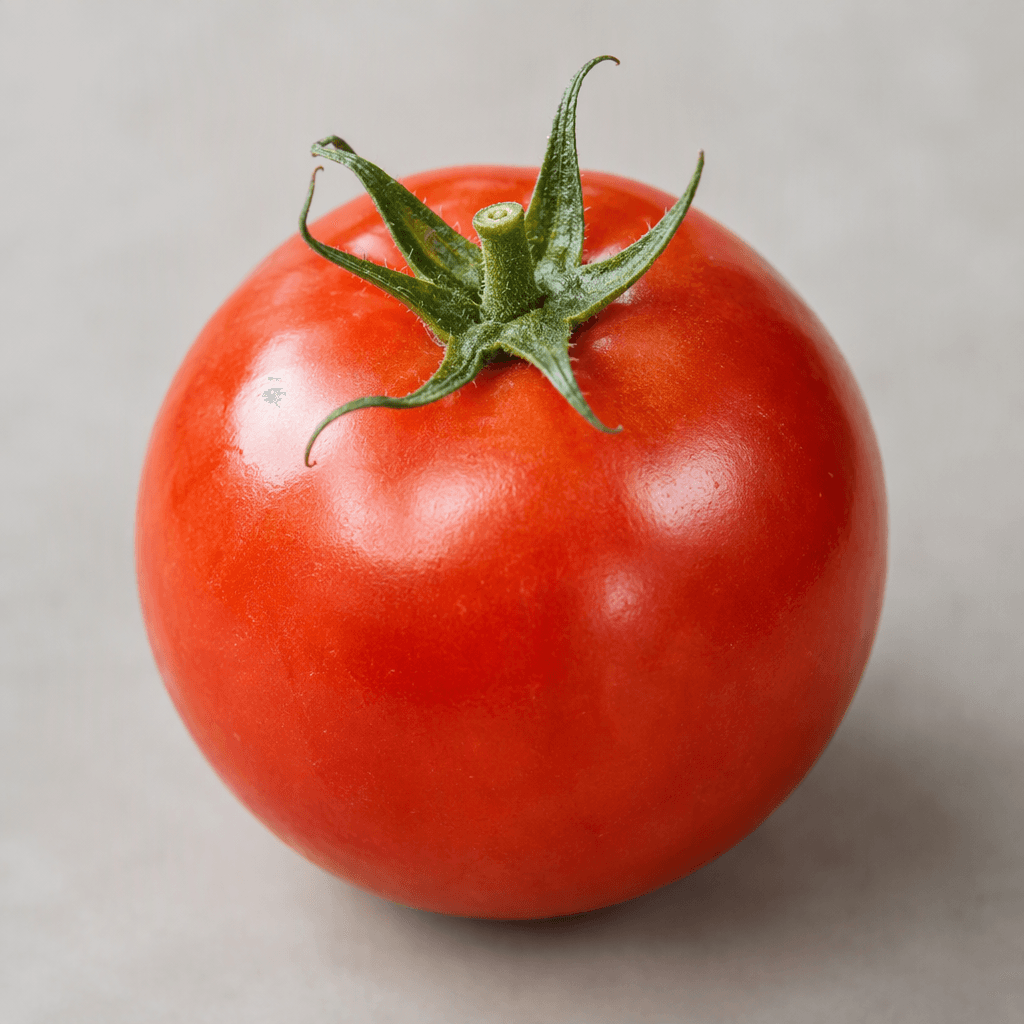
Field Tomato Calories
Vitamin C, lycopene, low calorie
In season: Summer · Autumn
CALORIES · 100 G
GI
POTASSIUM · 100 G
FIBER · 100 G
Quick answer
1 piece (medium) of Field Tomato (120 g) has 22 calories. That works out to 18 calories per 100 g. It contains 4.7 g of carbs, 1.1 g of protein, 0.2 g of fat and 1.4 g of fiber. Its 16.4 mg of Vitamin C covers 18% of the Daily Value. Its glycemic index is 15 (low), so it raises blood sugar slowly.
Field Tomato Nutrition Facts
Selected: 1 piece (medium) · 120 g
22
KCAL / 120G
Carbs
4.7g
· 2% DV
Protein
1.1g
· 2% DV
Fat
0.2g
· 0% DV
Fiber
1.4g
· 5% DV
DV is the share of the daily value covered, on a 2,000 kcal reference diet.
Calories come from: Carbs 75% · Protein 18% · Fat 7%
Field Tomato nutrition facts table · 1 piece (medium) (120 g)
| Nutrient | Amount | % DV |
|---|---|---|
| Calories | 22 kcal | |
| Total fat | 0.2 g | 0% |
| Saturated fat | 0.04 g | 0% |
| Trans fat | 0 g | |
| Sodium | 6 mg | 0% |
| Total carbohydrate | 4.7 g | 2% |
| Fiber | 1.4 g | 5% |
| Protein | 1.1 g | 2% |
Calories: Calories measure energy. Average daily need is 2,000 kcal. Excess calories are stored as fat, too few cause weight loss.
Carbs: Your body's primary energy source. The brain runs exclusively on carbs. Daily need: 275g.
Protein: Essential for muscle repair and cell growth. Daily need: 50g. Keeps you full and boosts metabolism.
Fat: Needed for hormone production and vitamin absorption. Daily need: 78g. Limit saturated fats, choose unsaturated.
Fiber: Critical for digestive health and satiety. Daily need: 28g. Stabilizes blood sugar, lowers cholesterol.

Log this food in EatBetter
100,000+ people use it
- Get your daily calorie target
- Snap your meal, log it in seconds
- See every vitamin and mineral

📸 Scan the code to get the app free.

How Many Calories in 1 Medium Field Tomato?
| Serving | Amount | Calories |
|---|---|---|
| 1 piece (medium) | 120 g | 22 kcal |
| 1 slice (thin) | 20 g | 4 kcal |
| 1 slice (thick) | 35 g | 6 kcal |
| 1 piece (small) | 80 g | 14 kcal |
| 100 g | 100 g | 18 kcal |
| 1 serving (medium) | 150 g | 27 kcal |
| 1 piece (large) | 180 g | 32 kcal |
| 1 cup (chopped) | 180 g | 32 kcal |
| 2 piece (medium) | 240 g | 43 kcal |
Calculated from 18 calories per 100 g.
Frequently Asked Questions About Field Tomato
What is the difference between a field tomato and a greenhouse tomato?
A field tomato grows outdoors, while a greenhouse tomato is grown under cover in a more controlled setting. Flavor and texture depend on the variety and ripeness as well as the growing method, so field-grown does not automatically mean tastier.
When are field tomatoes in season?
Field tomatoes are generally most abundant in summer, when outdoor-grown crops are harvested in many regions. Availability varies by location and climate, but choosing locally grown tomatoes in their season often means they were picked riper.
How do you choose a ripe field tomato?
Choose a field tomato that feels heavy for its size, has an even, rich colour, and is free of bruises or soft spots. A ripe one gives slightly under gentle pressure and has a fresh tomato aroma near the stem.
Should field tomatoes be refrigerated?
Keep unripe field tomatoes at room temperature, out of direct sunlight, so they can continue to ripen. Refrigeration can extend the keeping time of ripe tomatoes, but may dull their flavor; let them warm to room temperature before eating.
Why do field tomatoes crack on the vine?
Field tomatoes often crack when they take up water quickly after a dry spell, causing the fruit to expand faster than its skin can stretch. A small, fresh crack can be cut away, but discard tomatoes with mold, a bad smell, or extensive softening.
How can you ripen a field tomato at home?
Leave an unripe field tomato at room temperature, away from direct sunlight. To speed ripening, place it in a paper bag with a ripe banana or apple; the ethylene they release encourages the tomato to ripen.
Do you need to wash field tomatoes before eating them?
Yes, rinse a field tomato under clean running water before cutting or eating it, even if you plan to peel it. Dry it with a clean towel, and wash it just before use rather than before storage to reduce the chance of spoilage.
Can you eat the skin of a field tomato?
Yes, field tomato skin is edible, so you can leave it on for salads, sauces, and other dishes. If you prefer to remove it, briefly blanch the tomato and cool it in cold water; the skin will peel away more easily.
Does cooking a field tomato reduce its nutritional value?
Cooking can reduce some of a field tomato’s vitamin C, while making its lycopene easier for the body to access. Brief cooking with a little oil works well in sauces and soups and can help with lycopene absorption.
Can you eat field tomatoes at night?
Yes, there is no general rule against eating a field tomato at night. Its acidity can trigger heartburn or reflux symptoms in some people, though, so avoid having one close to bedtime if you notice that effect.
Field Tomato Vitamins & Minerals
Vitamins
Vitamin C
16.44mg · 18% DV
Vitamin K
9.48µg · 8% DV
B6
0.1mg · 6% DV
Vitamin A
50.4µg · 6% DV
Minerals
Potassium ⭐
284mg · 8% DV
Copper
0.07mg · 8% DV
Manganese
0.14mg · 6% DV
Phosphorus
29mg · 4% DV
Sodium
6mg · 0% DV
Field Tomato Glycemic Index
GLYCEMIC INDEX
GLYCEMIC LOAD
Accounts for portion size — a more realistic measure than GI alone.
How to Burn Off Field Tomato
To burn the 22 calories in 1 piece (medium) (120 g):
🚶
Walking (5 km/h)
🏃
Running (8 km/h)
🚴
Cycling
🏊
Swimming
Times are calculated with the MET equation for a 70 kg adult. Actual burn varies with your weight, age and pace.
What is Field Tomato?
Field Tomato refers to a tomato grown outdoors in the field, rather than to a distinct prepared dish. Ripe fruits are commonly red, juicy and gently sweet with a pleasant tang. They are eaten raw in salads and sandwiches, or cooked into sauces, soups and everyday vegetable dishes. In Turkey, field tomatoes are especially familiar in summer meals, from breakfast plates to menemen; elsewhere, they fit easily into local salads and home cooking. They contribute vitamin C and lycopene, while remaining low in calories: 100 g provides 18 calories. Pair one with herbs, beans or a little olive oil for a simple, satisfying dish, or add it to a meal when you want freshness and moisture.
How Nutritious Is Field Tomato?
Nutrient density
Very high
How many vitamins, minerals and how much fiber this food carries per calorie. A high score means a lot of nutrition for few calories.
Satiety score
Medium
An EatBetter score computed from fiber, protein and calorie density. A high score means staying full longer on the same calories.
Both scores are calculated per 100 g and do not change with the selected portion. The satiety score is EatBetter's own calculation, not a clinical measure.
Is Field Tomato Processed?
NOVA 1
Unprocessed
1. Unprocessed
2. Minimally Processed
3. Processed
4. Ultra-Processed
NOVA classifies foods into 4 groups by industrial processing. NOVA 1 (unprocessed) is the healthiest.
Does Field Tomato Contain Allergens?
No known major allergens
Which Diets Is Field Tomato Good For?
Vegan
✓ Suitable
Vegetarian
✓ Suitable
Gluten-Free
✓ Suitable
Dairy-Free
— Not suitable
Mediterranean
✓ Suitable
Paleo
✓ Suitable
Whole30
— Not suitable
DASH
— Not suitable
Keto
✓ Suitable
Low FODMAP
— Not suitable
Field Tomato Fat Profile
SATURATED
0.04g
MONOUNSATURATED
0.04g
POLYUNSATURATED
0.06g
Omega 6:3 ratio 4:1
Below the ideal 4:1 — a good omega balance.
Compare Field Tomato
Foods Similar to Field Tomato
Have another question about Field Tomato?
Ask the AI nutrition coach — calories, portions, alternatives and more, answered in seconds in the app.

Scan calories with your camera
Instant AI nutrition analysis

Nutrition data compiled from USDA FoodData Central and scientific sources.