

Ready & Packaged Foods
All →Vegetables & Legumes
All →Desserts & Confectionery
All →Meat & Protein
All →Grains & Bakery
All →Beverages
All →Milk & Dairy
All →

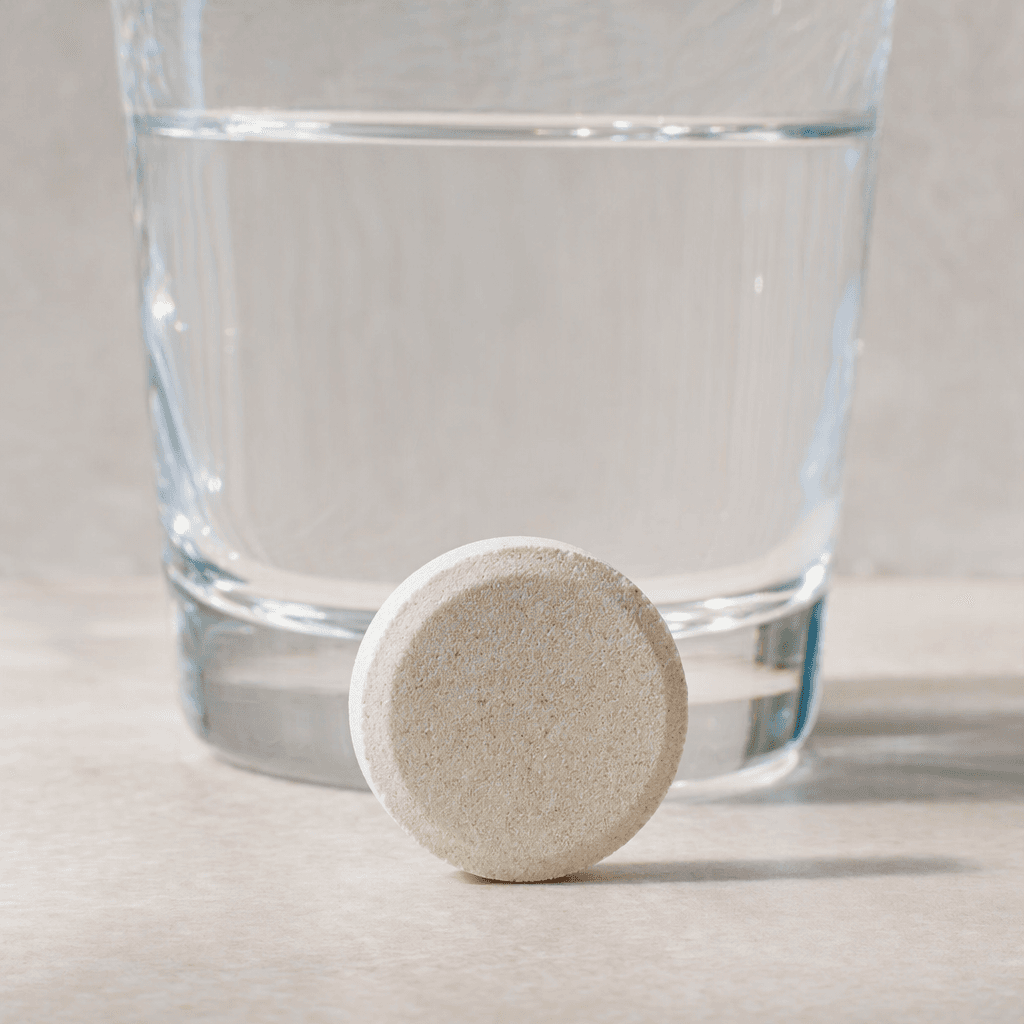
Electrolyte tablet Calories
Low-calorie electrolyte support
CALORIES · 100 G
GI
POTASSIUM · 100 G
FIBER · 100 G
Quick answer
1 piece (small) of Electrolyte tablet (4 g) has 10 calories. That works out to 250 calories per 100 g. It contains 2.5 g of carbs, 0 g of protein, 0 g of fat and 0 g of fiber. Its 250 mg of Potassium covers 7% of the Daily Value. Its glycemic index is 10 (low), so it raises blood sugar slowly.
Electrolyte tablet Nutrition Facts
Selected: 1 piece (small) · 4 g
10
KCAL / 4G
Carbs
2.5g
· 1% DV
Protein
0g
· 0% DV
Fat
0g
· 0% DV
Fiber
0g
· 0% DV
DV is the share of the daily value covered, on a 2,000 kcal reference diet.
Calories come from: Carbs 100% · Protein 0% · Fat 0%
Electrolyte tablet nutrition facts table · 1 piece (small) (4 g)
| Nutrient | Amount | % DV |
|---|---|---|
| Calories | 10 kcal | |
| Total fat | 0 g | 0% |
| Saturated fat | 0 g | 0% |
| Trans fat | 0 g | |
| Sodium | 500 mg | 22% |
| Total carbohydrate | 2.5 g | 1% |
| Fiber | 0 g | 0% |
| Protein | 0 g | 0% |
Calories: Calories measure energy. Average daily need is 2,000 kcal. Excess calories are stored as fat, too few cause weight loss.
Carbs: Your body's primary energy source. The brain runs exclusively on carbs. Daily need: 275g.
Protein: Essential for muscle repair and cell growth. Daily need: 50g. Keeps you full and boosts metabolism.
Fat: Needed for hormone production and vitamin absorption. Daily need: 78g. Limit saturated fats, choose unsaturated.
Fiber: Critical for digestive health and satiety. Daily need: 28g. Stabilizes blood sugar, lowers cholesterol.

Log this food in EatBetter
100,000+ people use it
- Get your daily calorie target
- Snap your meal, log it in seconds
- See every vitamin and mineral

📸 Scan the code to get the app free.

How Many Calories in 1 Small Electrolyte tablet?
| Serving | Amount | Calories |
|---|---|---|
| 1 piece (small) | 4 g | 10 kcal |
| 1 serving (medium) | 4 g | 10 kcal |
| 2 piece (double) | 8 g | 20 kcal |
| 1 pack (mini) | 10 g | 25 kcal |
| 1 pack (small) | 20 g | 50 kcal |
| 5 piece (jumbo) | 20 g | 50 kcal |
| 100 g | 100 g | 250 kcal |
Calculated from 250 calories per 100 g.
Frequently Asked Questions About Electrolyte tablet
What does an electrolyte tablet do?
An electrolyte tablet dissolves in water to make a drink containing electrolytes, often including sodium. People commonly use one during prolonged exercise or heavy sweating; the exact ingredients and intended use vary by product.
How do you use an electrolyte tablet?
Dissolve an electrolyte tablet in the amount of water stated on its packaging, then drink the prepared beverage as directed. Do not swallow or chew the tablet dry; the recommended dilution can differ between products.
How much water should you use for an electrolyte tablet?
Use the water volume specified for that electrolyte tablet on its label. Tablet formulas and dilution instructions vary, and using too little water can make the drink more concentrated and unpleasantly salty.
When should you take an electrolyte tablet—before, during, or after exercise?
You can take an electrolyte tablet during or after prolonged, intense exercise, particularly when you sweat heavily. For a short, light workout, water is usually enough; exercise duration, heat, and sweat loss matter.
Can you take an electrolyte tablet every day?
Most people do not need an electrolyte tablet every day because food and ordinary fluids usually provide what they need. If you have kidney or heart disease, ask your clinician before using one regularly.
Do electrolyte tablets prevent muscle cramps?
Electrolyte tablets do not reliably prevent muscle cramps. They can help replace fluid and electrolytes lost through heavy sweating, but cramps have several possible causes and are not always a sign of electrolyte deficiency.
Can an electrolyte tablet treat dehydration from diarrhea or vomiting?
An electrolyte tablet may not have the right formulation to replace an oral rehydration solution used for diarrhea or vomiting. Seek medical advice for severe symptoms, dehydration signs, or a child who cannot keep fluids down.
Can you take an electrolyte tablet if you are not exercising?
Yes, you can use an electrolyte tablet without exercising, but most people do not need one for routine hydration. Water is generally suitable for everyday drinking unless heat, heavy sweating, or another specific situation increases fluid and electrolyte losses.
Are electrolyte tablets better than sports drinks?
Neither is automatically better: an electrolyte tablet is dissolved in water, while a sports drink comes ready to drink. Their electrolyte and carbohydrate contents differ, so compare the product directions and ingredients for your particular use.
Can an electrolyte tablet help with a hangover?
An electrolyte tablet may help you take in fluid, but it does not cure a hangover or speed alcohol clearance. Drink water as needed and allow time; seek urgent help for severe confusion, repeated vomiting, or difficulty waking.
Electrolyte tablet Vitamins & Minerals
Vitamins
Vitamin A
0µg · 0% DV
B1
0mg · 0% DV
B2
0mg · 0% DV
B3
0mg · 0% DV
Minerals
Sodium
500mg · 22% DV
Potassium ⭐
250mg · 7% DV
Magnesium
25mg · 6% DV
Calcium
50mg · 5% DV
Electrolyte tablet Glycemic Index
GLYCEMIC INDEX
GLYCEMIC LOAD
Accounts for portion size — a more realistic measure than GI alone.
How to Burn Off Electrolyte tablet
To burn the 10 calories in 1 piece (small) (4 g):
🚶
Walking (5 km/h)
🏃
Running (8 km/h)
🚴
Cycling
🏊
Swimming
Times are calculated with the MET equation for a 70 kg adult. Actual burn varies with your weight, age and pace.
What is Electrolyte tablet?
An electrolyte tablet is a compact product designed to dissolve in water and make a flavoured drink containing electrolytes. Ingredients and taste vary by brand, but the drink may be lightly salty, tart or fruit-flavoured. The tablet often fizzes as it dissolves, making it easy to carry and prepare when plain water feels less appealing.
People use electrolyte tablets around exercise, in hot weather or while travelling, though they are not an everyday substitute for water. A small serving can be low in calories, but the nutrition profile depends on the particular product. Follow the directions on the pack for how much water to use, and add extra water if you prefer a milder taste.
How Nutritious Is Electrolyte tablet?
Nutrient density
Low
How many vitamins, minerals and how much fiber this food carries per calorie. A high score means a lot of nutrition for few calories.
Satiety score
Low
An EatBetter score computed from fiber, protein and calorie density. A high score means staying full longer on the same calories.
Both scores are calculated per 100 g and do not change with the selected portion. The satiety score is EatBetter's own calculation, not a clinical measure.
Is Electrolyte tablet Processed?
NOVA 4
Ultra-Processed
1. Unprocessed
2. Minimally Processed
3. Processed
4. Ultra-Processed
NOVA classifies foods into 4 groups by industrial processing. NOVA 1 (unprocessed) is the healthiest.
Does Electrolyte tablet Contain Allergens?
No known major allergens
Which Diets Is Electrolyte tablet Good For?
Vegan
✓ Suitable
Vegetarian
✓ Suitable
Gluten-Free
✓ Suitable
Dairy-Free
— Not suitable
Mediterranean
✓ Suitable
Paleo
✓ Suitable
Whole30
— Not suitable
DASH
— Not suitable
Keto
✓ Suitable
Low FODMAP
— Not suitable
Electrolyte tablet Fat Profile
SATURATED
0g
MONOUNSATURATED
0g
POLYUNSATURATED
0g
Compare Electrolyte tablet
Foods Similar to Electrolyte tablet
Have another question about Electrolyte tablet?
Ask the AI nutrition coach — calories, portions, alternatives and more, answered in seconds in the app.

Scan calories with your camera
Instant AI nutrition analysis

Nutrition data compiled from USDA FoodData Central and scientific sources.