

Ready & Packaged Foods
All →Vegetables & Legumes
All →Desserts & Confectionery
All →Meat & Protein
All →Grains & Bakery
All →Beverages
All →Milk & Dairy
All →

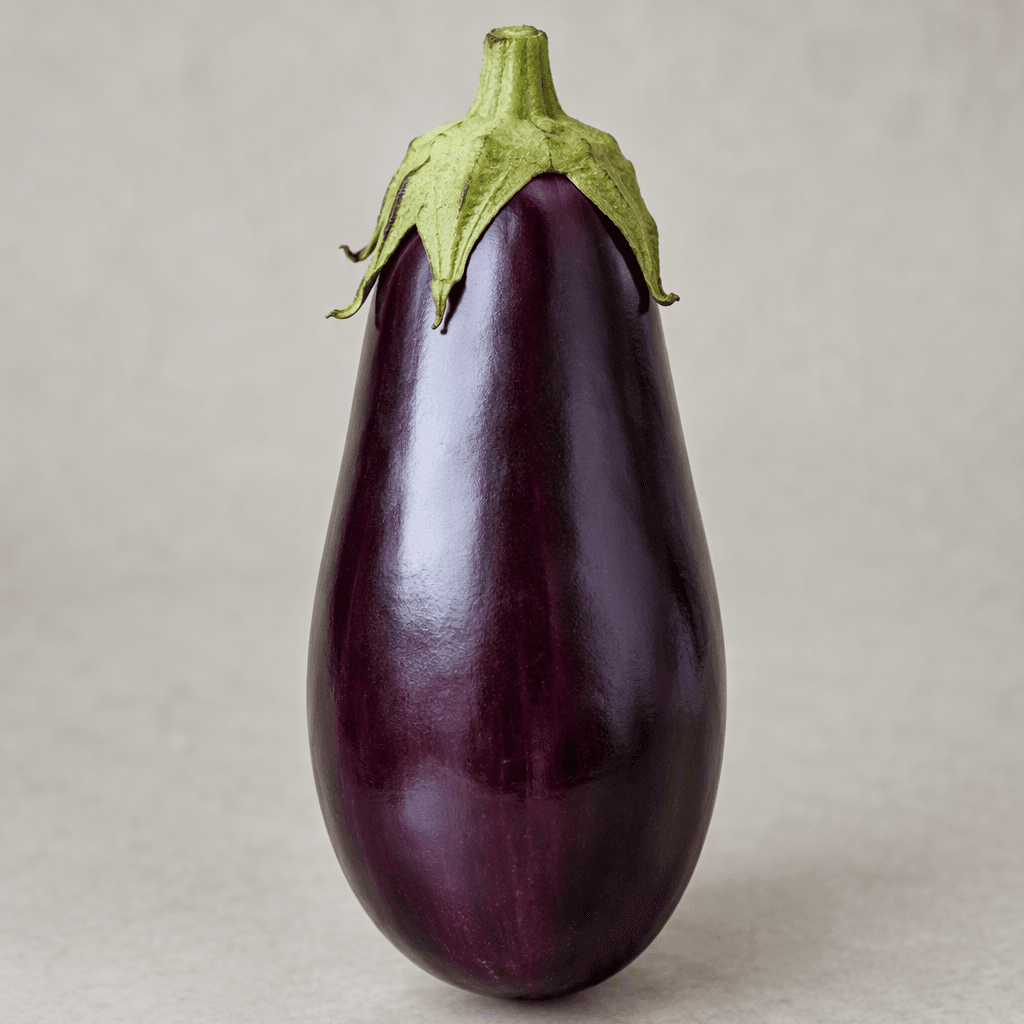
Eggplant Calories
Fiber source, low calorie, antioxidants
In season: Summer · Autumn
CALORIES
GI
POTASSIUM
FIBER
Quick answer
1 piece (medium) of Eggplant (300 g) has 75 calories. That works out to 25 calories per 100 g. It contains 18 g of carbs, 3 g of protein, 0.6 g of fat and 9 g of fiber. Its 0.7 mg of Manganese covers 30% of the Daily Value. Its glycemic index is 15 (low), so it raises blood sugar slowly.
What is Eggplant?
Eggplant has glossy, usually deep-purple skin and soft, spongy flesh. Though botanically a fruit, it is used as a vegetable; it originated in Asia and is now a familiar ingredient in cuisines around the world.
Its flesh turns tender and mellow when cooked, taking on a smoky flavour when grilled or roasted. In its regions of origin, it features in curries and stews; in Mediterranean cooking, it is often baked, grilled, or served in dips. Eggplant is low in calories and provides fibre, with 25 calories per 100 g. Roast or grill it with a little oil for a lighter option, or pair it with tomatoes, herbs, and grains for a satisfying meal.
Eggplant Nutrition Facts
Selected: 100 g
25
KCAL / 100G
Carbs
6g
· 2% DV
Protein
1g
· 2% DV
Fat
0.2g
· 0% DV
Fiber
3g
· 11% DV
DV is the share of the daily value covered, on a 2,000 kcal reference diet.
Calories come from: Carbs 81% · Protein 13% · Fat 6%
Eggplant Vitamins & Minerals
Vitamins
B5
0.28mg · 6% DV
Folate
22µg · 6% DV
B6
0.08mg · 5% DV
B3
0.6mg · 4% DV
Minerals
Potassium ⭐
230mg · 7% DV
Magnesium
14mg · 3% DV
Phosphorus
24mg · 3% DV
Calcium
9mg · 1% DV
How Nutritious Is Eggplant?
Nutrient density
High
How many vitamins, minerals and how much fiber this food carries per calorie. A high score means a lot of nutrition for few calories.
Satiety score
Medium
An EatBetter score computed from fiber, protein and calorie density. A high score means staying full longer on the same calories.
Both scores are calculated per 100 g and do not change with the selected portion. The satiety score is EatBetter's own calculation, not a clinical measure.
Eggplant Glycemic Index
GLYCEMIC INDEX
GLYCEMIC LOAD
Accounts for portion size — a more realistic measure than GI alone.
How to Burn Off Eggplant
To burn the 25 calories in 100 g:
🚶
Walking (5 km/h)
🏃
Running (8 km/h)
🚴
Cycling
🏊
Swimming
Times are calculated with the MET equation for a 70 kg adult. Actual burn varies with your weight, age and pace.
Is Eggplant Processed?
NOVA 1
Unprocessed
1. Unprocessed
2. Minimally Processed
3. Processed
4. Ultra-Processed
NOVA classifies foods into 4 groups by industrial processing. NOVA 1 (unprocessed) is the healthiest.
Does Eggplant Contain Allergens?
No known major allergens
Which Diets Is Eggplant Good For?
Vegan
✓ Suitable
Vegetarian
✓ Suitable
Gluten-Free
✓ Suitable
Dairy-Free
— Not suitable
Mediterranean
✓ Suitable
Paleo
✓ Suitable
Whole30
— Not suitable
DASH
— Not suitable
Keto
— Not suitable
Low FODMAP
— Not suitable
Eggplant Fat Profile
SATURATED
0.03g
MONOUNSATURATED
0.02g
POLYUNSATURATED
0.04g
Omega 6:3 ratio 2:1
Below the ideal 4:1 — a good omega balance.
Compare Eggplant
Foods Similar to Eggplant
Frequently Asked Questions About Eggplant
How do you cook eggplant so it doesn’t absorb too much oil?
To limit oil absorption, pat eggplant dry, use a hot pan, and avoid overcrowding it. A light coating of oil is usually enough for roasting. Baking or grilling eggplant instead of deep-frying is an easy way to use less oil.
Do you need to salt eggplant before cooking?
No, salting eggplant before cooking is usually optional. Modern eggplants are often not very bitter, though salting sliced pieces can draw out moisture and help them brown. If you salt them, rinse off excess salt and dry them well before cooking.
How do you roast eggplant?
To roast eggplant, prick the whole eggplant or cut it into pieces, brush lightly with oil, and cook in a hot oven until tender. For smoky, soft flesh, roast it whole under a broiler or over a flame, turning it until the skin is charred.
How should you store eggplant?
Store eggplant unwashed in a cool place, ideally in the refrigerator’s produce drawer, and use it while the skin is still firm and glossy. Keep it away from ethylene-producing fruit such as bananas, which can make it deteriorate faster.
Can you freeze eggplant?
Yes, eggplant freezes best after cooking or blanching because raw pieces can turn spongy. Slice it, briefly blanch or roast it, cool it completely, and freeze it in portions. Use thawed eggplant in cooked dishes rather than salads.
How can you tell if an eggplant is ripe?
A ripe eggplant usually has smooth, glossy skin and feels firm and heavy for its size. Press the skin gently: it should spring back. Avoid fruit with wrinkles, soft sunken spots, or a dry-looking stem.
Can you eat eggplant skin?
Yes, eggplant skin is edible and often helps the flesh hold its shape while cooking. Leave it on for roasting, grilling, or stews; peel it if the skin is unusually thick or you want a softer texture for a dip.
Can you eat eggplant raw?
Yes, raw eggplant is edible, but its firm texture and slightly bitter taste make it less popular than cooked eggplant. Wash it well and slice it thinly; cooking softens the flesh and brings out a milder, richer flavor.
Why does cut eggplant turn brown?
Cut eggplant turns brown because its flesh reacts with oxygen in the air. The change is mostly cosmetic. Cut it just before cooking, or place the pieces in water with a little lemon juice while you prepare the rest of the dish.
Is eggplant good for weight loss?
Eggplant can fit into a weight-loss meal because it is filling and works well in vegetable-rich dishes. Deep-frying or adding plenty of oil can make a dish much more energy-dense, so roasting, grilling, or baking is a lighter preparation.
Have another question about Eggplant?
Ask the AI nutrition coach — calories, portions, alternatives and more, answered in seconds in the app.

Scan calories with your camera
Instant AI nutrition analysis

Nutrition data compiled from USDA FoodData Central and scientific sources.