

Ready & Packaged Foods
All →Vegetables & Legumes
All →Desserts & Confectionery
All →Meat & Protein
All →Grains & Bakery
All →Beverages
All →Milk & Dairy
All →

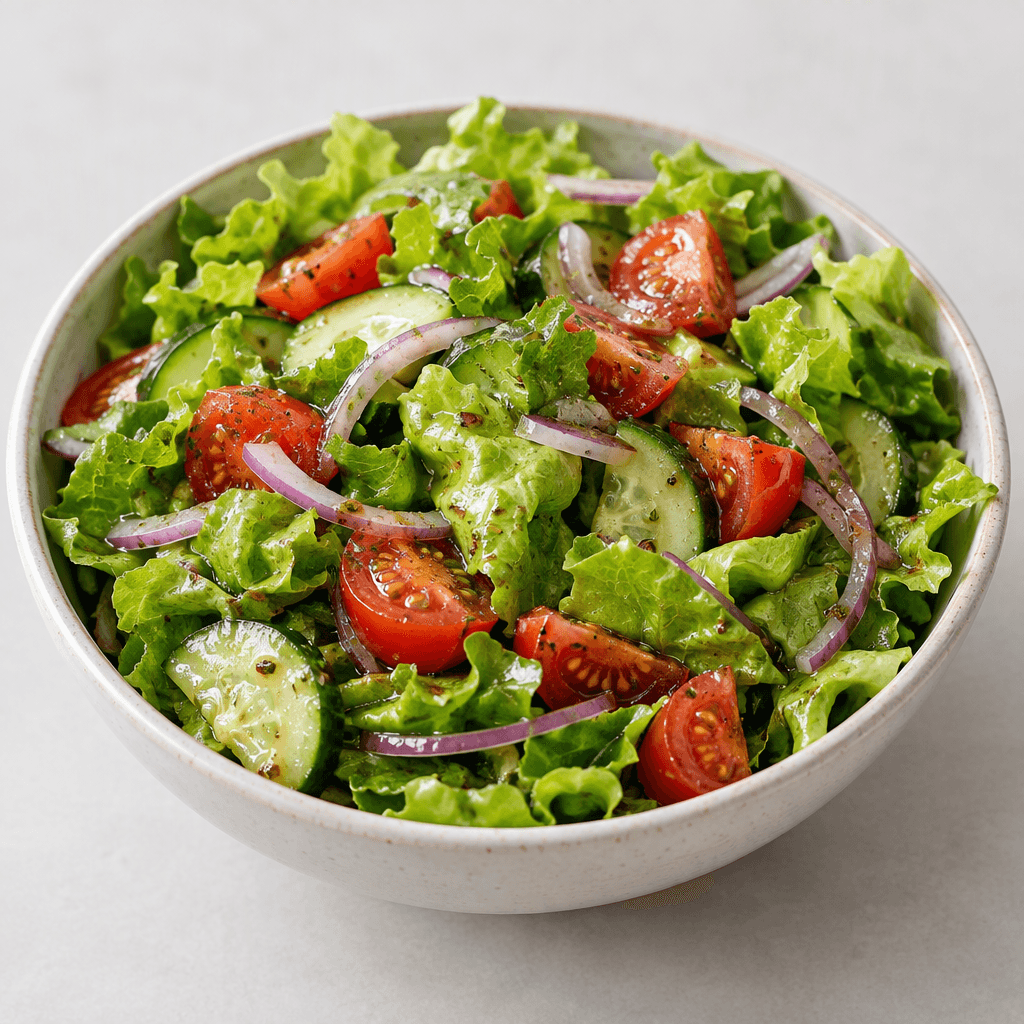
Dressed Salad Calories
Fresh vegetables with a variety of dressings
In season: Spring · Summer · Autumn · Winter
CALORIES
GI
POTASSIUM
FIBER
Quick answer
1 serving (medium) of Dressed Salad (120 g) has 108 calories. That works out to 90 calories per 100 g. It contains 7.8 g of carbs, 1.8 g of protein, 7.4 g of fat and 2.6 g of fiber. Its 54 µg of Vitamin K covers 45% of the Daily Value. Its glycemic index is 25 (low), so it raises blood sugar slowly.
What is Dressed Salad?
Dressed Salad brings together fresh vegetables—often crisp lettuce, tomato, cucumber and red onion—with a dressing, commonly made with oil and an acidic ingredient such as lemon juice or vinegar. There is no single place of origin or fixed recipe; the vegetables and dressing vary with local tastes and what is on hand.
It is served worldwide as a side with lunch or dinner, or as a light meal with bread, grains or another source of protein. The vegetables taste fresh and crisp, while the dressing adds tang and richness. They provide fibre, but the dressing contributes much of the dish’s fat and energy; this serving is about 90 calories per 100 g. For a lighter bowl, use a modest amount of dressing and add it just before serving.
Dressed Salad Nutrition Facts
Selected: 100 g
90
KCAL / 100G
Carbs
6.5g
· 2% DV
Protein
1.5g
· 3% DV
Fat
6.2g
· 8% DV
Fiber
2.2g
· 8% DV
DV is the share of the daily value covered, on a 2,000 kcal reference diet.
Calories come from: Carbs 30% · Protein 7% · Fat 63%
Dressed Salad Vitamins & Minerals
Vitamins
Vitamin K
45µg · 38% DV
Vitamin A
330µg · 37% DV
Vitamin C
12mg · 13% DV
Folate
38µg · 10% DV
Minerals
Sodium
210mg · 9% DV
Iron
1mg · 6% DV
Potassium ⭐
180mg · 5% DV
Calcium
38mg · 4% DV
How Nutritious Is Dressed Salad?
Nutrient density
High
How many vitamins, minerals and how much fiber this food carries per calorie. A high score means a lot of nutrition for few calories.
Satiety score
Medium
An EatBetter score computed from fiber, protein and calorie density. A high score means staying full longer on the same calories.
Both scores are calculated per 100 g and do not change with the selected portion. The satiety score is EatBetter's own calculation, not a clinical measure.
Dressed Salad Glycemic Index
GLYCEMIC INDEX
GLYCEMIC LOAD
Accounts for portion size — a more realistic measure than GI alone.
How to Burn Off Dressed Salad
To burn the 90 calories in 100 g:
🚶
Walking (5 km/h)
🏃
Running (8 km/h)
🚴
Cycling
🏊
Swimming
Times are calculated with the MET equation for a 70 kg adult. Actual burn varies with your weight, age and pace.
Is Dressed Salad Processed?
NOVA 2
Minimally Processed
1. Unprocessed
2. Minimally Processed
3. Processed
4. Ultra-Processed
NOVA classifies foods into 4 groups by industrial processing. NOVA 1 (unprocessed) is the healthiest.
Does Dressed Salad Contain Allergens?
No known major allergens
Which Diets Is Dressed Salad Good For?
Vegan
✓ Suitable
Vegetarian
✓ Suitable
Gluten-Free
✓ Suitable
Dairy-Free
— Not suitable
Mediterranean
✓ Suitable
Paleo
— Not suitable
Whole30
— Not suitable
DASH
— Not suitable
Keto
— Not suitable
Low FODMAP
— Not suitable
Dressed Salad Fat Profile
SATURATED
1.1g
MONOUNSATURATED
2.1g
POLYUNSATURATED
1.3g
Omega 6:3 ratio 5:1
Above the ideal 4:1 (5:1).
Compare Dressed Salad
Foods Similar to Dressed Salad
Frequently Asked Questions About Dressed Salad
How do you make dressed salad?
Dressed salad is made by combining crisp vegetables such as lettuce, tomato, cucumber and onion with a dressing just before serving. Dry the vegetables well first so the dressing coats them instead of turning watery.
What dressing goes with dressed salad?
A simple vinaigrette of olive oil, vinegar or lemon juice, and seasoning works well with dressed salad. Creamy or yogurt-based dressings are also options; choose one that complements the main dish rather than masking the vegetables.
Why does dressed salad get soggy?
Dressed salad gets soggy when the vegetables are wet or the dressing sits on them for too long. Salt also draws moisture from tomato and cucumber, so dress and season the salad shortly before eating.
Should you dress salad before or after serving?
Dress salad just before serving. Once dressing coats the leaves, they begin to soften, and watery vegetables can dilute the flavor; keeping dressing separate also makes leftovers easier to store.
Can you make dressed salad ahead of time?
You can prepare the chopped vegetables ahead, but keep the dressing separate until serving. Store the washed, thoroughly dried ingredients in a covered container in the refrigerator to help them stay crisp.
How long does dressed salad last in the fridge?
Dressed salad is best eaten right away because the leaves soften and the vegetables release liquid as it sits. Refrigerate leftovers promptly in a covered container and aim to eat them by the next day.
How do you keep dressed salad from getting watery?
To keep dressed salad from getting watery, dry the greens thoroughly and add dressing and salt at the last minute. If using juicy tomatoes or cucumbers, cut them just before assembling the salad.
What is the difference between dressed salad and undressed salad?
Dressed salad has a sauce or seasoning mixed through the vegetables, while undressed salad is served plain or with dressing on the side. Dressing adds flavor but can make leafy ingredients soften sooner.
Can you use olive oil and lemon on dressed salad?
Yes, olive oil and lemon make a fresh, simple dressing for dressed salad. Whisk them together with a little seasoning so the oil and juice coat the vegetables more evenly.
What can you serve with dressed salad?
Dressed salad pairs well with grilled fish, chicken, meat, beans or a grain-based dish. Its crisp vegetables and tangy dressing can balance richer mains, and it also works as a side for soup or sandwiches.
Have another question about Dressed Salad?
Ask the AI nutrition coach — calories, portions, alternatives and more, answered in seconds in the app.

Scan calories with your camera
Instant AI nutrition analysis

Nutrition data compiled from USDA FoodData Central and scientific sources.