

Ready & Packaged Foods
All →Vegetables & Legumes
All →Desserts & Confectionery
All →Meat & Protein
All →Grains & Bakery
All →Beverages
All →Milk & Dairy
All →

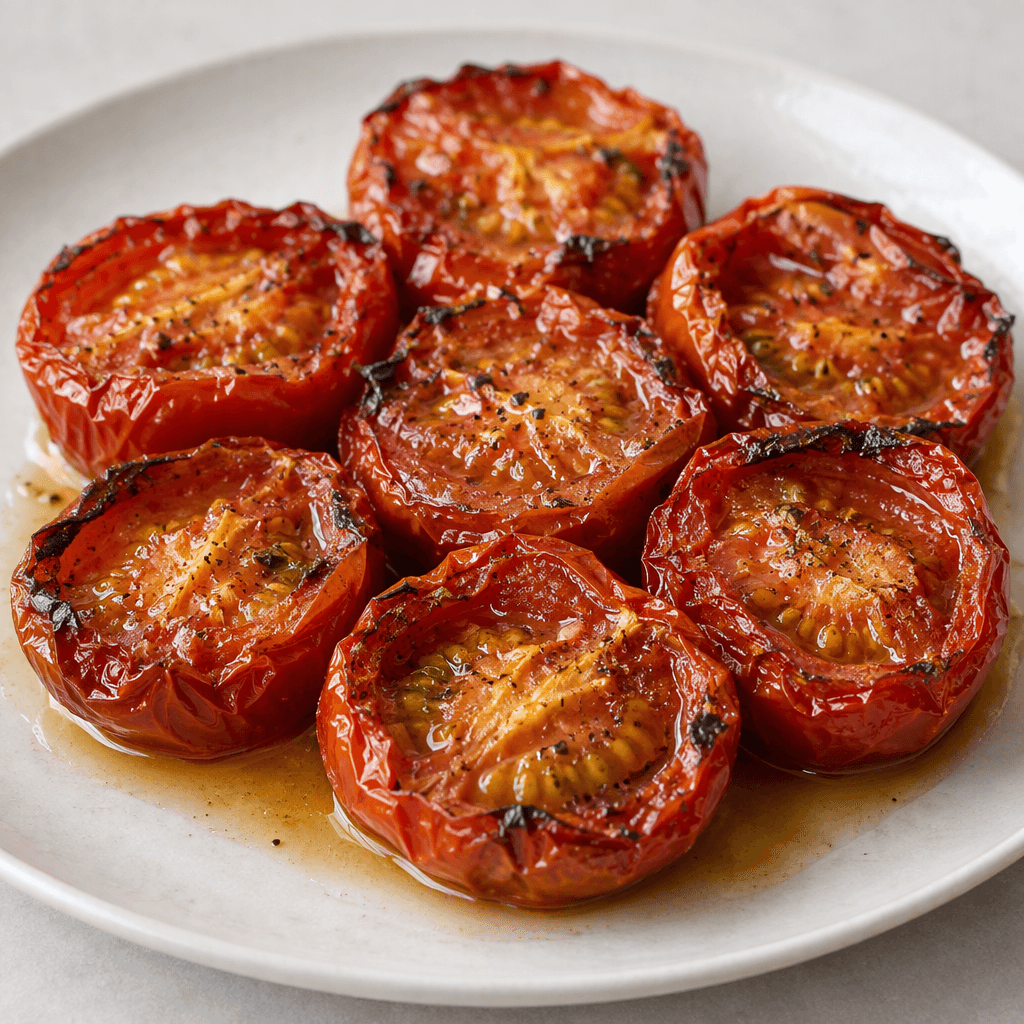
Roasted tomato Calories
Roasted tomato; low calorie, rich in vitamin C and lycopene.
In season: Spring · Summer · Autumn
CALORIES
GI
POTASSIUM
FIBER
Quick answer
1 piece (medium) of Roasted tomato (75 g) has 19 calories. That works out to 25 calories per 100 g. It contains 3.8 g of carbs, 0.8 g of protein, 0.2 g of fat and 1.1 g of fiber. Its 9.8 mg of Vitamin C covers 11% of the Daily Value. Its glycemic index is 35 (low), so it raises blood sugar slowly.
What is Roasted tomato?
Roasted tomato is a tomato cooked until its flesh softens and the edges take on a little colour. It may be roasted whole or halved, and its juices become sweeter and more concentrated as it cooks. Around the Mediterranean, it often appears alongside grilled foods, folded into sauces, or served simply with bread and herbs. It also makes an easy addition to breakfast or a light lunch, especially with eggs, beans or cheese.
Roasted tomato is low in calories and provides some fibre, along with the tomato pigment lycopene. For a lighter serving, use just a drizzle of oil; herbs, garlic and a slice of crusty bread make a simple accompaniment.
Roasted tomato Nutrition Facts
Selected: 100 g
25
KCAL / 100G
Carbs
5.1g
· 2% DV
Protein
1.1g
· 2% DV
Fat
0.3g
· 0% DV
Fiber
1.5g
· 5% DV
DV is the share of the daily value covered, on a 2,000 kcal reference diet.
Calories come from: Carbs 74% · Protein 16% · Fat 10%
Roasted tomato Vitamins & Minerals
Vitamins
Vitamin C
13mg · 14% DV
Vitamin K
7.9µg · 7% DV
Vitamin A
42µg · 5% DV
B6
0.08mg · 5% DV
Minerals
Potassium ⭐
290mg · 9% DV
Magnesium
11mg · 3% DV
Phosphorus
24mg · 3% DV
Calcium
10mg · 1% DV
How Nutritious Is Roasted tomato?
Nutrient density
High
How many vitamins, minerals and how much fiber this food carries per calorie. A high score means a lot of nutrition for few calories.
Satiety score
Medium
An EatBetter score computed from fiber, protein and calorie density. A high score means staying full longer on the same calories.
Both scores are calculated per 100 g and do not change with the selected portion. The satiety score is EatBetter's own calculation, not a clinical measure.
Roasted tomato Glycemic Index
GLYCEMIC INDEX
GLYCEMIC LOAD
Accounts for portion size — a more realistic measure than GI alone.
How to Burn Off Roasted tomato
To burn the 25 calories in 100 g:
🚶
Walking (5 km/h)
🏃
Running (8 km/h)
🚴
Cycling
🏊
Swimming
Times are calculated with the MET equation for a 70 kg adult. Actual burn varies with your weight, age and pace.
Is Roasted tomato Processed?
NOVA 2
Minimally Processed
1. Unprocessed
2. Minimally Processed
3. Processed
4. Ultra-Processed
NOVA classifies foods into 4 groups by industrial processing. NOVA 1 (unprocessed) is the healthiest.
Does Roasted tomato Contain Allergens?
No known major allergens
Which Diets Is Roasted tomato Good For?
Vegan
✓ Suitable
Vegetarian
✓ Suitable
Gluten-Free
✓ Suitable
Dairy-Free
— Not suitable
Mediterranean
✓ Suitable
Paleo
✓ Suitable
Whole30
— Not suitable
DASH
— Not suitable
Keto
— Not suitable
Low FODMAP
— Not suitable
Roasted tomato Fat Profile
SATURATED
0.05g
MONOUNSATURATED
0.05g
POLYUNSATURATED
0.08g
Omega 6:3 ratio 2:1
Below the ideal 4:1 — a good omega balance.
Compare Roasted tomato
Foods Similar to Roasted tomato
Frequently Asked Questions About Roasted tomato
How do you make roasted tomatoes in the oven?
To make roasted tomatoes, halve them and arrange them cut-side up on a baking sheet. Add olive oil, salt, and pepper, then roast at 400°F (200°C) until soft and browned at the edges.
What tomatoes are best for roasted tomatoes?
Meaty, ripe tomatoes work especially well for roasted tomatoes because they keep their shape and develop a concentrated flavor. Cherry tomatoes also roast nicely, but cook faster and are better left whole.
How long do roasted tomatoes take in the oven?
Roasted tomatoes usually take about 25–35 minutes at 400°F (200°C), depending on their size and the oven. They are ready when the flesh is tender and the edges have begun to brown.
Should you peel tomatoes before roasting them?
No, you do not need to peel tomatoes before roasting them. The skins soften in the oven and help the halves hold their shape; peel them afterward only if you want a smoother sauce.
Can you roast tomatoes in an air fryer?
Yes, tomatoes can be roasted in an air fryer. Arrange halved tomatoes in a single layer, add a little oil and seasoning, and cook until softened and browned, checking early because smaller tomatoes cook quickly.
Why are my roasted tomatoes watery?
Roasted tomatoes can turn watery when they are crowded on the pan or naturally have a high water content. Space them out and roast cut-side up; if liquid collects, pour it off or keep roasting until it reduces.
What seasonings go well with roasted tomatoes?
Olive oil, salt, black pepper, garlic, and thyme are classic seasonings for roasted tomatoes. Basil or balsamic vinegar can be added after roasting, since fresh herbs and vinegar can lose their brightness in the oven.
How should you store roasted tomatoes?
Store cooled roasted tomatoes in a covered container in the refrigerator and use them within 3–4 days. Reheat only the portion you plan to eat, or add the cold tomatoes straight to salads and sandwiches.
Can roasted tomatoes be frozen?
Yes, roasted tomatoes freeze well for later use in sauces, soups, and stews. Cool them first, freeze in portions in an airtight container, and expect the texture to be softer after thawing.
What can you make with roasted tomatoes?
Roasted tomatoes make an easy base for pasta sauce, soup, and shakshuka, or a flavorful topping for toast and sandwiches. Their concentrated taste also pairs well with beans, grains, and roasted vegetables.
Have another question about Roasted tomato?
Ask the AI nutrition coach — calories, portions, alternatives and more, answered in seconds in the app.

Scan calories with your camera
Instant AI nutrition analysis

Nutrition data compiled from USDA FoodData Central and scientific sources.