

Ready & Packaged Foods
All →Vegetables & Legumes
All →Desserts & Confectionery
All →Meat & Protein
All →Grains & Bakery
All →Beverages
All →Milk & Dairy
All →

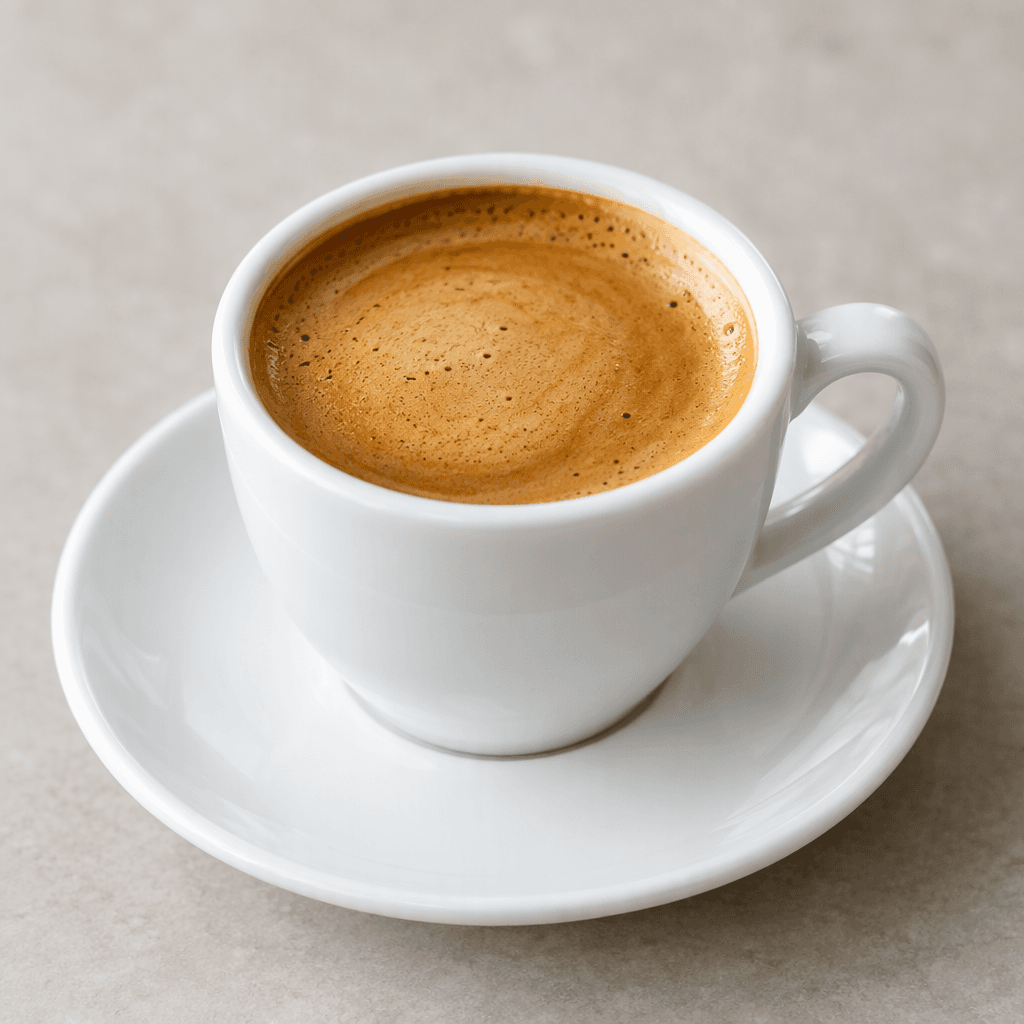
Dibek Coffee Calories
Traditional Turkish coffee, ground in stone mortars, smoother and richer flavor.
In season: Spring · Summer · Autumn · Winter
CALORIES
GI
POTASSIUM
FIBER
Quick answer
1 cup (small) of Dibek Coffee (60 g) has 12 calories. That works out to 20 calories per 100 g. It contains 2.1 g of carbs, 0.2 g of protein, 0.1 g of fat and 0 g of fiber. Its glycemic index is 0 (low), so it raises blood sugar slowly.
What is Dibek Coffee?
Dibek Coffee takes its name from the traditional stone mortar (dibek) once used to pound coffee beans. Today, the name may describe different grinds or blends, but the drink is rooted in Turkish coffee and is made with roasted coffee.
It is typically brewed in a cezve and served unfiltered in a small cup, with the grounds settling at the bottom. Its texture and flavour are often described as smooth and full-bodied. In Turkey it is commonly enjoyed after a meal, sometimes with a glass of water or a small sweet; elsewhere, it fits naturally into a coffee break. Plain Dibek Coffee is low in fat, and having it without added sugar keeps it lighter.
Dibek Coffee Nutrition Facts
Selected: 100 g
20
KCAL / 100G
Carbs
3.5g
· 1% DV
Protein
0.3g
· 1% DV
Fat
0.1g
· 0% DV
Fiber
0g
· 0% DV
DV is the share of the daily value covered, on a 2,000 kcal reference diet.
Calories come from: Carbs 87% · Protein 7% · Fat 6%

Log this food in EatBetter
100,000+ people use it
- Get your daily calorie target
- Snap your meal, log it in seconds
- See every vitamin and mineral

📸 Scan the code to get the app free.

Dibek Coffee Vitamins & Minerals
Vitamins
B3
0.3mg · 2% DV
B2
0.02mg · 2% DV
B5
0.07mg · 1% DV
B1
0.01mg · 1% DV
Minerals
Magnesium
15mg · 4% DV
Potassium ⭐
60mg · 2% DV
Phosphorus
7mg · 1% DV
Copper
0mg · 0% DV
How Nutritious Is Dibek Coffee?
Nutrient density
Low
How many vitamins, minerals and how much fiber this food carries per calorie. A high score means a lot of nutrition for few calories.
Satiety score
Medium
An EatBetter score computed from fiber, protein and calorie density. A high score means staying full longer on the same calories.
Both scores are calculated per 100 g and do not change with the selected portion. The satiety score is EatBetter's own calculation, not a clinical measure.
Dibek Coffee Glycemic Index
GLYCEMIC INDEX
GLYCEMIC LOAD
Accounts for portion size — a more realistic measure than GI alone.
How to Burn Off Dibek Coffee
To burn the 20 calories in 100 g:
🚶
Walking (5 km/h)
🏃
Running (8 km/h)
🚴
Cycling
🏊
Swimming
Times are calculated with the MET equation for a 70 kg adult. Actual burn varies with your weight, age and pace.
Is Dibek Coffee Processed?
NOVA 2
Minimally Processed
1. Unprocessed
2. Minimally Processed
3. Processed
4. Ultra-Processed
NOVA classifies foods into 4 groups by industrial processing. NOVA 1 (unprocessed) is the healthiest.
Does Dibek Coffee Contain Allergens?
No known major allergens
Which Diets Is Dibek Coffee Good For?
Vegan
✓ Suitable
Vegetarian
✓ Suitable
Gluten-Free
✓ Suitable
Dairy-Free
— Not suitable
Mediterranean
✓ Suitable
Paleo
✓ Suitable
Whole30
— Not suitable
DASH
— Not suitable
Keto
— Not suitable
Low FODMAP
— Not suitable
Dibek Coffee Fat Profile
SATURATED
0.01g
MONOUNSATURATED
0.01g
POLYUNSATURATED
0.01g
Compare Dibek Coffee
Foods Similar to Dibek Coffee
Frequently Asked Questions About Dibek Coffee
What is Dibek Coffee?
Dibek Coffee is a Turkish-style coffee traditionally made by pounding coffee beans in a stone mortar called a dibek. The name describes this traditional preparation, though modern products may be ground or blended differently.
What does “dibek” mean in Dibek Coffee?
“Dibek” means a large mortar used for pounding ingredients. In Dibek Coffee, the word refers to the traditional stone-mortar method of preparing the coffee, not to a single fixed recipe or list of added ingredients.
How is Dibek Coffee different from Turkish coffee?
Dibek Coffee is traditionally pounded in a mortar, while Turkish coffee is typically ground very finely. Both are commonly simmered and served with the grounds, but today the texture and ingredients can vary by product.
What is Dibek Coffee made from?
Dibek Coffee is based on coffee, but some products are blends that also contain ingredients such as mastic, cardamom, carob, or milk powder. The recipe is not standardized, so check the product’s ingredient list if you need to know its exact contents.
Does Dibek Coffee have caffeine?
Yes, Dibek Coffee made with coffee beans contains caffeine. The amount varies with the coffee and any other ingredients in the blend, as well as how much you use; drinking it late may interfere with sleep if you are caffeine-sensitive.
Why does Dibek Coffee taste smoother than regular Turkish coffee?
Dibek Coffee is often described as smoother and fuller, partly because of its traditional pounding method and, in some blends, added flavorings. The difference is not guaranteed: the taste depends on the product’s grind, roast, and recipe.
Can you make Dibek Coffee with milk?
Yes, you can prepare Dibek Coffee with milk instead of water for a creamier cup. If your blend already contains milk powder or other flavorings, the result may taste especially rich, so start with a small amount of the mix.
Is Dibek Coffee instant coffee?
Usually, Dibek Coffee is a ground coffee meant to be brewed rather than an instant coffee that dissolves completely. Some products may be sold as soluble mixes, so the preparation directions on the package will tell you which kind you have.
How is Dibek Coffee traditionally served?
Dibek Coffee is usually served hot in a small cup, often with a glass of water and a Turkish sweet such as lokum. Like Turkish coffee, it is served with its grounds, which settle at the bottom as you drink.
Can you drink Dibek Coffee cold?
Yes, you can serve brewed Dibek Coffee over ice, though this is not the traditional way to drink it. Let it cool first, then pour it over ice; adding ice while it is hot can dilute its rich flavor.
Have another question about Dibek Coffee?
Ask the AI nutrition coach — calories, portions, alternatives and more, answered in seconds in the app.

Scan calories with your camera
Instant AI nutrition analysis

Nutrition data compiled from USDA FoodData Central and scientific sources.