

Ready & Packaged Foods
All →Vegetables & Legumes
All →Desserts & Confectionery
All →Meat & Protein
All →Grains & Bakery
All →Beverages
All →Milk & Dairy
All →

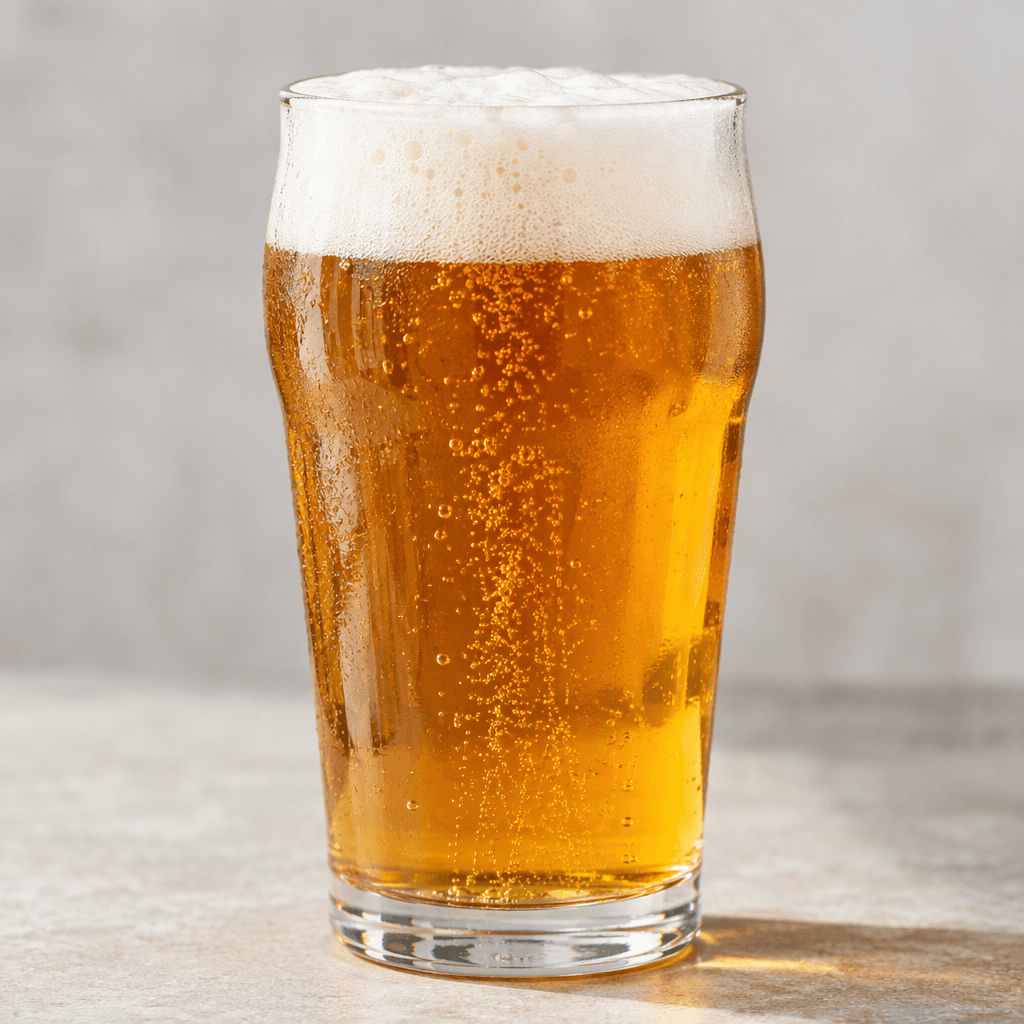
Craft Beer Calories
Handcrafted beer made with diverse malts and hops.
In season: Spring · Summer · Autumn · Winter
CALORIES
GI
POTASSIUM
FIBER
Quick answer
1 bottle (medium) of Craft Beer (330 g) has 142 calories. That works out to 43 calories per 100 g. It contains 11.9 g of carbs, 1.7 g of protein, 0 g of fat and 0 g of fiber. Its 1.7 mg of B3 covers 10% of the Daily Value. Its glycemic index is 110 (high), so it raises blood sugar quickly.
What is Craft Beer?
Craft Beer is brewed from malted grains, hops, water and yeast, with an emphasis on distinctive recipes and brewing skill. The term is often associated with smaller, independent breweries, though craft-style beers are now made at different scales. The choice of malts and hops shapes each beer’s colour, aroma and bitterness.
It is commonly poured into a glass and enjoyed at a pub, with a meal, or alongside savoury snacks; styles range from malty and mellow to sharply bitter and aromatic. Nutritionally, it provides energy and carbohydrates, with little protein and no fat listed here. At 43 calories per 100 g, it can fit into a meal or tasting occasion; for a lighter pairing, try grilled vegetables or a modest portion of salty snacks, and check the label for alcohol content.
Craft Beer Nutrition Facts
Selected: 100 g
43
KCAL / 100G
Carbs
3.6g
· 1% DV
Protein
0.5g
· 1% DV
Fat
0g
· 0% DV
Fiber
0g
· 0% DV
DV is the share of the daily value covered, on a 2,000 kcal reference diet.
Calories come from: Carbs 88% · Protein 12% · Fat 0%
Craft Beer Vitamins & Minerals
Vitamins
B3
0.5mg · 3% DV
B1
0.02mg · 2% DV
Biotin
0.5µg · 2% DV
B2
0.01mg · 1% DV
Minerals
Phosphorus
13mg · 2% DV
Calcium
5mg · 1% DV
Magnesium
6mg · 1% DV
Potassium ⭐
27mg · 1% DV
How Nutritious Is Craft Beer?
Nutrient density
Low
How many vitamins, minerals and how much fiber this food carries per calorie. A high score means a lot of nutrition for few calories.
Satiety score
Medium
An EatBetter score computed from fiber, protein and calorie density. A high score means staying full longer on the same calories.
Both scores are calculated per 100 g and do not change with the selected portion. The satiety score is EatBetter's own calculation, not a clinical measure.
Craft Beer Glycemic Index
GLYCEMIC INDEX
GLYCEMIC LOAD
Accounts for portion size — a more realistic measure than GI alone.
How to Burn Off Craft Beer
To burn the 43 calories in 100 g:
🚶
Walking (5 km/h)
🏃
Running (8 km/h)
🚴
Cycling
🏊
Swimming
Times are calculated with the MET equation for a 70 kg adult. Actual burn varies with your weight, age and pace.
Is Craft Beer Processed?
NOVA 3
Processed
1. Unprocessed
2. Minimally Processed
3. Processed
4. Ultra-Processed
NOVA classifies foods into 4 groups by industrial processing. NOVA 1 (unprocessed) is the healthiest.
Does Craft Beer Contain Allergens?
Contains these allergens:
Which Diets Is Craft Beer Good For?
Vegan
✓ Suitable
Vegetarian
✓ Suitable
Gluten-Free
— Not suitable
Dairy-Free
— Not suitable
Mediterranean
— Not suitable
Paleo
— Not suitable
Whole30
— Not suitable
DASH
— Not suitable
Keto
— Not suitable
Low FODMAP
— Not suitable
Craft Beer Fat Profile
SATURATED
0g
MONOUNSATURATED
0g
POLYUNSATURATED
0g
Compare Craft Beer
Foods Similar to Craft Beer
Frequently Asked Questions About Craft Beer
What makes craft beer different from regular beer?
Craft beer is typically made by smaller or independent breweries that experiment with ingredients, styles, and recipes. It is not automatically stronger or better than other beer; its defining appeal is often the wider range of flavors and brewing approaches.
Why is craft beer often more expensive?
Craft beer can cost more because small batches, specialty ingredients, and less automated production may raise the cost per bottle. Limited distribution can also affect its price, although some craft beers cost about the same as mainstream options.
Does craft beer have more alcohol than regular beer?
No, craft beer is not always higher in alcohol. Strength varies by beer and recipe, so check the alcohol-by-volume figure on the label rather than assuming that an IPA, stout, or other style is especially strong.
What is the difference between an IPA and a pale ale?
An IPA is a type of pale ale that is commonly made with a more prominent hop aroma or bitterness. The styles overlap, and individual beers vary, but pale ales are often a milder starting point for someone who finds IPAs too bitter.
Why does craft beer taste fruity if it contains no fruit?
Craft beer can smell or taste fruity because hops and yeast produce aromas that resemble citrus, tropical fruit, or berries. Those flavors do not necessarily mean fruit was added; the brewer’s ingredients and fermentation choices create the impression.
Why is some craft beer cloudy?
Some craft beer is intentionally cloudy because yeast, proteins, or unfiltered ingredients remain suspended in it. Hazy styles are not necessarily spoiled; check for an unexpected sour or unpleasant smell and follow the brewery’s storage instructions.
Should you pour craft beer into a glass?
Yes, pouring craft beer into a clean glass helps release its aroma and makes the foam easier to appreciate. Pour steadily down the side at first, then tilt the glass upright near the end to form a modest head.
What food goes well with craft beer?
Craft beer pairs well with food chosen to match its style: hoppy IPAs can cut through spicy or rich dishes, while roasted stouts suit chocolate desserts. For a casual meal, try a pale ale with burgers or a crisp lager with salty snacks.
Does craft beer need to be refrigerated?
Yes, refrigeration helps preserve craft beer’s flavor, especially for hoppy styles that lose their fresh aroma over time. Keep bottles or cans away from heat and sunlight, and follow any freshness or storage guidance printed by the brewery.
Can you drink craft beer while pregnant?
No, the safest choice during pregnancy is to avoid craft beer and all other alcoholic drinks. Alcohol can reach the developing baby, and there is no established safe amount or safe time to drink during pregnancy.
Have another question about Craft Beer?
Ask the AI nutrition coach — calories, portions, alternatives and more, answered in seconds in the app.

Scan calories with your camera
Instant AI nutrition analysis

Nutrition data compiled from USDA FoodData Central and scientific sources.