

Ready & Packaged Foods
All →Vegetables & Legumes
All →Desserts & Confectionery
All →Meat & Protein
All →Grains & Bakery
All →Beverages
All →Milk & Dairy
All →

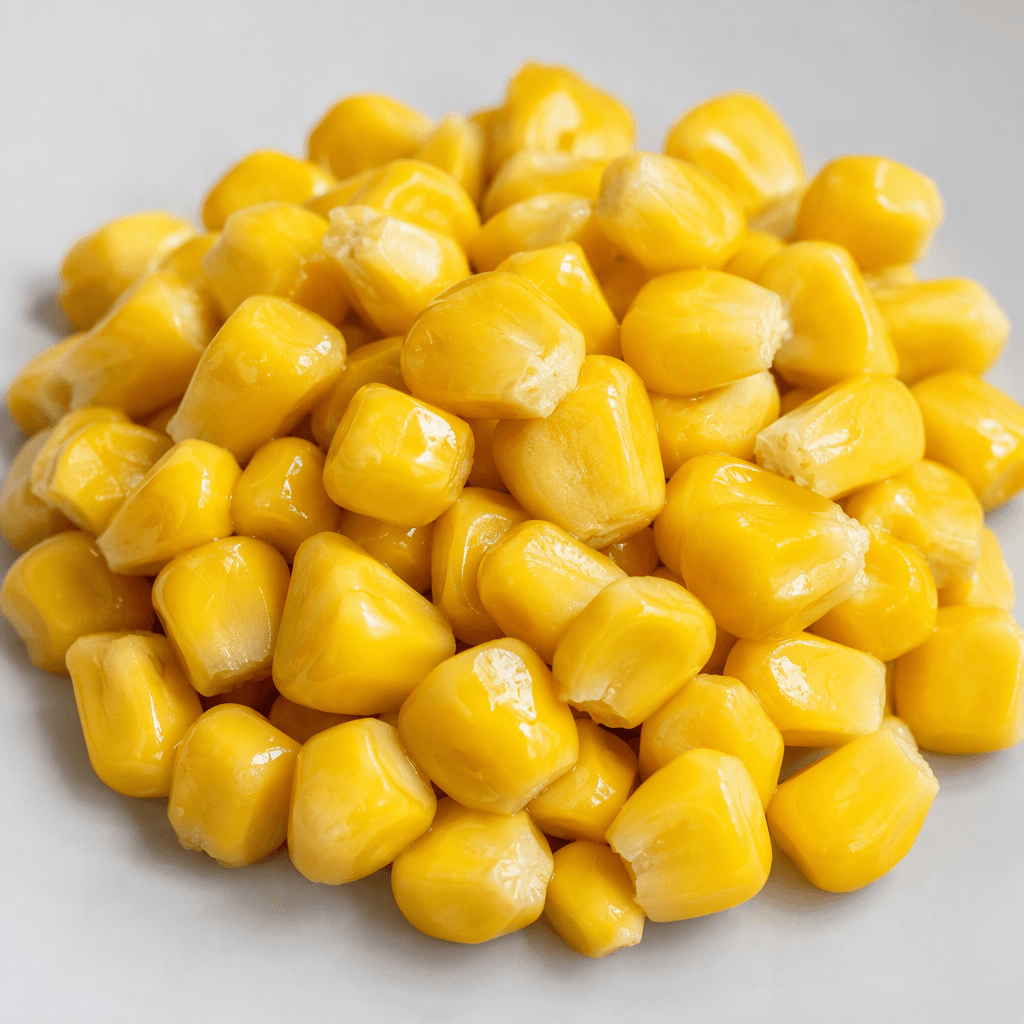
Corn Kernels Calories
Source of fiber and energy, contains B vitamins
In season: Summer · Autumn
CALORIES
GI
POTASSIUM
FIBER
Quick answer
1 cup (medium) of Corn Kernels (150 g) has 129 calories. That works out to 86 calories per 100 g. It contains 28.5 g of carbs, 4.8 g of protein, 1.8 g of fat and 4.1 g of fiber. Its 9 µg of Biotin covers 30% of the Daily Value. Its glycemic index is 52 (medium), so it raises blood sugar at a moderate pace.
What is Corn Kernels?
Corn kernels are the individual seeds cut or picked from an ear of maize, a crop first domesticated in the Americas. They’re sold fresh, frozen or canned, and used around the world in soups, salads, stews and grain dishes. Their mildly sweet flavour and juicy, slightly crisp bite also make them an easy topping for tacos, baked potatoes or a simple bowl of rice.
Corn kernels provide carbohydrates for energy, along with fibre and B vitamins; 100 g has 2.7 g of fibre. For a lighter side, toss them with chopped herbs, lime or a little olive oil, or stir them into a bean salad for a more filling dish.
Corn Kernels Nutrition Facts
Selected: 100 g
86
KCAL / 100G
Carbs
19g
· 7% DV
Protein
3.2g
· 6% DV
Fat
1.2g
· 2% DV
Fiber
2.7g
· 10% DV
DV is the share of the daily value covered, on a 2,000 kcal reference diet.
Calories come from: Carbs 76% · Protein 13% · Fat 11%
Corn Kernels Vitamins & Minerals
Vitamins
Biotin
6µg · 20% DV
B1
0.2mg · 17% DV
B5
0.7mg · 14% DV
B3
1.7mg · 11% DV
Minerals
Phosphorus
89mg · 13% DV
Magnesium
37mg · 9% DV
Zinc
1mg · 9% DV
Potassium ⭐
270mg · 8% DV
How Nutritious Is Corn Kernels?
Nutrient density
Medium
How many vitamins, minerals and how much fiber this food carries per calorie. A high score means a lot of nutrition for few calories.
Satiety score
Medium
An EatBetter score computed from fiber, protein and calorie density. A high score means staying full longer on the same calories.
Both scores are calculated per 100 g and do not change with the selected portion. The satiety score is EatBetter's own calculation, not a clinical measure.
Corn Kernels Glycemic Index
GLYCEMIC INDEX
GLYCEMIC LOAD
Accounts for portion size — a more realistic measure than GI alone.
How to Burn Off Corn Kernels
To burn the 86 calories in 100 g:
🚶
Walking (5 km/h)
🏃
Running (8 km/h)
🚴
Cycling
🏊
Swimming
Times are calculated with the MET equation for a 70 kg adult. Actual burn varies with your weight, age and pace.
Is Corn Kernels Processed?
NOVA 1
Unprocessed
1. Unprocessed
2. Minimally Processed
3. Processed
4. Ultra-Processed
NOVA classifies foods into 4 groups by industrial processing. NOVA 1 (unprocessed) is the healthiest.
Does Corn Kernels Contain Allergens?
No known major allergens
Which Diets Is Corn Kernels Good For?
Vegan
✓ Suitable
Vegetarian
✓ Suitable
Gluten-Free
✓ Suitable
Dairy-Free
— Not suitable
Mediterranean
✓ Suitable
Paleo
✓ Suitable
Whole30
— Not suitable
DASH
— Not suitable
Keto
— Not suitable
Low FODMAP
— Not suitable
Corn Kernels Fat Profile
SATURATED
0.18g
MONOUNSATURATED
0.3g
POLYUNSATURATED
0.5g
Omega 6:3 ratio 50:1
Above the ideal 4:1 (50:1).
Compare Corn Kernels
Foods Similar to Corn Kernels
Frequently Asked Questions About Corn Kernels
How do you cook corn kernels in the microwave?
Put corn kernels in a microwave-safe bowl with a small splash of water, cover loosely, and heat until tender, stirring once during cooking. Let the bowl stand briefly before uncovering, since trapped steam can cause burns.
Can you eat corn kernels raw?
Yes, fresh sweet corn kernels can be eaten raw after you rinse them. They are often cooked because heat softens them and brings out their sweetness. Canned corn kernels are already cooked and can be eaten after draining.
Can you freeze fresh corn kernels?
Yes, fresh corn kernels freeze well. Blanch them briefly, cool them quickly in cold water, drain thoroughly, and pack them airtight. Freezing kernels in meal-size portions makes it easier to add them straight to soups, sides, and other cooked dishes.
How long do cooked corn kernels last in the fridge?
Cooked corn kernels generally keep for about three to four days in the refrigerator when stored promptly in a covered container. Refrigerate them within two hours of cooking, and reheat only the portion you plan to eat.
Why do corn kernels show up whole in your stool?
The outer skin of corn kernels contains tough fiber that your digestive system does not fully break down, so pieces can look intact in stool. This is usually normal; chewing the kernels thoroughly helps expose more of their inner contents.
Are sweet corn kernels the same as popcorn kernels?
No, sweet corn kernels and popcorn kernels come from different types of corn. Popcorn has a hard outer hull and enough internal moisture to pop when heated; sweet corn kernels usually soften or scorch instead.
How do you remove corn kernels from the cob?
Stand the cob upright on a stable cutting board and slice downward with a sharp knife, keeping the blade close to the cob. Rotate it and repeat until the kernels are removed, taking care not to cut deeply into the tough core.
Do you need to rinse canned corn kernels?
No, rinsing canned corn kernels is optional. Drain and rinse them if you want to remove the canning liquid and some of its salt; for a hot dish, you can drain them and add them directly to the recipe.
Can you cook frozen corn kernels without thawing them?
Yes, add frozen corn kernels straight to boiling water, a hot pan, or a soup. Cook until heated through, stirring as needed. Thawing first is unnecessary and can make the kernels watery, especially when you plan to sauté them.
Do corn kernels raise blood sugar?
Yes, the carbohydrates in corn kernels can raise blood sugar. The effect varies with the portion and the rest of the meal; if you have diabetes, follow your individualized meal plan when deciding how much to serve.
Have another question about Corn Kernels?
Ask the AI nutrition coach — calories, portions, alternatives and more, answered in seconds in the app.

Scan calories with your camera
Instant AI nutrition analysis

Nutrition data compiled from USDA FoodData Central and scientific sources.