

Ready & Packaged Foods
All →Vegetables & Legumes
All →Desserts & Confectionery
All →Meat & Protein
All →Grains & Bakery
All →Beverages
All →Milk & Dairy
All →

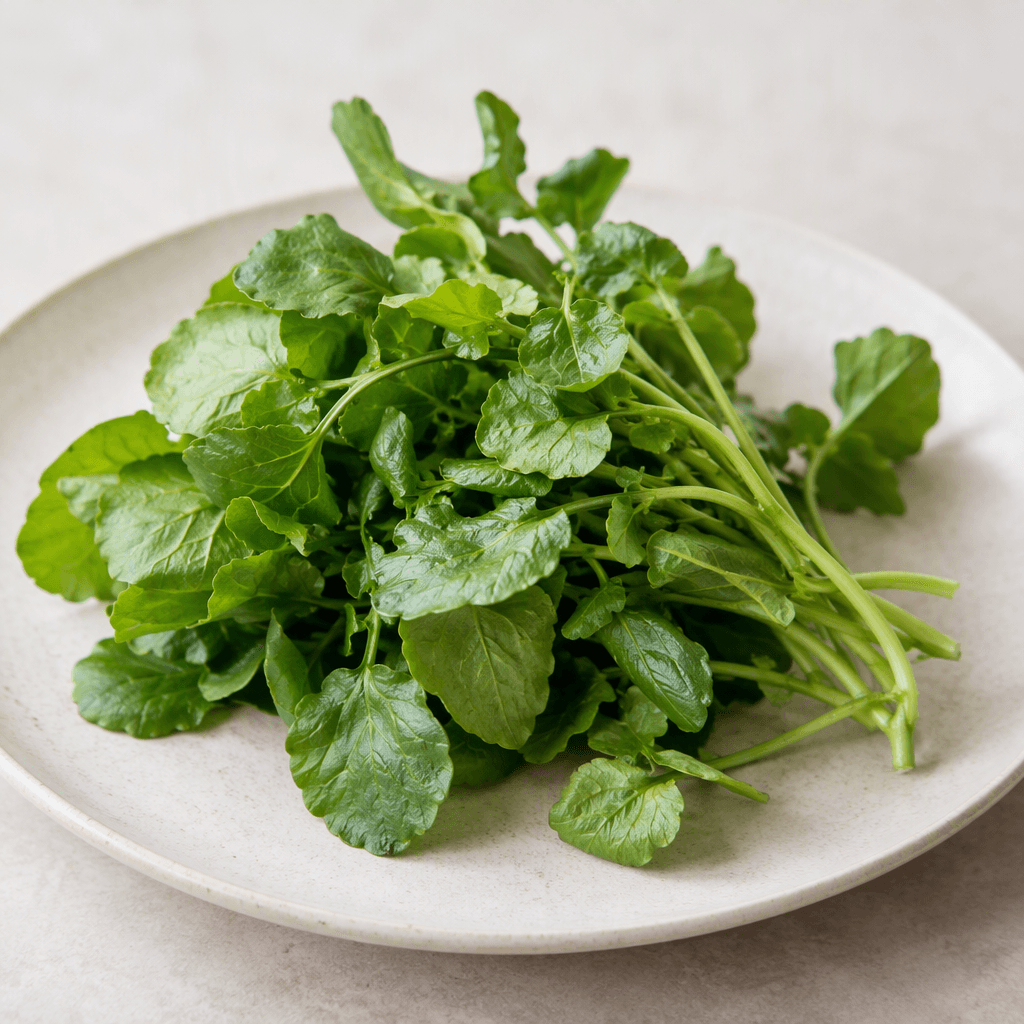
Corcill Calories
Low calorie, source of fiber, contains various vitamins and minerals
In season: Spring · Summer · Autumn
CALORIES
GI
POTASSIUM
FIBER
Quick answer
1 cup (chopped) of Corcill (70 g) has 15 calories. That works out to 22 calories per 100 g. It contains 2.3 g of carbs, 1.8 g of protein, 0.2 g of fat and 0.7 g of fiber. Its 11.2 µg of Biotin covers 37% of the Daily Value. Its glycemic index is 15 (low), so it raises blood sugar slowly.
What is Corcill?
Corcill is listed as a vegetable, though the name is not a familiar common vegetable name in many English-speaking kitchens. Rather than tying it to a specific regional tradition without reliable grounds, it is best approached as a green vegetable that can be eaten raw or lightly cooked.
Try it chopped into a salad, or briefly sautéed and served alongside eggs, grains or a main dish; a mild dressing lets its own flavour come through. It also fits easily into soups and vegetable sides. At 22 calories per 100 g, Corcill is a light option and provides some fibre, so it can add variety to a meal without making the plate heavy. Pair it with lemon and use just enough oil to coat the greens.
Corcill Nutrition Facts
Selected: 100 g
22
KCAL / 100G
Carbs
3.3g
· 1% DV
Protein
2.5g
· 5% DV
Fat
0.3g
· 0% DV
Fiber
1g
· 4% DV
DV is the share of the daily value covered, on a 2,000 kcal reference diet.
Calories come from: Carbs 51% · Protein 39% · Fat 10%
Corcill Vitamins & Minerals
Vitamins
Biotin
16µg · 53% DV
B2
0.35mg · 27% DV
B3
3.8mg · 24% DV
B5
1.2mg · 24% DV
Minerals
Phosphorus
120mg · 17% DV
Zinc
1mg · 9% DV
Potassium ⭐
318mg · 9% DV
Iron
1mg · 6% DV
How Nutritious Is Corcill?
Nutrient density
High
How many vitamins, minerals and how much fiber this food carries per calorie. A high score means a lot of nutrition for few calories.
Satiety score
Medium
An EatBetter score computed from fiber, protein and calorie density. A high score means staying full longer on the same calories.
Both scores are calculated per 100 g and do not change with the selected portion. The satiety score is EatBetter's own calculation, not a clinical measure.
Corcill Glycemic Index
GLYCEMIC INDEX
GLYCEMIC LOAD
Accounts for portion size — a more realistic measure than GI alone.
How to Burn Off Corcill
To burn the 22 calories in 100 g:
🚶
Walking (5 km/h)
🏃
Running (8 km/h)
🚴
Cycling
🏊
Swimming
Times are calculated with the MET equation for a 70 kg adult. Actual burn varies with your weight, age and pace.
Is Corcill Processed?
NOVA 1
Unprocessed
1. Unprocessed
2. Minimally Processed
3. Processed
4. Ultra-Processed
NOVA classifies foods into 4 groups by industrial processing. NOVA 1 (unprocessed) is the healthiest.
Does Corcill Contain Allergens?
No known major allergens
Which Diets Is Corcill Good For?
Vegan
✓ Suitable
Vegetarian
✓ Suitable
Gluten-Free
✓ Suitable
Dairy-Free
— Not suitable
Mediterranean
✓ Suitable
Paleo
✓ Suitable
Whole30
— Not suitable
DASH
— Not suitable
Keto
✓ Suitable
Low FODMAP
— Not suitable
Corcill Fat Profile
SATURATED
0.05g
MONOUNSATURATED
0.01g
POLYUNSATURATED
0.08g
Omega 6:3 ratio 7:1
Above the ideal 4:1 (7:1).
Compare Corcill
Foods Similar to Corcill
Frequently Asked Questions About Corcill
What is corcill?
Corcill is a vegetable that can be chopped into salads or added to cooked dishes. Since the name may refer to different local produce, choose fresh, firm pieces and use it in the way you would a tender green vegetable.
How do you cook corcill?
You can sauté corcill briefly or stir it into soups and vegetable dishes near the end of cooking. A short cooking time helps preserve its fresh texture; prolonged cooking may leave it limp.
Can you eat corcill raw?
Yes, corcill can be eaten raw when it is fresh and thoroughly washed. Chop it into a salad or add it to a sandwich, and discard any parts that are slimy, discolored, or unpleasant-smelling.
What does corcill taste like?
Corcill has a fresh, plant-like flavor, though the exact taste can vary with the variety and how mature it is. Try a small piece first, then pair it with lemon or olive oil if you want a brighter flavor.
How do you make a corcill salad?
For a simple corcill salad, wash and dry the vegetable, then toss it with tomato, cucumber, olive oil, and lemon juice. Add the dressing just before serving so the corcill does not become soggy.
How should you choose fresh corcill?
Choose corcill that looks firm and fresh, with an even color and no crushed or slimy patches. Avoid pieces that are yellowing or smell off, as these are signs that the vegetable is past its best.
How do you wash corcill properly?
Rinse corcill gently under cool running water, separating the pieces so grit can wash away. Drain it well or pat it dry before using; storing it wet can make it deteriorate more quickly.
How should corcill be stored in the refrigerator?
Keep unwashed, dry corcill in the refrigerator’s vegetable drawer, loosely wrapped in a paper towel. Wash it shortly before use and remove any pieces that have turned yellow or soft.
Can you freeze corcill?
Yes, but freezing can soften corcill, so thawed pieces are usually better in cooked dishes than in salads. Wash and dry it thoroughly, portion it, and add the frozen pieces directly to soup or another cooked dish.
What can you use instead of corcill in a recipe?
For a recipe that uses corcill as a fresh green, substitute another tender leafy vegetable with a similar texture, such as watercress or baby spinach. For cooked dishes, add the substitute near the end so it does not overcook.
Have another question about Corcill?
Ask the AI nutrition coach — calories, portions, alternatives and more, answered in seconds in the app.

Scan calories with your camera
Instant AI nutrition analysis

Nutrition data compiled from USDA FoodData Central and scientific sources.