

Ready & Packaged Foods
All →Vegetables & Legumes
All →Desserts & Confectionery
All →Meat & Protein
All →Grains & Bakery
All →Beverages
All →Milk & Dairy
All →

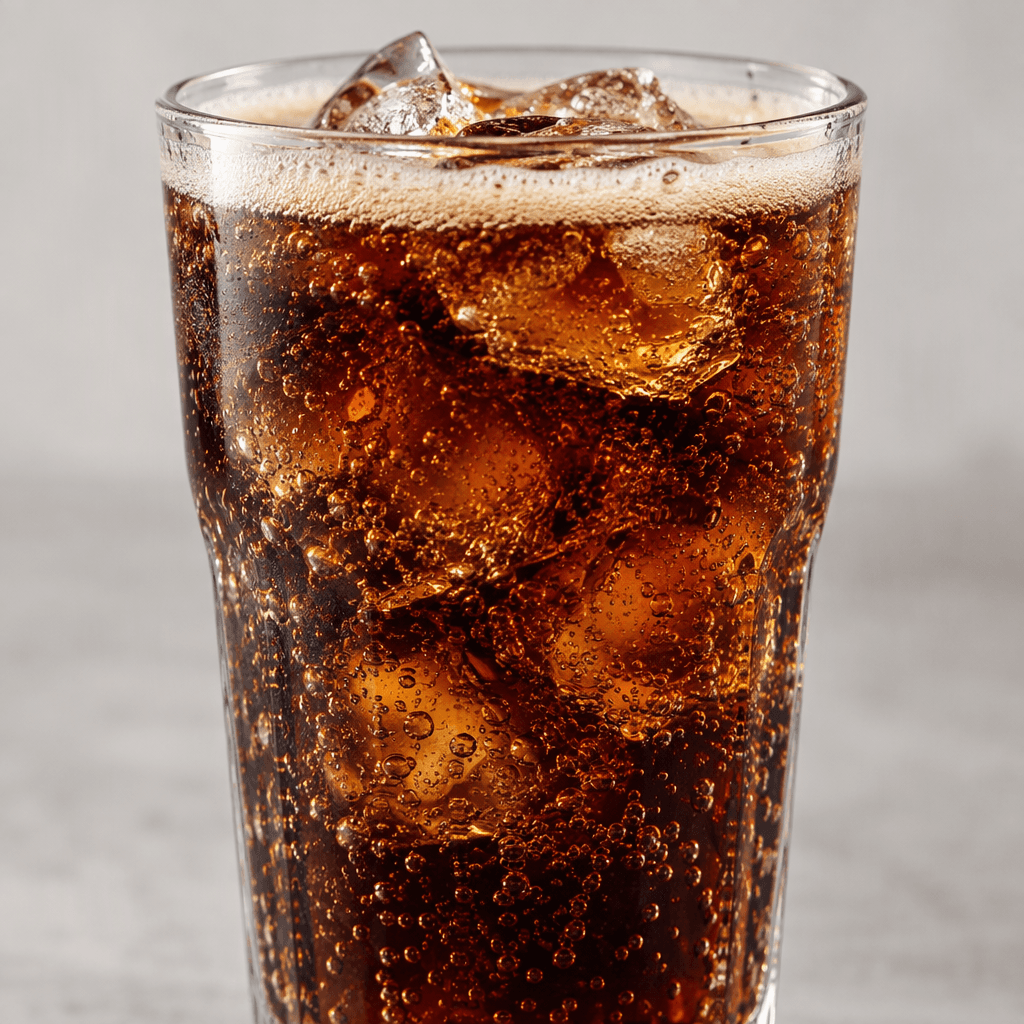
Cola soda Calories
Sugary carbonated soft drink
CALORIES
GI
POTASSIUM
FIBER
Quick answer
1 can (medium) of Cola soda (330 g) has 139 calories. That works out to 42 calories per 100 g. It contains 35 g of carbs, 0 g of protein, 0 g of fat and 0 g of fiber. Its 56.1 mg of Phosphorus covers 8% of the Daily Value. Its glycemic index is 63 (medium), so it raises blood sugar at a moderate pace.
What is Cola soda?
Cola soda is a sweet, fizzy soft drink with a distinctive caramel-like flavour, originating in the United States. It is usually served chilled; its fine bubbles and light foam are especially noticeable when poured into a glass.
In the US and many other places, it commonly accompanies burgers, pizza and snacks, and is also served with casual meals. Its nutritional character is mainly carbohydrate from sugar, with no protein, fat or fibre; it provides 42 calories per 100 g. For a lighter choice, pour a smaller serving or alternate it with water.
Cola soda Nutrition Facts
Selected: 100 g
42
KCAL / 100G
Carbs
10.6g
· 4% DV
Protein
0g
· 0% DV
Fat
0g
· 0% DV
Fiber
0g
· 0% DV
DV is the share of the daily value covered, on a 2,000 kcal reference diet.
Calories come from: Carbs 100% · Protein 0% · Fat 0%
Cola soda Vitamins & Minerals
Vitamins
Vitamin A
0µg · 0% DV
B1
0mg · 0% DV
B2
0mg · 0% DV
B3
0mg · 0% DV
Minerals
Phosphorus
17mg · 2% DV
Calcium
2mg · 0% DV
Iron
0mg · 0% DV
Magnesium
0mg · 0% DV
How Nutritious Is Cola soda?
Nutrient density
Low
How many vitamins, minerals and how much fiber this food carries per calorie. A high score means a lot of nutrition for few calories.
Satiety score
Medium
An EatBetter score computed from fiber, protein and calorie density. A high score means staying full longer on the same calories.
Both scores are calculated per 100 g and do not change with the selected portion. The satiety score is EatBetter's own calculation, not a clinical measure.
Cola soda Glycemic Index
GLYCEMIC INDEX
GLYCEMIC LOAD
Accounts for portion size — a more realistic measure than GI alone.
How to Burn Off Cola soda
To burn the 42 calories in 100 g:
🚶
Walking (5 km/h)
🏃
Running (8 km/h)
🚴
Cycling
🏊
Swimming
Times are calculated with the MET equation for a 70 kg adult. Actual burn varies with your weight, age and pace.
Is Cola soda Processed?
NOVA 4
Ultra-Processed
1. Unprocessed
2. Minimally Processed
3. Processed
4. Ultra-Processed
NOVA classifies foods into 4 groups by industrial processing. NOVA 1 (unprocessed) is the healthiest.
Does Cola soda Contain Allergens?
No known major allergens
Which Diets Is Cola soda Good For?
Vegan
✓ Suitable
Vegetarian
✓ Suitable
Gluten-Free
✓ Suitable
Dairy-Free
— Not suitable
Mediterranean
✓ Suitable
Paleo
— Not suitable
Whole30
— Not suitable
DASH
— Not suitable
Keto
— Not suitable
Low FODMAP
— Not suitable
Cola soda Fat Profile
SATURATED
0g
MONOUNSATURATED
0g
POLYUNSATURATED
0g
Compare Cola soda
Foods Similar to Cola soda
Frequently Asked Questions About Cola soda
Does cola soda contain caffeine?
Many cola sodas do contain caffeine, but the amount varies by product and country. Some versions are caffeine-free, so choose one specifically labelled that way if you are avoiding caffeine.
Is cola soda bad for you?
Regular cola soda is not a health-promoting drink. Frequent intake of its added sugar and acidity can contribute to tooth decay and make it easier to consume excess sugar; water is a better everyday choice.
Does cola soda hydrate you?
Yes, cola soda provides fluid, but it is not the best drink for routine hydration because regular versions contain substantial added sugar, and many contain caffeine. Choose water for everyday thirst.
Can cola soda damage tooth enamel?
Yes, cola soda is acidic, and regular versions also contain sugar, so frequent sipping can contribute to enamel erosion and cavities. Drink it with a meal rather than sipping for hours, then rinse with water.
Can cola soda help an upset stomach?
No, cola soda is not a proven treatment for nausea or an upset stomach. Its carbonation may increase bloating, while the sugar can feel unpleasant when you are already nauseated.
Does cola soda keep you awake?
It can, if the cola soda contains caffeine. Having it later in the day may make it harder to fall asleep, especially if you are sensitive to caffeine; caffeine-free cola avoids that particular effect.
Why does cola soda fizz when you pour it over ice?
Cola soda fizzes because dissolved carbon dioxide escapes when the drink is poured, and the ice provides surfaces where bubbles can form. Rough or chipped ice can create even more bubbling and foam.
Is it safe to drink flat cola soda?
Usually, yes: losing its fizz does not by itself make cola soda unsafe. Keep an opened bottle refrigerated and covered, and discard it if its smell, appearance, or taste seems unusual.
Can you freeze cola soda?
You can freeze cola soda, but a sealed can or bottle may burst as the liquid expands. Freezing also changes the carbonation and texture, so use a freezer-safe container and leave room for expansion.
Does cola soda have more caffeine than coffee?
Usually, a serving of cola soda has less caffeine than a typical serving of brewed coffee, but serving sizes and recipes vary. Cola soda can still affect sleep if you drink it late or are caffeine-sensitive.
Have another question about Cola soda?
Ask the AI nutrition coach — calories, portions, alternatives and more, answered in seconds in the app.

Scan calories with your camera
Instant AI nutrition analysis

Nutrition data compiled from USDA FoodData Central and scientific sources.