

Ready & Packaged Foods
All →Vegetables & Legumes
All →Desserts & Confectionery
All →Meat & Protein
All →Grains & Bakery
All →Beverages
All →Milk & Dairy
All →

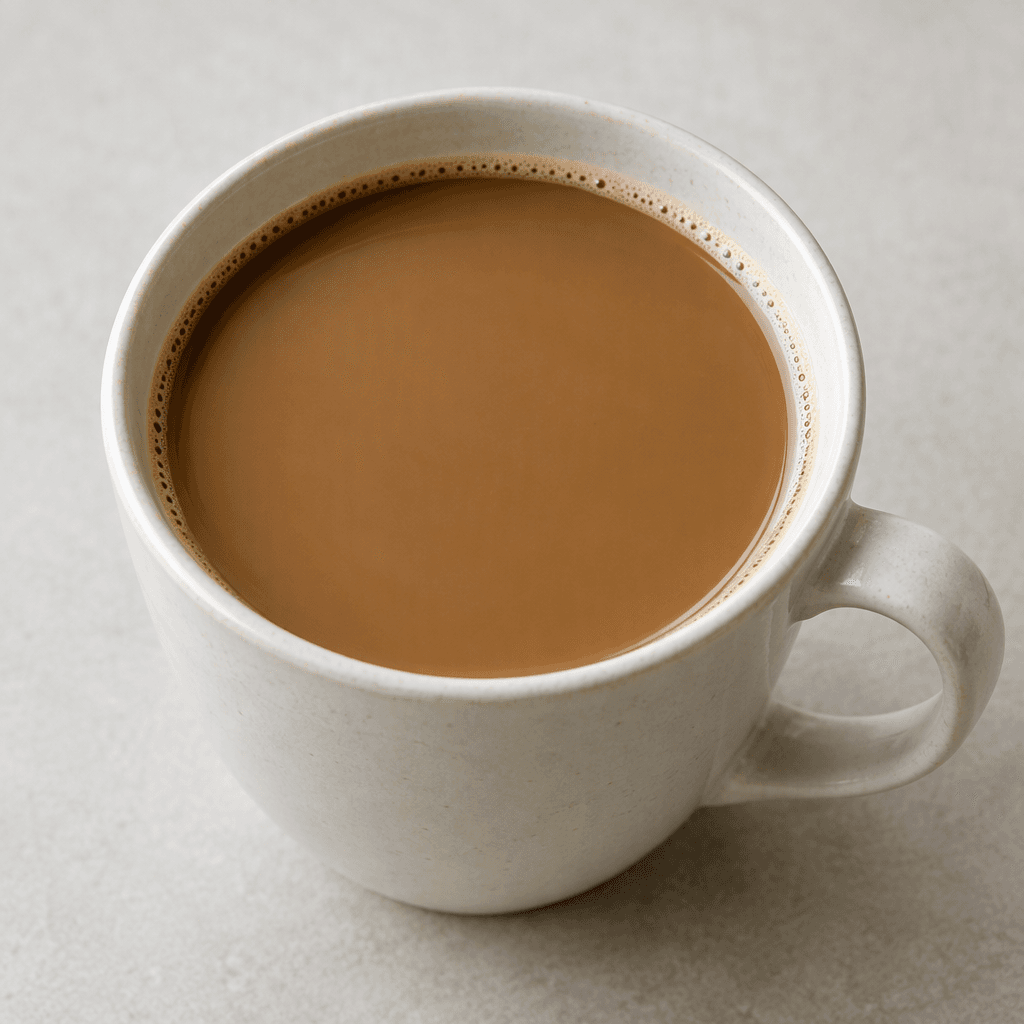
Coffee with low milk Calories
Coffee with low milk is a low-calorie, caffeinated beverage.
In season: Spring · Summer · Autumn · Winter
CALORIES
GI
POTASSIUM
FIBER
Quick answer
1 cup (medium) of Coffee with low milk (180 g) has 43 calories. That works out to 24 calories per 100 g. It contains 4.5 g of carbs, 2 g of protein, 1.4 g of fat and 0 g of fiber. Its 0.2 mg of B2 covers 12% of the Daily Value. Its glycemic index is 35 (low), so it raises blood sugar slowly.
What is Coffee with low milk?
Coffee with low milk is brewed or instant coffee mixed with a small amount of milk. It is a way of serving coffee rather than a single regional recipe: the coffee may be made in a filter machine, with instant granules, or by another local method, then softened with a splash of milk.
The result keeps coffee’s roasted, slightly bitter flavour, with a smoother, creamier finish than black coffee. It is commonly enjoyed at breakfast or as a daytime cup, whether at home or from a café; the exact coffee style varies around the world. It contains caffeine and is generally a light drink when only a little milk is added. Pair it with toast or a small biscuit, and leave out added sugar if you prefer to keep it lighter.
Coffee with low milk Nutrition Facts
Selected: 100 g
24
KCAL / 100G
Carbs
2.5g
· 1% DV
Protein
1.1g
· 2% DV
Fat
0.8g
· 1% DV
Fiber
0g
· 0% DV
DV is the share of the daily value covered, on a 2,000 kcal reference diet.
Calories come from: Carbs 46% · Protein 20% · Fat 34%
Coffee with low milk Vitamins & Minerals
Vitamins
B2
0.09mg · 7% DV
B5
0.3mg · 6% DV
Biotin
1.5µg · 5% DV
B1
0.02mg · 2% DV
Minerals
Calcium
40mg · 4% DV
Phosphorus
28mg · 4% DV
Potassium ⭐
110mg · 3% DV
Magnesium
8mg · 2% DV
How Nutritious Is Coffee with low milk?
Nutrient density
Low
How many vitamins, minerals and how much fiber this food carries per calorie. A high score means a lot of nutrition for few calories.
Satiety score
Medium
An EatBetter score computed from fiber, protein and calorie density. A high score means staying full longer on the same calories.
Both scores are calculated per 100 g and do not change with the selected portion. The satiety score is EatBetter's own calculation, not a clinical measure.
Coffee with low milk Glycemic Index
GLYCEMIC INDEX
GLYCEMIC LOAD
Accounts for portion size — a more realistic measure than GI alone.
How to Burn Off Coffee with low milk
To burn the 24 calories in 100 g:
🚶
Walking (5 km/h)
🏃
Running (8 km/h)
🚴
Cycling
🏊
Swimming
Times are calculated with the MET equation for a 70 kg adult. Actual burn varies with your weight, age and pace.
Is Coffee with low milk Processed?
NOVA 2
Minimally Processed
1. Unprocessed
2. Minimally Processed
3. Processed
4. Ultra-Processed
NOVA classifies foods into 4 groups by industrial processing. NOVA 1 (unprocessed) is the healthiest.
Does Coffee with low milk Contain Allergens?
Contains these allergens:
Which Diets Is Coffee with low milk Good For?
Vegan
— Not suitable
Vegetarian
✓ Suitable
Gluten-Free
— Not suitable
Dairy-Free
— Not suitable
Mediterranean
✓ Suitable
Paleo
— Not suitable
Whole30
— Not suitable
DASH
— Not suitable
Keto
— Not suitable
Low FODMAP
— Not suitable
Coffee with low milk Fat Profile
SATURATED
0.5g
MONOUNSATURATED
0.2g
POLYUNSATURATED
0.03g
Compare Coffee with low milk
Foods Similar to Coffee with low milk
Frequently Asked Questions About Coffee with low milk
Does coffee with low milk break an intermittent fast?
Yes, coffee with low milk breaks a strict fast because milk provides energy and nutrients. Black coffee is usually allowed during fasting windows, but follow the rules of your particular fasting plan.
Does coffee with low milk contain less caffeine than black coffee?
No, adding a little milk does not remove or meaningfully reduce the caffeine in the brewed coffee. The caffeine amount mainly depends on the coffee beans, serving size, and brewing method.
Can coffee with low milk help with weight loss?
It can fit into a weight-loss plan, especially without added sugar or syrups, but it does not cause weight loss by itself. Sweeteners and rich add-ins can make the drink more energy-dense.
Does coffee with low milk stain your teeth?
Yes, coffee with low milk can still stain teeth because the coffee’s dark pigments remain even when milk is added. Rinsing your mouth with water afterward can help clear residue, though it does not replace brushing.
Does milk make coffee with low milk less acidic?
A little milk can soften coffee’s sharp taste, but it does not reliably prevent coffee-related heartburn or reflux. If coffee bothers your stomach, try having it with food or choosing a less irritating brew.
How do you make coffee with low milk at home?
Brew your coffee using your preferred method, then stir in a small splash of milk. Add the milk after brewing so you can control the amount and keep the drink’s coffee flavor prominent.
Can coffee with low milk cause dehydration?
No, a normal serving of coffee with low milk does not usually dehydrate you. It contributes fluid, although caffeine may increase urination temporarily in people who are not used to it.
Is coffee with low milk safe during pregnancy?
It can be consumed during pregnancy, but its caffeine counts toward your daily total from all sources. Because caffeine content varies with the brew, ask your doctor or dietitian what limit is appropriate for you.
Can you reheat coffee with low milk?
Yes, you can reheat coffee with low milk, but warm it gently and avoid boiling it. Reheating can make the coffee taste more bitter and the milk less pleasant, so it is best freshly prepared.
Can people with lactose intolerance drink coffee with low milk?
Coffee with low milk made with regular dairy milk contains lactose and may cause symptoms such as bloating. Using lactose-free milk is a practical alternative, while plant-based milk changes the drink’s ingredients and taste.
Have another question about Coffee with low milk?
Ask the AI nutrition coach — calories, portions, alternatives and more, answered in seconds in the app.

Scan calories with your camera
Instant AI nutrition analysis

Nutrition data compiled from USDA FoodData Central and scientific sources.