

Ready & Packaged Foods
All →Vegetables & Legumes
All →Desserts & Confectionery
All →Meat & Protein
All →Grains & Bakery
All →Beverages
All →Milk & Dairy
All →

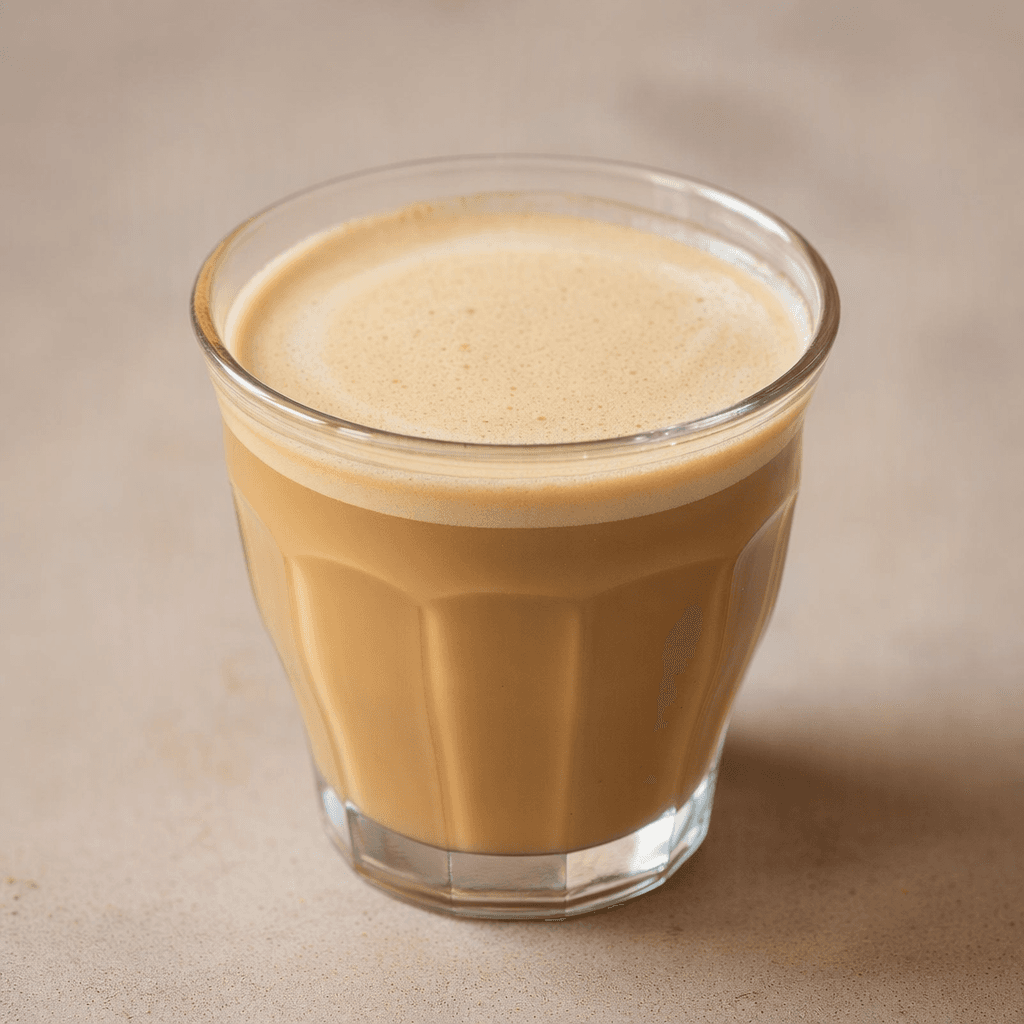
Coffee protein drink Calories
High-protein coffee beverage
CALORIES
GI
POTASSIUM
FIBER
Quick answer
1 bottle (medium) of Coffee protein drink (330 g) has 205 calories. That works out to 62 calories per 100 g. It contains 13.9 g of carbs, 28.1 g of protein, 4.6 g of fat and 1 g of fiber. Its 346.5 mg of Phosphorus covers 50% of the Daily Value. Its glycemic index is 32 (low), so it raises blood sugar slowly.
What is Coffee protein drink?
A coffee protein drink combines coffee flavour with added protein in a ready-to-drink beverage, often with a creamy, milk-based character. It is typically smooth and lightly foamy, offering a softer, more filling alternative to a plain iced coffee.
It can be enjoyed chilled at breakfast, as a coffee break, or after a workout; in warmer weather, pour it over ice. In the UK, US and elsewhere, it fits easily into a grab-and-go routine, though it also works alongside toast or fruit at home. Its defining nutritional feature is its protein content: it provides 8.5 g per 100 g. Choose it when you want coffee with a more substantial feel, or pair it with a lighter snack.
Coffee protein drink Nutrition Facts
Selected: 100 g
62
KCAL / 100G
Carbs
4.2g
· 2% DV
Protein
8.5g
· 17% DV
Fat
1.4g
· 2% DV
Fiber
0.3g
· 1% DV
DV is the share of the daily value covered, on a 2,000 kcal reference diet.
Calories come from: Carbs 26% · Protein 54% · Fat 20%
Coffee protein drink Vitamins & Minerals
Vitamins
B12
0.35µg · 15% DV
B2
0.18mg · 14% DV
B3
0.9mg · 6% DV
B5
0.32mg · 6% DV
Minerals
Phosphorus
105mg · 15% DV
Calcium
120mg · 12% DV
Selenium
3.2µg · 6% DV
Iodine
8µg · 5% DV
How Nutritious Is Coffee protein drink?
Nutrient density
Medium
How many vitamins, minerals and how much fiber this food carries per calorie. A high score means a lot of nutrition for few calories.
Satiety score
Medium
An EatBetter score computed from fiber, protein and calorie density. A high score means staying full longer on the same calories.
Both scores are calculated per 100 g and do not change with the selected portion. The satiety score is EatBetter's own calculation, not a clinical measure.
Coffee protein drink Glycemic Index
GLYCEMIC INDEX
GLYCEMIC LOAD
Accounts for portion size — a more realistic measure than GI alone.
How to Burn Off Coffee protein drink
To burn the 62 calories in 100 g:
🚶
Walking (5 km/h)
🏃
Running (8 km/h)
🚴
Cycling
🏊
Swimming
Times are calculated with the MET equation for a 70 kg adult. Actual burn varies with your weight, age and pace.
Is Coffee protein drink Processed?
NOVA 3
Processed
1. Unprocessed
2. Minimally Processed
3. Processed
4. Ultra-Processed
NOVA classifies foods into 4 groups by industrial processing. NOVA 1 (unprocessed) is the healthiest.
Does Coffee protein drink Contain Allergens?
Contains these allergens:
Which Diets Is Coffee protein drink Good For?
Vegan
— Not suitable
Vegetarian
✓ Suitable
Gluten-Free
✓ Suitable
Dairy-Free
— Not suitable
Mediterranean
✓ Suitable
Paleo
— Not suitable
Whole30
— Not suitable
DASH
— Not suitable
Keto
— Not suitable
Low FODMAP
— Not suitable
Coffee protein drink Fat Profile
SATURATED
0.8g
MONOUNSATURATED
0.35g
POLYUNSATURATED
0.11g
Omega 6:3 ratio 2.7:1
Below the ideal 4:1 — a good omega balance.
Compare Coffee protein drink
Foods Similar to Coffee protein drink
Frequently Asked Questions About Coffee protein drink
What is a coffee protein drink?
A coffee protein drink combines coffee with a protein-containing ingredient, commonly milk or a protein powder. Ready-to-drink versions vary in their protein source and added ingredients, while homemade versions can be made by blending chilled coffee with milk and protein powder.
Does a coffee protein drink contain caffeine?
Usually, yes: a coffee protein drink made with regular coffee contains caffeine. The amount varies with the coffee and recipe, and a decaffeinated version can contain much less; check the specific product if you need to limit caffeine.
Is a coffee protein drink good after a workout?
Yes, a coffee protein drink can be a convenient way to have protein after exercise. Its coffee may also provide caffeine, but it is not essential for recovery, and caffeine may not suit everyone after an evening workout.
Can you make a coffee protein drink with hot coffee?
Yes, but mix the protein powder with a little cold milk or water first, then stir it into the coffee. Adding powder straight to very hot coffee can make it clump, and some milk-based drinks may separate when overheated.
Can a coffee protein drink replace breakfast?
Sometimes, but a coffee protein drink alone may not keep you satisfied like a fuller breakfast. Pair it with a fiber-rich food, such as fruit or oats, if you need a more substantial morning meal.
Will a coffee protein drink help you lose weight?
Not by itself. A coffee protein drink may work as a filling snack, but it can also add sugar or replace a more balanced meal; how it fits into your eating habits matters more than the drink alone.
Can you drink a coffee protein drink at night?
You can, but caffeine in a coffee protein drink may make it harder to fall asleep, especially if you are sensitive to caffeine. Choose a decaffeinated version or have it earlier if evening coffee affects your sleep.
How long does a coffee protein drink last after opening?
Refrigerate a coffee protein drink as soon as it is opened and follow the storage directions on its package. Because many versions contain milk, do not leave an opened bottle at room temperature for an extended period.
Can a coffee protein drink replace a pre-workout drink?
It can provide coffee-derived caffeine and protein, but a coffee protein drink is not necessarily formulated like a pre-workout product. Check how caffeine affects you during exercise, and avoid taking extra caffeine without accounting for what is already in the drink.
Can you have a coffee protein drink during pregnancy?
Possibly, if the drink is made with pasteurized dairy and its caffeine fits your daily limit. Caffeine recommendations and individual circumstances matter during pregnancy, so ask your healthcare professional if you are unsure how this drink fits.
Have another question about Coffee protein drink?
Ask the AI nutrition coach — calories, portions, alternatives and more, answered in seconds in the app.

Scan calories with your camera
Instant AI nutrition analysis

Nutrition data compiled from USDA FoodData Central and scientific sources.