

Ready & Packaged Foods
All →Vegetables & Legumes
All →Desserts & Confectionery
All →Meat & Protein
All →Grains & Bakery
All →Beverages
All →Milk & Dairy
All →

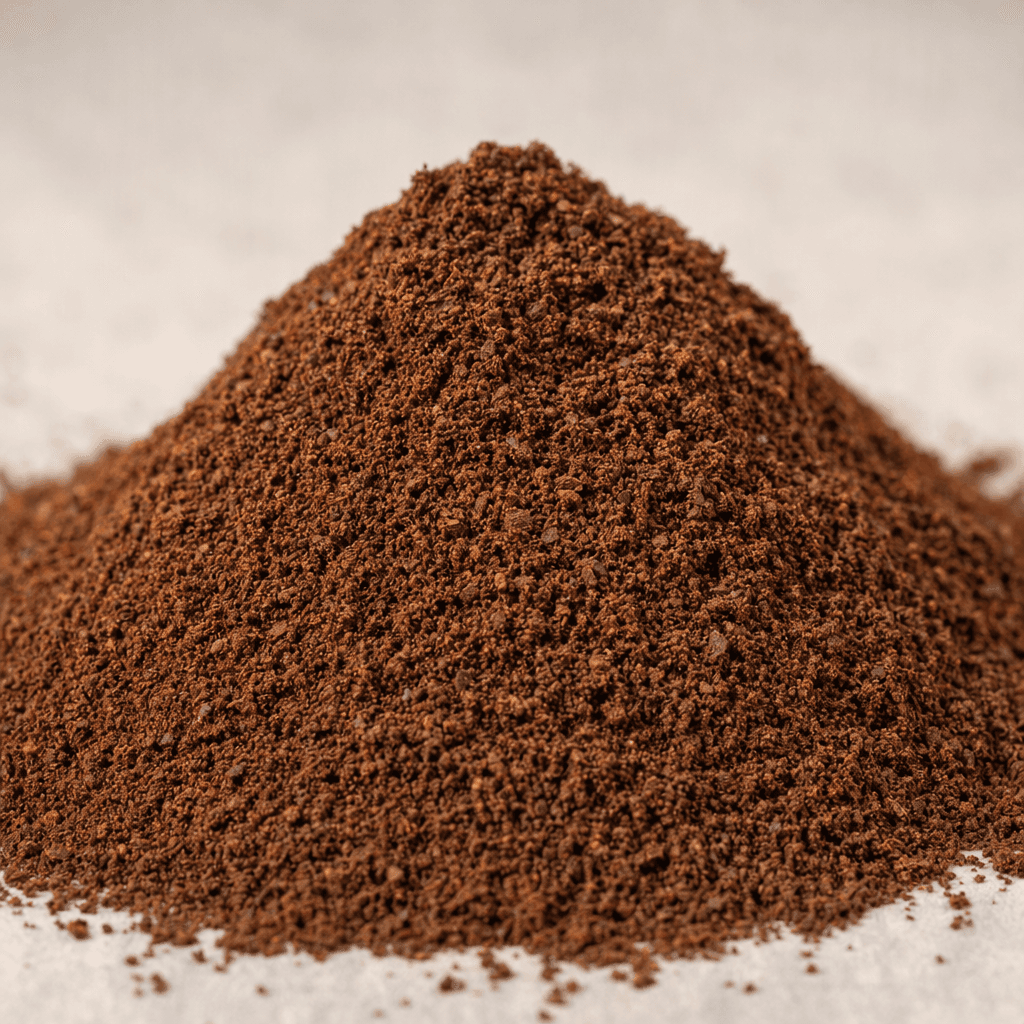
Coffee powder Calories
Coffee powder
In season: Spring · Summer · Autumn · Winter
CALORIES
GI
POTASSIUM
FIBER
Quick answer
1 tablespoon (medium) of Coffee powder (5 g) has 13 calories. That works out to 250 calories per 100 g. It contains 1.9 g of carbs, 0.7 g of protein, 0.2 g of fat and 0 g of fiber. Its 1.4 mg of B3 covers 9% of the Daily Value. Its glycemic index is 0 (low), so it raises blood sugar slowly.
What is Coffee powder?
Coffee powder is made by grinding roasted coffee beans. Depending on how finely it is ground, it can be brewed in different ways: very fine grounds are used for Turkish coffee, while coarser grinds suit methods such as a French press. It is brewed rather than eaten on its own, and the roast and grind shape its aroma and strength.
Across coffee-drinking cultures, it is served black or with additions such as milk, and often enjoyed at breakfast or during a break. Turkish coffee is simmered and poured with its grounds; filtered styles are strained before serving. Although dry coffee powder is concentrated, only a small amount goes into a cup, so the drink’s nutritional character depends in part on what you add. For a lighter cup, try it black or use less sugar.
Coffee powder Nutrition Facts
Selected: 100 g
250
KCAL / 100G
Carbs
38.7g
· 14% DV
Protein
14.5g
· 29% DV
Fat
3.1g
· 4% DV
Fiber
0g
· 0% DV
DV is the share of the daily value covered, on a 2,000 kcal reference diet.
Calories come from: Carbs 64% · Protein 24% · Fat 12%
Coffee powder Vitamins & Minerals
Vitamins
B3
28mg · 175% DV
B2
0.8mg · 62% DV
B1
0.2mg · 17% DV
B5
0.7mg · 14% DV
Minerals
Manganese
2mg · 87% DV
Magnesium
327mg · 78% DV
Potassium ⭐
2000mg · 59% DV
Phosphorus
160mg · 23% DV
How Nutritious Is Coffee powder?
Nutrient density
Medium
How many vitamins, minerals and how much fiber this food carries per calorie. A high score means a lot of nutrition for few calories.
Satiety score
Medium
An EatBetter score computed from fiber, protein and calorie density. A high score means staying full longer on the same calories.
Both scores are calculated per 100 g and do not change with the selected portion. The satiety score is EatBetter's own calculation, not a clinical measure.
Coffee powder Glycemic Index
GLYCEMIC INDEX
GLYCEMIC LOAD
Accounts for portion size — a more realistic measure than GI alone.
How to Burn Off Coffee powder
To burn the 250 calories in 100 g:
🚶
Walking (5 km/h)
🏃
Running (8 km/h)
🚴
Cycling
🏊
Swimming
Times are calculated with the MET equation for a 70 kg adult. Actual burn varies with your weight, age and pace.
Is Coffee powder Processed?
NOVA 2
Minimally Processed
1. Unprocessed
2. Minimally Processed
3. Processed
4. Ultra-Processed
NOVA classifies foods into 4 groups by industrial processing. NOVA 1 (unprocessed) is the healthiest.
Does Coffee powder Contain Allergens?
No known major allergens
Which Diets Is Coffee powder Good For?
Vegan
✓ Suitable
Vegetarian
✓ Suitable
Gluten-Free
✓ Suitable
Dairy-Free
— Not suitable
Mediterranean
✓ Suitable
Paleo
✓ Suitable
Whole30
— Not suitable
DASH
— Not suitable
Keto
✓ Suitable
Low FODMAP
— Not suitable
Coffee powder Fat Profile
SATURATED
0.2g
MONOUNSATURATED
0.7g
POLYUNSATURATED
0.5g
Omega 6:3 ratio 16.7:1
Above the ideal 4:1 (16.7:1).
Compare Coffee powder
Foods Similar to Coffee powder
Frequently Asked Questions About Coffee powder
Is coffee powder the same as instant coffee?
No. Coffee powder, in this context, is ground coffee beans; instant coffee is brewed coffee that has been dried into soluble granules or powder. Ground coffee needs to be brewed and then filtered or allowed to settle, while instant coffee dissolves in water.
How do you use coffee powder to make coffee?
Brew coffee powder with a method suited to its grind: use a paper or reusable filter, a French press, or an espresso machine. For Turkish coffee, use an extra-fine grind and simmer it in a cezve; the grounds are not filtered out.
What grind of coffee powder is used for Turkish coffee?
Turkish coffee requires an extra-fine, powder-like grind, finer than espresso. The fine particles stay suspended while the coffee simmers in a cezve and settle in the cup, so regular filter-ground coffee will not produce the traditional texture.
How should coffee powder be stored?
Keep coffee powder in an airtight, opaque container in a cool, dry place. Heat, light, air, and moisture make it lose aroma faster; store it away from the stove and close the container promptly after each use.
Does coffee powder expire?
Coffee powder can lose its aroma and taste over time, even when it does not show obvious spoilage. Discard it if it has become damp, moldy, or developed an unusual smell, and keep it sealed to preserve freshness after opening.
Does coffee powder contain caffeine?
Yes, coffee powder naturally contains caffeine. The amount in a brewed cup varies with the coffee bean, how much powder you use, and the brewing method; choose decaffeinated coffee or avoid late-day cups if caffeine affects your sleep.
Can you use coffee powder in an espresso machine?
Yes, if the coffee powder is ground finely enough for your espresso machine. A coarse grind can make espresso weak and watery, while an excessively fine or tightly packed dose can slow the flow; follow the machine’s instructions for the grind and basket.
Can you make cold brew with coffee powder?
Yes. Combine coarsely ground coffee powder with cold water, let it steep in the refrigerator, then strain it through a fine filter. A coarse grind is easier to filter and helps keep the finished drink from becoming gritty.
Can coffee powder be frozen?
Yes, coffee powder can be frozen if it is sealed in an airtight, moisture-proof container. Divide it into small portions so you do not repeatedly expose the whole supply to air, and let a portion come to room temperature while still sealed.
Can you eat coffee powder or coffee grounds?
You can swallow small amounts, but coffee powder is usually brewed rather than eaten. Grounds retain some caffeine and can be gritty or upset your stomach in larger amounts; strain brewed coffee instead of consuming the leftover grounds.
Have another question about Coffee powder?
Ask the AI nutrition coach — calories, portions, alternatives and more, answered in seconds in the app.

Scan calories with your camera
Instant AI nutrition analysis

Nutrition data compiled from USDA FoodData Central and scientific sources.