

Ready & Packaged Foods
All →Vegetables & Legumes
All →Desserts & Confectionery
All →Meat & Protein
All →Grains & Bakery
All →Beverages
All →Milk & Dairy
All →

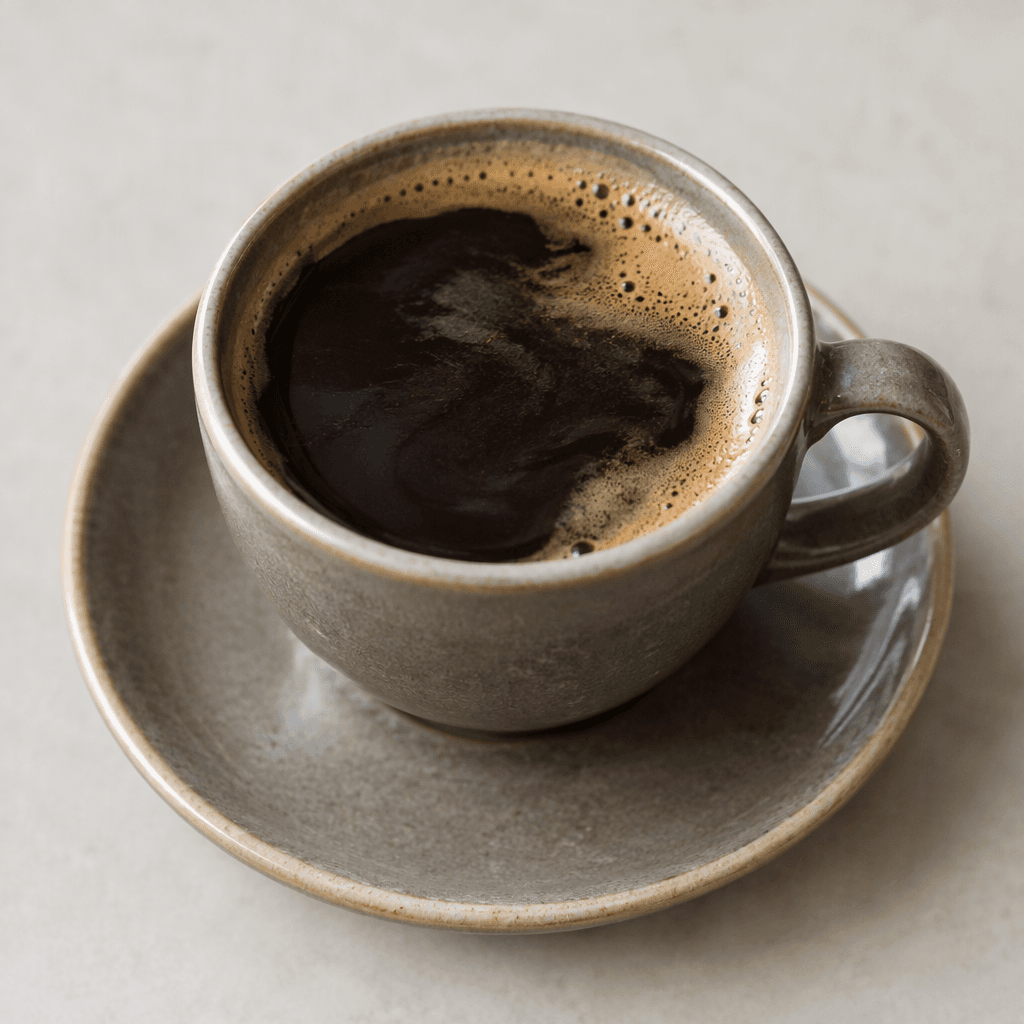
Coffee (Medium Sugar) Calories
Classic coffee prepared with a medium amount of sugar.
In season: Spring · Summer · Autumn · Winter
CALORIES
GI
POTASSIUM
FIBER
Quick answer
1 cup (medium) of Coffee (Medium Sugar) (120 g) has 42 calories. That works out to 35 calories per 100 g. It contains 10.2 g of carbs, 0.4 g of protein, 0.1 g of fat and 0 g of fiber. Its glycemic index is 60 (medium), so it raises blood sugar at a moderate pace.
What is Coffee (Medium Sugar)?
Coffee (Medium Sugar) is Turkish coffee prepared in a cezve with finely ground coffee, water and a moderate amount of sugar. It is poured unfiltered into a small cup, grounds and all; let them settle before drinking, and leave the sediment at the bottom. The sweetness falls between unsweetened and fully sweetened Turkish coffee.
Expect a strong, dark coffee flavour balanced by clear sweetness, sometimes topped with a thin layer of foam. In Turkey it is commonly served after a meal with a glass of water; elsewhere, it also works as a small after-dinner coffee. Most of its carbohydrate comes from the added sugar, while the drink is very low in fat and protein. For a lighter cup, ask for less sugar and skip an accompanying sweet.
Coffee (Medium Sugar) Nutrition Facts
Selected: 100 g
35
KCAL / 100G
Carbs
8.5g
· 3% DV
Protein
0.3g
· 1% DV
Fat
0.1g
· 0% DV
Fiber
0g
· 0% DV
DV is the share of the daily value covered, on a 2,000 kcal reference diet.
Calories come from: Carbs 94% · Protein 3% · Fat 3%
Coffee (Medium Sugar) Vitamins & Minerals
Vitamins
B3
0.3mg · 2% DV
B2
0.02mg · 2% DV
B6
0.01mg · 1% DV
B1
0.01mg · 1% DV
Minerals
Potassium ⭐
50mg · 1% DV
Magnesium
6mg · 1% DV
Calcium
5mg · 1% DV
Phosphorus
7mg · 1% DV
How Nutritious Is Coffee (Medium Sugar)?
Nutrient density
Low
How many vitamins, minerals and how much fiber this food carries per calorie. A high score means a lot of nutrition for few calories.
Satiety score
Medium
An EatBetter score computed from fiber, protein and calorie density. A high score means staying full longer on the same calories.
Both scores are calculated per 100 g and do not change with the selected portion. The satiety score is EatBetter's own calculation, not a clinical measure.
Coffee (Medium Sugar) Glycemic Index
GLYCEMIC INDEX
GLYCEMIC LOAD
Accounts for portion size — a more realistic measure than GI alone.
How to Burn Off Coffee (Medium Sugar)
To burn the 35 calories in 100 g:
🚶
Walking (5 km/h)
🏃
Running (8 km/h)
🚴
Cycling
🏊
Swimming
Times are calculated with the MET equation for a 70 kg adult. Actual burn varies with your weight, age and pace.
Is Coffee (Medium Sugar) Processed?
NOVA 2
Minimally Processed
1. Unprocessed
2. Minimally Processed
3. Processed
4. Ultra-Processed
NOVA classifies foods into 4 groups by industrial processing. NOVA 1 (unprocessed) is the healthiest.
Does Coffee (Medium Sugar) Contain Allergens?
No known major allergens
Which Diets Is Coffee (Medium Sugar) Good For?
Vegan
✓ Suitable
Vegetarian
✓ Suitable
Gluten-Free
✓ Suitable
Dairy-Free
— Not suitable
Mediterranean
✓ Suitable
Paleo
— Not suitable
Whole30
— Not suitable
DASH
— Not suitable
Keto
— Not suitable
Low FODMAP
— Not suitable
Coffee (Medium Sugar) Fat Profile
SATURATED
0.01g
MONOUNSATURATED
0.01g
POLYUNSATURATED
0.01g
Compare Coffee (Medium Sugar)
Foods Similar to Coffee (Medium Sugar)
Frequently Asked Questions About Coffee (Medium Sugar)
What does medium-sugar coffee mean?
Medium-sugar coffee means coffee sweetened to a moderate level, rather than a medium-sized cup. In Turkish coffee orders, “medium sweet” describes the sugar preference; the exact amount can vary between households and cafés.
How do you make medium-sugar coffee?
For Turkish-style medium-sugar coffee, combine finely ground coffee, water, and sugar in a small pot before heating. Warm it gently until foam rises, spoon some foam into the cup, then finish heating without letting the coffee boil over.
How much sugar goes into medium-sugar coffee?
A common Turkish-coffee measure is about two teaspoons of sugar per cup for a medium-sweet result. Cup sizes and personal preferences vary, so use that as a starting point rather than a fixed standard.
Does medium-sugar coffee have caffeine?
Yes, medium-sugar coffee contains caffeine because the sugar does not remove or neutralize the coffee’s caffeine. The amount varies with the beans, preparation, and serving size, so it is not possible to infer an exact amount from sweetness alone.
Does medium-sugar coffee have more caffeine than unsweetened coffee?
No, adding sugar does not increase the caffeine in medium-sugar coffee. If both cups use the same coffee and brewing method, their caffeine content is broadly similar; the difference is the sweetness.
Why does medium-sugar Turkish coffee foam?
Medium-sugar Turkish coffee foams as it heats because finely ground coffee and air form bubbles at the surface. Heat it gently and take the foam off before it boils; vigorous boiling can make the foam collapse.
Can you drink the grounds in medium-sugar coffee?
You do not need to drink the grounds in medium-sugar Turkish coffee. Let the cup sit briefly so they settle at the bottom, then leave the last sip if you want to avoid the gritty sediment.
Does medium-sugar coffee keep you awake?
It can, especially if you are sensitive to caffeine or drink it close to bedtime. The sugar does not cancel caffeine’s effect, so choose an earlier time if coffee tends to interfere with your sleep.
Is medium-sugar coffee dehydrating?
No, a cup of medium-sugar coffee does not automatically dehydrate you; it also provides fluid. Coffee is not a substitute for drinking water, though, so have water when you are thirsty.
Can you reheat medium-sugar coffee?
You can reheat medium-sugar coffee, but it is best freshly brewed: reheating often dulls its aroma and ruins the foam. If you do reheat it, warm it gently rather than boiling it again.
Have another question about Coffee (Medium Sugar)?
Ask the AI nutrition coach — calories, portions, alternatives and more, answered in seconds in the app.

Scan calories with your camera
Instant AI nutrition analysis

Nutrition data compiled from USDA FoodData Central and scientific sources.