

Ready & Packaged Foods
All →Vegetables & Legumes
All →Desserts & Confectionery
All →Meat & Protein
All →Grains & Bakery
All →Beverages
All →Milk & Dairy
All →

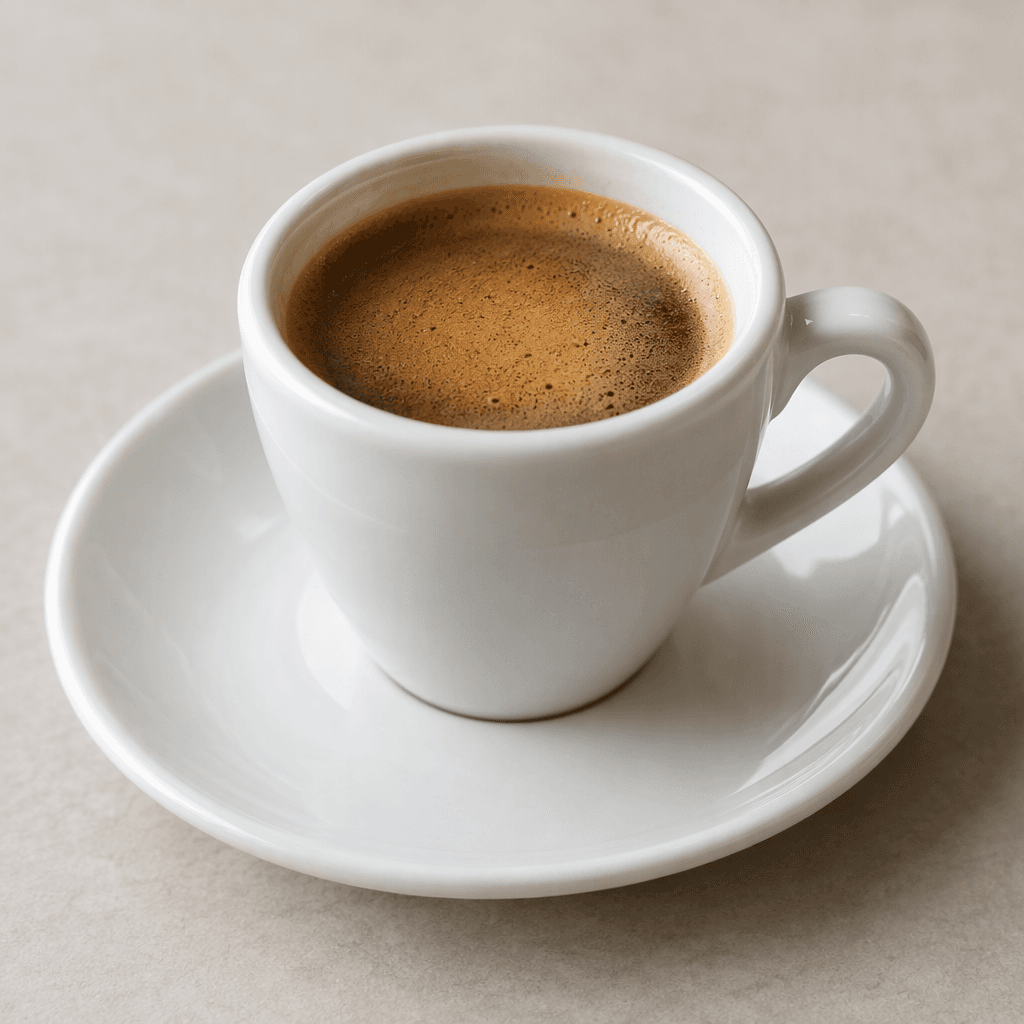
Coffee (Low Sugar) Calories
Low sugar coffee is a low-calorie, caffeinated beverage.
In season: Spring · Summer · Autumn · Winter
CALORIES
GI
POTASSIUM
FIBER
Quick answer
1 cup (medium) of Coffee (Low Sugar) (120 g) has 22 calories. That works out to 18 calories per 100 g. It contains 4.9 g of carbs, 0.2 g of protein, 0 g of fat and 0 g of fiber. Its glycemic index is 40 (low), so it raises blood sugar slowly.
What is Coffee (Low Sugar)?
Low-sugar coffee here refers to Turkish coffee made with finely ground coffee simmered in water in a cezve, with a small amount of sugar added during brewing. It is poured unfiltered into a small cup, so the grounds settle at the bottom, while a light layer of foam is often kept on top.
In Turkey, it is commonly served after a meal or when welcoming guests, usually with a glass of water; elsewhere, it makes a small, leisurely cup rather than a large takeaway drink. The modest sugar addition gives it some carbohydrate and a little energy: this version has 18 calories per 100 g. If you want to keep it lighter, ask for less sugar, or enjoy it alongside water instead of a sweet treat.
Coffee (Low Sugar) Nutrition Facts
Selected: 100 g
18
KCAL / 100G
Carbs
4.1g
· 1% DV
Protein
0.2g
· 0% DV
Fat
0g
· 0% DV
Fiber
0g
· 0% DV
DV is the share of the daily value covered, on a 2,000 kcal reference diet.
Calories come from: Carbs 95% · Protein 5% · Fat 0%
Coffee (Low Sugar) Vitamins & Minerals
Vitamins
B3
0.3mg · 2% DV
B2
0.02mg · 2% DV
B5
0.05mg · 1% DV
B6
0.01mg · 1% DV
Minerals
Potassium ⭐
60mg · 2% DV
Magnesium
7mg · 2% DV
Phosphorus
7mg · 1% DV
Sodium
5mg · 0% DV
How Nutritious Is Coffee (Low Sugar)?
Nutrient density
Low
How many vitamins, minerals and how much fiber this food carries per calorie. A high score means a lot of nutrition for few calories.
Satiety score
Medium
An EatBetter score computed from fiber, protein and calorie density. A high score means staying full longer on the same calories.
Both scores are calculated per 100 g and do not change with the selected portion. The satiety score is EatBetter's own calculation, not a clinical measure.
Coffee (Low Sugar) Glycemic Index
GLYCEMIC INDEX
GLYCEMIC LOAD
Accounts for portion size — a more realistic measure than GI alone.
How to Burn Off Coffee (Low Sugar)
To burn the 18 calories in 100 g:
🚶
Walking (5 km/h)
🏃
Running (8 km/h)
🚴
Cycling
🏊
Swimming
Times are calculated with the MET equation for a 70 kg adult. Actual burn varies with your weight, age and pace.
Is Coffee (Low Sugar) Processed?
NOVA 2
Minimally Processed
1. Unprocessed
2. Minimally Processed
3. Processed
4. Ultra-Processed
NOVA classifies foods into 4 groups by industrial processing. NOVA 1 (unprocessed) is the healthiest.
Does Coffee (Low Sugar) Contain Allergens?
No known major allergens
Which Diets Is Coffee (Low Sugar) Good For?
Vegan
✓ Suitable
Vegetarian
✓ Suitable
Gluten-Free
✓ Suitable
Dairy-Free
— Not suitable
Mediterranean
✓ Suitable
Paleo
— Not suitable
Whole30
— Not suitable
DASH
— Not suitable
Keto
✓ Suitable
Low FODMAP
— Not suitable
Coffee (Low Sugar) Fat Profile
SATURATED
0g
MONOUNSATURATED
0g
POLYUNSATURATED
0g
Compare Coffee (Low Sugar)
Foods Similar to Coffee (Low Sugar)
Frequently Asked Questions About Coffee (Low Sugar)
How do you make low-sugar coffee taste less bitter?
Use freshly brewed coffee and add a small amount of sugar while the coffee is hot, so it dissolves evenly. If it still tastes bitter, try a less intense brew rather than adding more sugar; dark, over-extracted coffee can taste especially harsh.
How much sugar is in low-sugar coffee?
There is no fixed amount: “low-sugar” describes the preparation, not a standard recipe. The amount depends on how much sweetener is added at home or by a café, so ask for the sugar to be measured or request it on the side.
Does low-sugar coffee still contain caffeine?
Yes, low-sugar coffee still contains caffeine because reducing the sugar does not change the coffee itself. The caffeine amount varies with the beans, serving size, and brewing method.
Is low-sugar coffee healthier than regular sweet coffee?
Usually, yes, if “regular” coffee is made with more sugar: using less added sugar reduces the drink’s added-sugar load. It does not reduce the coffee’s caffeine, so changing the sweetness will not make it suitable for everyone.
Can low-sugar coffee help with weight loss?
It can make it easier to cut back on added sugar compared with a heavily sweetened coffee, but it is not a weight-loss treatment. Sweet syrups, cream, and large add-ins can also change the drink substantially.
Can you drink low-sugar coffee on an empty stomach?
Yes, most people can drink low-sugar coffee before eating. Coffee can cause stomach discomfort, nausea, or reflux in some people, though; if that happens to you, have it with food instead.
Will low-sugar coffee dehydrate you?
No, a moderate amount of low-sugar coffee does not usually dehydrate regular coffee drinkers. Caffeine may briefly increase urination, but coffee still contributes fluid; it should not replace drinking water throughout the day.
Does low-sugar coffee affect blood sugar?
It can: the coffee’s added sugar may raise blood glucose, even when the drink tastes only slightly sweet. If you monitor glucose, ask how the coffee was sweetened or choose an unsweetened version so the amount is easier to manage.
Can you drink low-sugar coffee while pregnant?
Yes, but the caffeine in low-sugar coffee counts toward your total daily caffeine intake. Keep within the pregnancy guidance used in your country, and ask your healthcare professional about a suitable limit for you.
How can you order low-sugar coffee at a café?
Ask for less sugar than the café’s usual recipe, or request the coffee unsweetened with sugar on the side. This lets you control the sweetness yourself, since “low-sugar” does not mean the same amount at every café.
Have another question about Coffee (Low Sugar)?
Ask the AI nutrition coach — calories, portions, alternatives and more, answered in seconds in the app.

Scan calories with your camera
Instant AI nutrition analysis

Nutrition data compiled from USDA FoodData Central and scientific sources.