

Ready & Packaged Foods
All →Vegetables & Legumes
All →Desserts & Confectionery
All →Meat & Protein
All →Grains & Bakery
All →Beverages
All →Milk & Dairy
All →

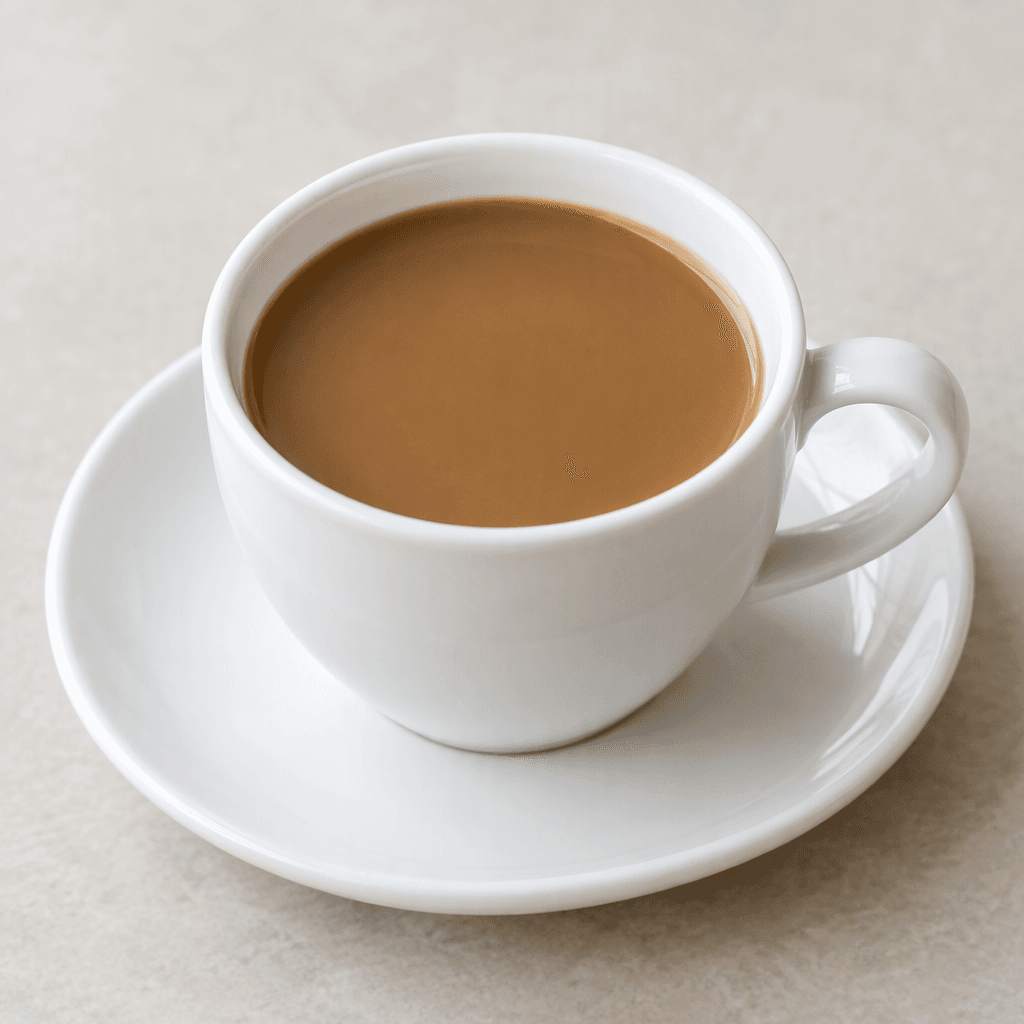
Coffee (low milk, no sugar) Calories
Coffee with low milk, no sugar: low calorie, low fat, caffeinated beverage.
In season: Winter · Spring · Summer · Autumn
CALORIES
GI
POTASSIUM
FIBER
Quick answer
1 cup (medium) of Coffee (low milk, no sugar) (180 g) has 32 calories. That works out to 18 calories per 100 g. It contains 3.6 g of carbs, 1.6 g of protein, 1.1 g of fat and 0 g of fiber. Its 0.2 mg of B2 covers 12% of the Daily Value. Its glycemic index is 30 (low), so it raises blood sugar slowly.
What is Coffee (low milk, no sugar)?
Coffee with a little milk and no sugar is brewed coffee softened with a small splash of milk. Coffee has roots in Ethiopia and spread through the Arab world before becoming a daily drink in many parts of the globe; preparation and serving customs vary widely.
People often enjoy it in the morning or during a break, from a small cup of strong coffee to a larger filter brew. This lightly milky version has a smooth, gently rounded taste without the sweetness of sugar. It is mostly fluid, relatively low in calories, and contains caffeine. Pair it with breakfast or a small snack, or use less milk if you prefer a lighter cup.
Coffee (low milk, no sugar) Nutrition Facts
Selected: 100 g
18
KCAL / 100G
Carbs
2g
· 1% DV
Protein
0.9g
· 2% DV
Fat
0.6g
· 1% DV
Fiber
0g
· 0% DV
DV is the share of the daily value covered, on a 2,000 kcal reference diet.
Calories come from: Carbs 47% · Protein 21% · Fat 32%
Coffee (low milk, no sugar) Vitamins & Minerals
Vitamins
B2
0.09mg · 7% DV
B5
0.3mg · 6% DV
B1
0.02mg · 2% DV
B3
0.3mg · 2% DV
Minerals
Calcium
30mg · 3% DV
Phosphorus
20mg · 3% DV
Magnesium
8mg · 2% DV
Selenium
1µg · 2% DV
How Nutritious Is Coffee (low milk, no sugar)?
Nutrient density
Low
How many vitamins, minerals and how much fiber this food carries per calorie. A high score means a lot of nutrition for few calories.
Satiety score
Medium
An EatBetter score computed from fiber, protein and calorie density. A high score means staying full longer on the same calories.
Both scores are calculated per 100 g and do not change with the selected portion. The satiety score is EatBetter's own calculation, not a clinical measure.
Coffee (low milk, no sugar) Glycemic Index
GLYCEMIC INDEX
GLYCEMIC LOAD
Accounts for portion size — a more realistic measure than GI alone.
How to Burn Off Coffee (low milk, no sugar)
To burn the 18 calories in 100 g:
🚶
Walking (5 km/h)
🏃
Running (8 km/h)
🚴
Cycling
🏊
Swimming
Times are calculated with the MET equation for a 70 kg adult. Actual burn varies with your weight, age and pace.
Is Coffee (low milk, no sugar) Processed?
NOVA 2
Minimally Processed
1. Unprocessed
2. Minimally Processed
3. Processed
4. Ultra-Processed
NOVA classifies foods into 4 groups by industrial processing. NOVA 1 (unprocessed) is the healthiest.
Does Coffee (low milk, no sugar) Contain Allergens?
Contains these allergens:
Which Diets Is Coffee (low milk, no sugar) Good For?
Vegan
— Not suitable
Vegetarian
✓ Suitable
Gluten-Free
— Not suitable
Dairy-Free
— Not suitable
Mediterranean
— Not suitable
Paleo
— Not suitable
Whole30
— Not suitable
DASH
— Not suitable
Keto
— Not suitable
Low FODMAP
— Not suitable
Coffee (low milk, no sugar) Fat Profile
SATURATED
0.35g
MONOUNSATURATED
0.15g
POLYUNSATURATED
0.03g
Omega 6:3 ratio 2:1
Below the ideal 4:1 — a good omega balance.
Compare Coffee (low milk, no sugar)
Foods Similar to Coffee (low milk, no sugar)
Frequently Asked Questions About Coffee (low milk, no sugar)
Does coffee with a little milk and no sugar keep you awake?
Yes, coffee with a little milk and no sugar contains caffeine, which can delay sleep or make it lighter, especially when you drink it later in the day. The small amount of milk does not cancel caffeine’s effects.
Does coffee with a little milk and no sugar break a fast?
Yes, coffee with a little milk and no sugar breaks a strict fast because the milk provides energy. If your fasting plan allows only non-caloric drinks, choose black coffee instead; fasting rules vary by purpose.
Is coffee with a little milk and no sugar good for weight loss?
It can be a useful swap for sweetened coffee, but coffee with a little milk and no sugar does not cause weight loss on its own. Caffeine may briefly affect appetite, but it is not a substitute for meals.
Can you drink coffee with a little milk and no sugar before a workout?
Yes, coffee with a little milk and no sugar can be drunk before exercise, and its caffeine may help you feel more alert. If it upsets your stomach, avoid having it immediately before training.
Does milk in coffee with no sugar reduce caffeine?
No, adding a little milk to coffee with no sugar does not remove or neutralize its caffeine. Milk softens the flavor, but the drink can still affect alertness and sleep.
How do you make coffee with a little milk and no sugar?
Brew coffee using your preferred method, then stir in a small amount of milk and leave out the sugar. You can warm the milk first, but the brewing method and coffee type determine the drink’s flavor.
Can coffee with a little milk and no sugar dehydrate you?
No, a moderate amount of coffee with a little milk and no sugar does not normally dehydrate regular coffee drinkers. It still contributes fluid, though water is the best choice when you are thirsty.
How long can coffee with a little milk and no sugar sit out?
Do not leave coffee with a little milk and no sugar at room temperature for more than two hours. Refrigerate it promptly if you want to keep it, and discard it if it has been left out longer.
Does coffee with a little milk and no sugar stain your teeth?
Yes, coffee with a little milk and no sugar can stain teeth because coffee contains dark pigments. Milk may lighten the drink’s appearance, but it does not prevent staining; rinsing your mouth with water afterward can help.
Can you drink coffee with a little milk and no sugar during pregnancy?
Yes, it can be consumed during pregnancy, but the total caffeine from coffee, tea, chocolate, and other sources should stay within pregnancy guidance. Ask your healthcare professional what limit is appropriate for you.
Have another question about Coffee (low milk, no sugar)?
Ask the AI nutrition coach — calories, portions, alternatives and more, answered in seconds in the app.

Scan calories with your camera
Instant AI nutrition analysis

Nutrition data compiled from USDA FoodData Central and scientific sources.