

Ready & Packaged Foods
All →Vegetables & Legumes
All →Desserts & Confectionery
All →Meat & Protein
All →Grains & Bakery
All →Beverages
All →Milk & Dairy
All →

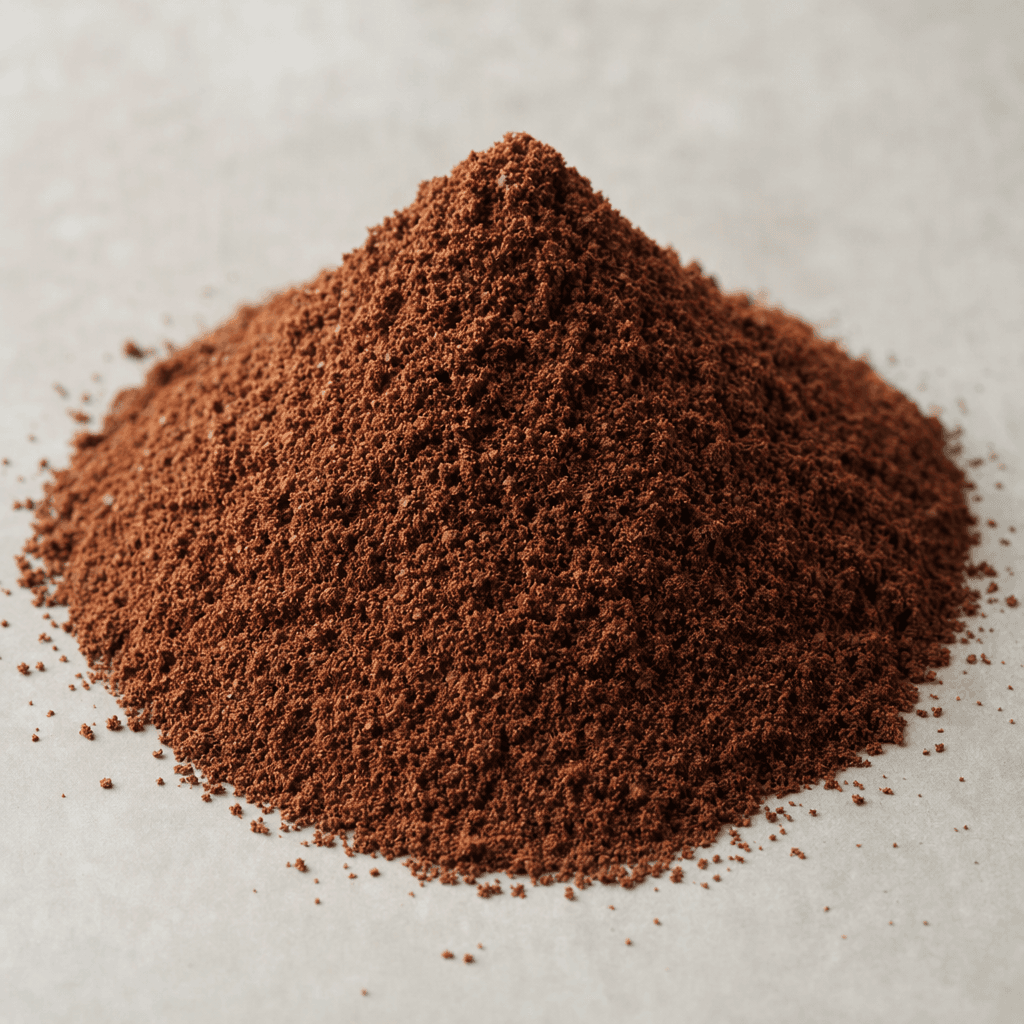
Coffee (ground) Calories
Antioxidant source, low calorie, contains caffeine
In season: Spring · Summer · Autumn · Winter
CALORIES
GI
POTASSIUM
FIBER
Quick answer
1 tablespoon (medium) of Coffee (ground) (6 g) has 15 calories. That works out to 250 calories per 100 g. It contains 2.2 g of carbs, 0.8 g of protein, 0.8 g of fat and 0 g of fiber. Its glycemic index is 0 (low), so it raises blood sugar slowly.
What is Coffee (ground)?
Ground coffee is made from roasted coffee beans milled to a chosen texture, from fine grounds for espresso or Turkish-style brewing to coarser grounds for filter methods. It is brewed around the world using everything from a cezve to a French press or drip machine. In Turkey, finely ground coffee is simmered with water and served with the grounds in the cup; elsewhere, filter coffee is often a breakfast or daytime drink, sometimes served with milk.
Plain brewed coffee is low in calories and contains caffeine and antioxidants; the nutrition figures for dry grounds do not represent what ends up in a cup. For a lighter drink, have it without sugar or flavoured syrups, or add a little milk if you prefer a softer taste.
Coffee (ground) Nutrition Facts
Selected: 100 g
250
KCAL / 100G
Carbs
36g
· 13% DV
Protein
14g
· 28% DV
Fat
13g
· 17% DV
Fiber
0g
· 0% DV
DV is the share of the daily value covered, on a 2,000 kcal reference diet.
Calories come from: Carbs 45% · Protein 18% · Fat 37%
Coffee (ground) Vitamins & Minerals
Vitamins
B3
10mg · 63% DV
B2
0.3mg · 23% DV
B1
0.05mg · 4% DV
B5
0.2mg · 4% DV
Minerals
Manganese
2mg · 87% DV
Potassium ⭐
2000mg · 59% DV
Magnesium
200mg · 48% DV
Phosphorus
160mg · 23% DV
How Nutritious Is Coffee (ground)?
Nutrient density
Medium
How many vitamins, minerals and how much fiber this food carries per calorie. A high score means a lot of nutrition for few calories.
Satiety score
Medium
An EatBetter score computed from fiber, protein and calorie density. A high score means staying full longer on the same calories.
Both scores are calculated per 100 g and do not change with the selected portion. The satiety score is EatBetter's own calculation, not a clinical measure.
Coffee (ground) Glycemic Index
GLYCEMIC INDEX
GLYCEMIC LOAD
Accounts for portion size — a more realistic measure than GI alone.
How to Burn Off Coffee (ground)
To burn the 250 calories in 100 g:
🚶
Walking (5 km/h)
🏃
Running (8 km/h)
🚴
Cycling
🏊
Swimming
Times are calculated with the MET equation for a 70 kg adult. Actual burn varies with your weight, age and pace.
Is Coffee (ground) Processed?
NOVA 2
Minimally Processed
1. Unprocessed
2. Minimally Processed
3. Processed
4. Ultra-Processed
NOVA classifies foods into 4 groups by industrial processing. NOVA 1 (unprocessed) is the healthiest.
Does Coffee (ground) Contain Allergens?
No known major allergens
Which Diets Is Coffee (ground) Good For?
Vegan
✓ Suitable
Vegetarian
✓ Suitable
Gluten-Free
✓ Suitable
Dairy-Free
— Not suitable
Mediterranean
✓ Suitable
Paleo
✓ Suitable
Whole30
— Not suitable
DASH
— Not suitable
Keto
✓ Suitable
Low FODMAP
— Not suitable
Coffee (ground) Fat Profile
SATURATED
6g
MONOUNSATURATED
4g
POLYUNSATURATED
2.5g
Omega 6:3 ratio 25:1
Above the ideal 4:1 (25:1).
Compare Coffee (ground)
Foods Similar to Coffee (ground)
Frequently Asked Questions About Coffee (ground)
How do you brew ground coffee?
Brew ground coffee by passing hot water through it or steeping it and then separating the grounds. Match the grind to your method: medium grinds suit many filter brewers, while espresso requires a fine grind and French presses work better with coarse grounds.
What is the difference between ground coffee and instant coffee?
Ground coffee consists of roasted coffee beans that need brewing and straining; instant coffee is brewed coffee that has been dried and dissolves in water. Stirring ground coffee into a cup will leave grounds behind rather than make it dissolve.
Can you use ground coffee in an espresso machine?
Yes, if the ground coffee is fine enough for espresso and the machine uses a portafilter. A grind that is too coarse can make the shot run quickly and taste weak, while a grind that is too fine can slow extraction.
Can you make cold brew with ground coffee?
Yes, ground coffee works for cold brew. A coarse grind is easiest to strain and tends to produce a smoother brew; steep the coffee in cold water, then filter out the grounds before serving.
How much ground coffee should you use per cup?
Use the amount recommended by your brewer or its cup markings, then adjust to taste. A level tablespoon is a practical starting measure, but cup sizes, grind, and brewing methods differ, so it will not produce the same strength every time.
How should you store ground coffee?
Keep ground coffee in a tightly sealed, dry container away from heat, light, and moisture. A cool, dark cupboard is a practical spot; close the package promptly after use to help preserve its aroma.
Can you freeze ground coffee?
Yes, ground coffee can be frozen in a tightly sealed, moisture-proof container. Divide it into portions before freezing so you do not repeatedly expose the rest to air and condensation; let a portion come to room temperature before opening.
Does ground coffee contain caffeine?
Yes, ground coffee contains caffeine, which passes into the brewed drink. The amount in a cup varies with the coffee, grind, serving size, and brewing method, so the same scoop may not give identical caffeine each time.
Does ground coffee keep you awake?
It can: caffeine in coffee may make it harder to fall asleep, especially for people who are sensitive to it. If coffee affects your sleep, try having it earlier in the day or choosing a decaffeinated brew later on.
Can you reuse ground coffee after brewing?
You can brew used grounds again, but the next cup will usually be weaker and less aromatic because much of the coffee has already been extracted. For a better-tasting brew, use fresh grounds; do not leave wet grounds sitting out for long.
Have another question about Coffee (ground)?
Ask the AI nutrition coach — calories, portions, alternatives and more, answered in seconds in the app.

Scan calories with your camera
Instant AI nutrition analysis

Nutrition data compiled from USDA FoodData Central and scientific sources.