

Ready & Packaged Foods
All →Vegetables & Legumes
All →Desserts & Confectionery
All →Meat & Protein
All →Grains & Bakery
All →Beverages
All →Milk & Dairy
All →

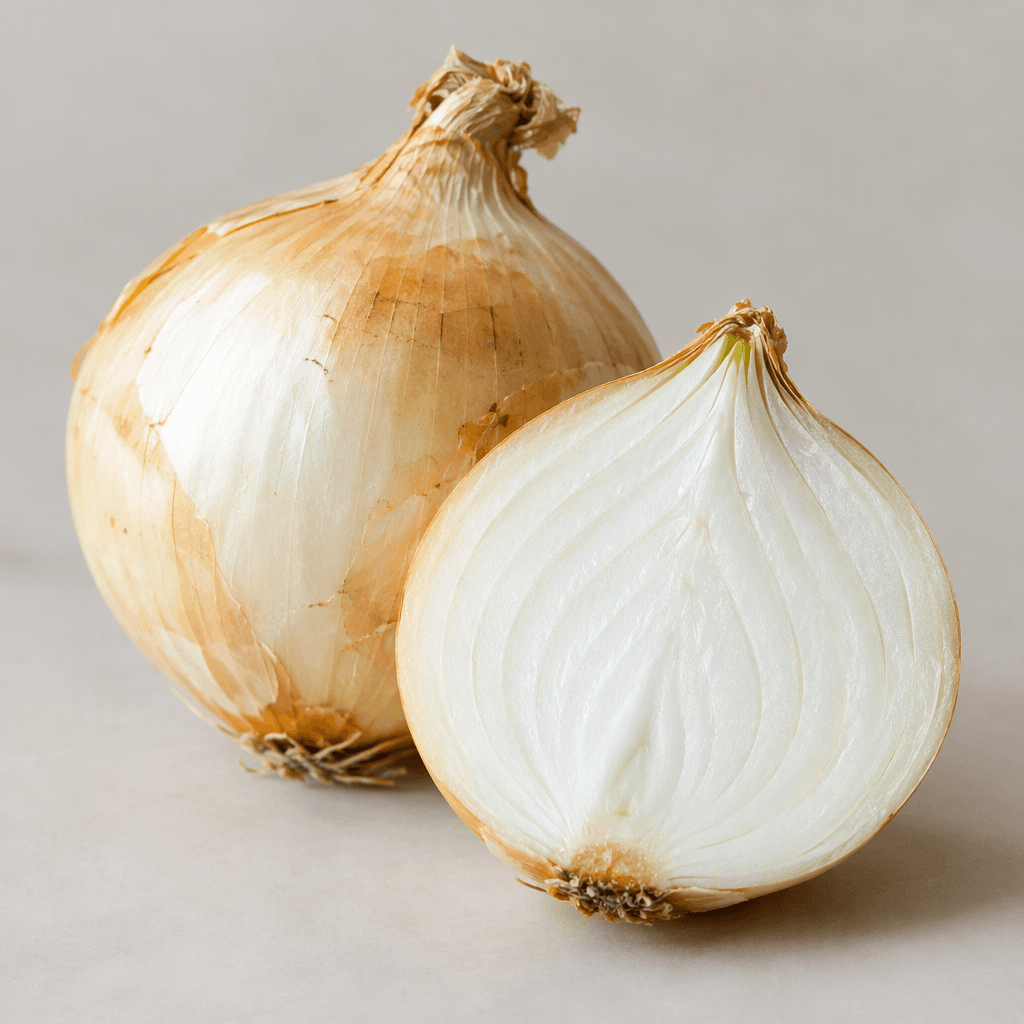
Raw Onion Calories
Source of vitamin C and fiber, low calorie, contains antioxidants
In season: Spring · Summer · Autumn · Winter
CALORIES
GI
POTASSIUM
FIBER
Quick answer
1 piece (medium) of Raw Onion (80 g) has 32 calories. That works out to 40 calories per 100 g. It contains 7.4 g of carbs, 0.9 g of protein, 0.1 g of fat and 1.4 g of fiber. Its 5.9 mg of Vitamin C covers 7% of the Daily Value. Its glycemic index is 15 (low), so it raises blood sugar slowly.
What is Raw Onion?
Raw Onion is the crisp, layered bulb of the onion plant, eaten without cooking. It is used in cuisines around the world, from chopped salads and sandwiches to garnishes for grilled meats and bean dishes. The flavour ranges from gently sweet to sharp and pungent, while the freshly cut layers stay juicy and crunchy.
It is low in calories and contributes fibre and vitamin C, making it an easy way to add flavour and texture without much richness. If its bite is too strong, slice it thinly and briefly soak it in cold water, then drain well. It pairs especially well with herbs, citrus, tomatoes and savoury grilled foods.
Raw Onion Nutrition Facts
Selected: 100 g
40
KCAL / 100G
Carbs
9.3g
· 3% DV
Protein
1.1g
· 2% DV
Fat
0.1g
· 0% DV
Fiber
1.7g
· 6% DV
DV is the share of the daily value covered, on a 2,000 kcal reference diet.
Calories come from: Carbs 88% · Protein 10% · Fat 2%
Raw Onion Vitamins & Minerals
Vitamins
Vitamin C
7.4mg · 8% DV
B6
0.12mg · 7% DV
Folate
19µg · 5% DV
B1
0.04mg · 3% DV
Minerals
Phosphorus
29mg · 4% DV
Potassium ⭐
146mg · 4% DV
Calcium
23mg · 2% DV
Magnesium
10mg · 2% DV
How Nutritious Is Raw Onion?
Nutrient density
High
How many vitamins, minerals and how much fiber this food carries per calorie. A high score means a lot of nutrition for few calories.
Satiety score
Medium
An EatBetter score computed from fiber, protein and calorie density. A high score means staying full longer on the same calories.
Both scores are calculated per 100 g and do not change with the selected portion. The satiety score is EatBetter's own calculation, not a clinical measure.
Raw Onion Glycemic Index
GLYCEMIC INDEX
GLYCEMIC LOAD
Accounts for portion size — a more realistic measure than GI alone.
How to Burn Off Raw Onion
To burn the 40 calories in 100 g:
🚶
Walking (5 km/h)
🏃
Running (8 km/h)
🚴
Cycling
🏊
Swimming
Times are calculated with the MET equation for a 70 kg adult. Actual burn varies with your weight, age and pace.
Is Raw Onion Processed?
NOVA 1
Unprocessed
1. Unprocessed
2. Minimally Processed
3. Processed
4. Ultra-Processed
NOVA classifies foods into 4 groups by industrial processing. NOVA 1 (unprocessed) is the healthiest.
Does Raw Onion Contain Allergens?
No known major allergens
Which Diets Is Raw Onion Good For?
Vegan
✓ Suitable
Vegetarian
✓ Suitable
Gluten-Free
✓ Suitable
Dairy-Free
— Not suitable
Mediterranean
✓ Suitable
Paleo
✓ Suitable
Whole30
— Not suitable
DASH
— Not suitable
Keto
✓ Suitable
Low FODMAP
— Not suitable
Raw Onion Fat Profile
SATURATED
0.03g
MONOUNSATURATED
0.01g
POLYUNSATURATED
0.02g
Omega 6:3 ratio 2:1
Below the ideal 4:1 — a good omega balance.
Compare Raw Onion
Foods Similar to Raw Onion
Frequently Asked Questions About Raw Onion
Is raw onion good for you?
Yes, raw onion provides vitamin C, fiber and antioxidant compounds. It can be part of a balanced diet, but it is not a remedy for a cold or a substitute for medical care.
Does raw onion cause gas or bloating?
Yes, raw onion can cause gas or bloating, especially in people sensitive to fructans, a type of fermentable carbohydrate. Try a smaller serving or cooked onion if raw onion bothers your digestion.
How do you get raw onion breath out of your mouth?
Brush your teeth and tongue, floss, and drink water to reduce raw onion breath. Chewing parsley or having milk may also help; mint gum can mask the smell but does not remove it.
How can you make raw onion taste less sharp?
Soak thin slices of raw onion in cold water briefly, then drain them well. This reduces some of the sharp flavor while keeping the onion crisp; a splash of vinegar also works in salads.
How should you store a whole raw onion?
Keep a whole raw onion in a cool, dry, dark place with good airflow. Avoid sealed plastic bags and damp spots, which trap moisture and encourage softening or mold.
Can you freeze raw onion?
Yes, you can freeze raw onion, preferably chopped and sealed in a freezer-safe bag. Thawing makes it soft, so frozen onion is better for cooked dishes than salads or sandwiches.
Are red onions better than yellow onions for eating raw?
Red onions are often milder and slightly sweeter, while yellow onions tend to taste sharper. Either can be eaten raw; choose red onion for a gentler salad topping or use whichever flavor you prefer.
Why does cutting a raw onion make your eyes water?
Cutting a raw onion releases compounds that form an eye-irritating gas when they meet moisture. A sharp knife, good ventilation, and chilling the onion before cutting can reduce the irritation.
Can you eat a raw onion that has sprouted?
Yes, a firm, mold-free sprouted onion is generally edible. Remove the sprout if you dislike its taste; discard the onion if it is soft, slimy, moldy, or smells unpleasant.
How do you choose a fresh raw onion?
Choose a raw onion that feels firm and heavy for its size, with dry, papery skin. Avoid bulbs with soft spots, damp patches, mold, or a strong musty smell.
Have another question about Raw Onion?
Ask the AI nutrition coach — calories, portions, alternatives and more, answered in seconds in the app.

Scan calories with your camera
Instant AI nutrition analysis

Nutrition data compiled from USDA FoodData Central and scientific sources.