

Ready & Packaged Foods
All →Vegetables & Legumes
All →Desserts & Confectionery
All →Meat & Protein
All →Grains & Bakery
All →Beverages
All →Milk & Dairy
All →

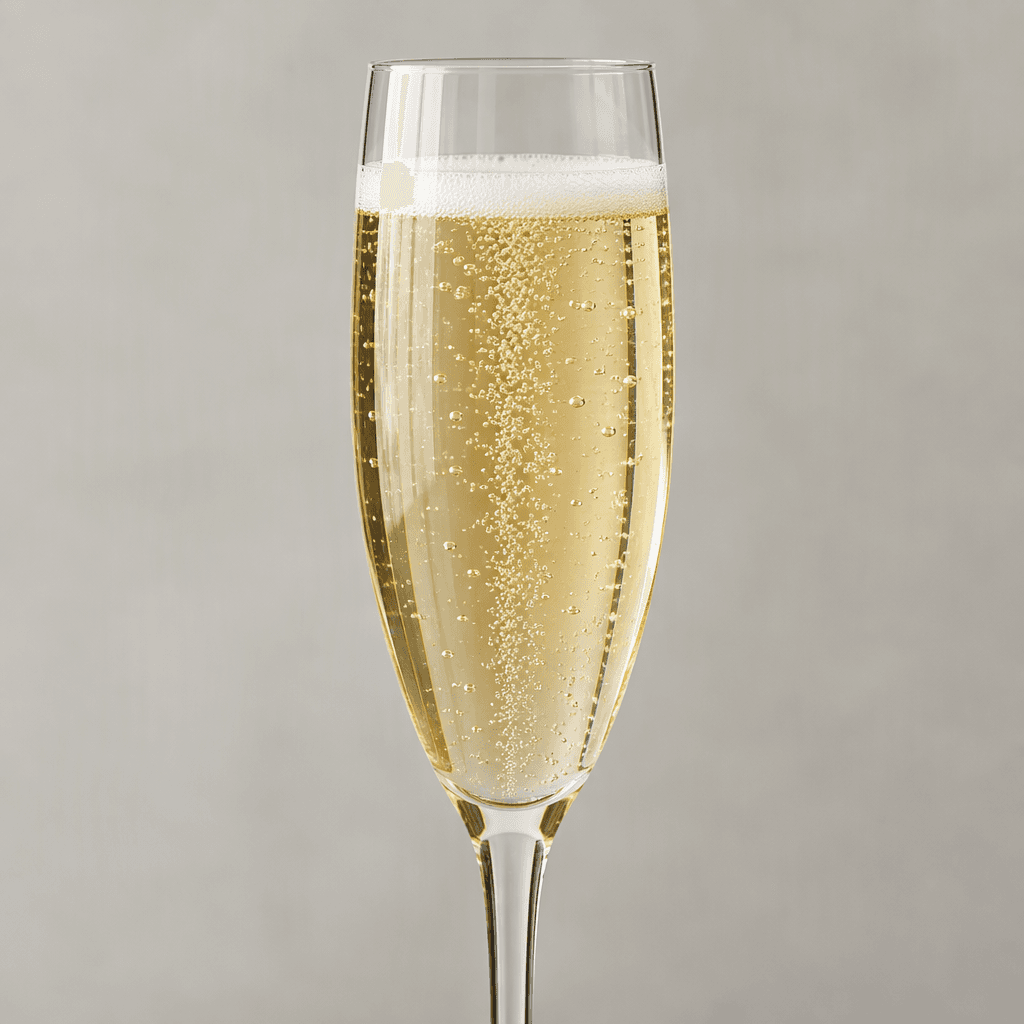
Champagne Calories
Sparkling, celebratory drink, low vitamins/minerals
In season: Winter · Spring · Summer · Autumn
CALORIES
GI
POTASSIUM
FIBER
Quick answer
1 cup (medium) of Champagne (150 g) has 113 calories. That works out to 75 calories per 100 g. It contains 2.1 g of carbs, 0.2 g of protein, 0 g of fat and 0 g of fiber. Its glycemic index is 40 (low), so it raises blood sugar slowly.
What is Champagne?
Champagne is a sparkling wine made from grapes in France’s Champagne region. Its fine bubbles develop through a second fermentation in the bottle; sparkling wine made elsewhere is not technically Champagne.
It is usually served well chilled in a flute or wine glass, often for celebrations, though it also works as an aperitif. In France it may accompany oysters, seafood or light starters; elsewhere, pair it with delicate cheeses or savoury bites that won’t overwhelm its crisp, acidic character. Champagne offers little in the way of vitamins or minerals, and most of its energy comes from alcohol. For a lighter occasion, pour a smaller glass and serve water alongside.
Champagne Nutrition Facts
Selected: 100 g
75
KCAL / 100G
Carbs
1.4g
· 1% DV
Protein
0.1g
· 0% DV
Fat
0g
· 0% DV
Fiber
0g
· 0% DV
DV is the share of the daily value covered, on a 2,000 kcal reference diet.
Calories come from: Carbs 93% · Protein 7% · Fat 0%
Champagne Vitamins & Minerals
Vitamins
B1
0.01mg · 1% DV
B2
0.01mg · 1% DV
B6
0.01mg · 1% DV
Vitamin A
0µg · 0% DV
Minerals
Potassium ⭐
60mg · 2% DV
Calcium
6mg · 1% DV
Magnesium
4mg · 1% DV
Phosphorus
8mg · 1% DV
How Nutritious Is Champagne?
Nutrient density
Low
How many vitamins, minerals and how much fiber this food carries per calorie. A high score means a lot of nutrition for few calories.
Satiety score
Low
An EatBetter score computed from fiber, protein and calorie density. A high score means staying full longer on the same calories.
Both scores are calculated per 100 g and do not change with the selected portion. The satiety score is EatBetter's own calculation, not a clinical measure.
Champagne Glycemic Index
GLYCEMIC INDEX
GLYCEMIC LOAD
Accounts for portion size — a more realistic measure than GI alone.
How to Burn Off Champagne
To burn the 75 calories in 100 g:
🚶
Walking (5 km/h)
🏃
Running (8 km/h)
🚴
Cycling
🏊
Swimming
Times are calculated with the MET equation for a 70 kg adult. Actual burn varies with your weight, age and pace.
Is Champagne Processed?
NOVA 3
Processed
1. Unprocessed
2. Minimally Processed
3. Processed
4. Ultra-Processed
NOVA classifies foods into 4 groups by industrial processing. NOVA 1 (unprocessed) is the healthiest.
Does Champagne Contain Allergens?
No known major allergens
Which Diets Is Champagne Good For?
Vegan
✓ Suitable
Vegetarian
✓ Suitable
Gluten-Free
— Not suitable
Dairy-Free
— Not suitable
Mediterranean
✓ Suitable
Paleo
— Not suitable
Whole30
— Not suitable
DASH
— Not suitable
Keto
— Not suitable
Low FODMAP
— Not suitable
Champagne Fat Profile
SATURATED
0g
MONOUNSATURATED
0g
POLYUNSATURATED
0g
Compare Champagne
Foods Similar to Champagne
Frequently Asked Questions About Champagne
What is the difference between Champagne and sparkling wine?
Champagne is sparkling wine made in France’s Champagne region under specific production rules. Prosecco, cava, and other sparkling wines come from elsewhere and may use different grapes or winemaking methods.
How is Champagne made?
Champagne gets its bubbles from a second fermentation in the bottle. In the traditional method, the wine ages with yeast sediment, which is later removed before the producer adjusts the final sweetness.
Is Champagne sweet or dry?
Champagne can be dry or sweet, and the label gives clues: brut is generally dry, while demi-sec and doux are sweeter styles. The sweetness comes from the final dosage added during production.
How should Champagne be served?
Serve Champagne chilled, not warm, so it stays refreshing and its bubbles remain lively. Chill the bottle before opening, then pour gently into glasses to help prevent the foam from overflowing.
What glass should you use for Champagne?
A tulip-shaped glass is a good choice for Champagne because it gives the aromas room to develop while preserving the bubbles. A flute shows off the stream of bubbles, but its narrow shape can limit aroma.
How do you open a bottle of Champagne safely?
Keep a hand over the cork as you loosen the wire cage, point the bottle away from people, and slowly turn the bottle rather than pulling the cork. A controlled release helps prevent spills and a flying cork.
How long does Champagne last after opening?
Opened Champagne keeps its bubbles best when sealed with a Champagne stopper and refrigerated. Its fizz fades over time, so drink the leftovers soon rather than leaving the bottle open.
What food goes well with Champagne?
Champagne pairs well with oysters and other seafood, as well as mild cheeses and salty snacks. Sweeter styles can work with fruit desserts; match the food to the Champagne’s sweetness.
Does Champagne go bad?
Yes, Champagne can lose its freshness and fizz, especially if it is stored warm or exposed to air after opening. Keep unopened bottles cool and away from light, and refrigerate and stopper leftovers.
Can you drink Champagne while pregnant?
No. Champagne contains alcohol, and there is no established safe amount of alcohol during pregnancy, so it is best to avoid it. Choose a clearly alcohol-free drink instead.
Have another question about Champagne?
Ask the AI nutrition coach — calories, portions, alternatives and more, answered in seconds in the app.

Scan calories with your camera
Instant AI nutrition analysis

Nutrition data compiled from USDA FoodData Central and scientific sources.