

Ready & Packaged Foods
All →Vegetables & Legumes
All →Desserts & Confectionery
All →Meat & Protein
All →Grains & Bakery
All →Beverages
All →Milk & Dairy
All →

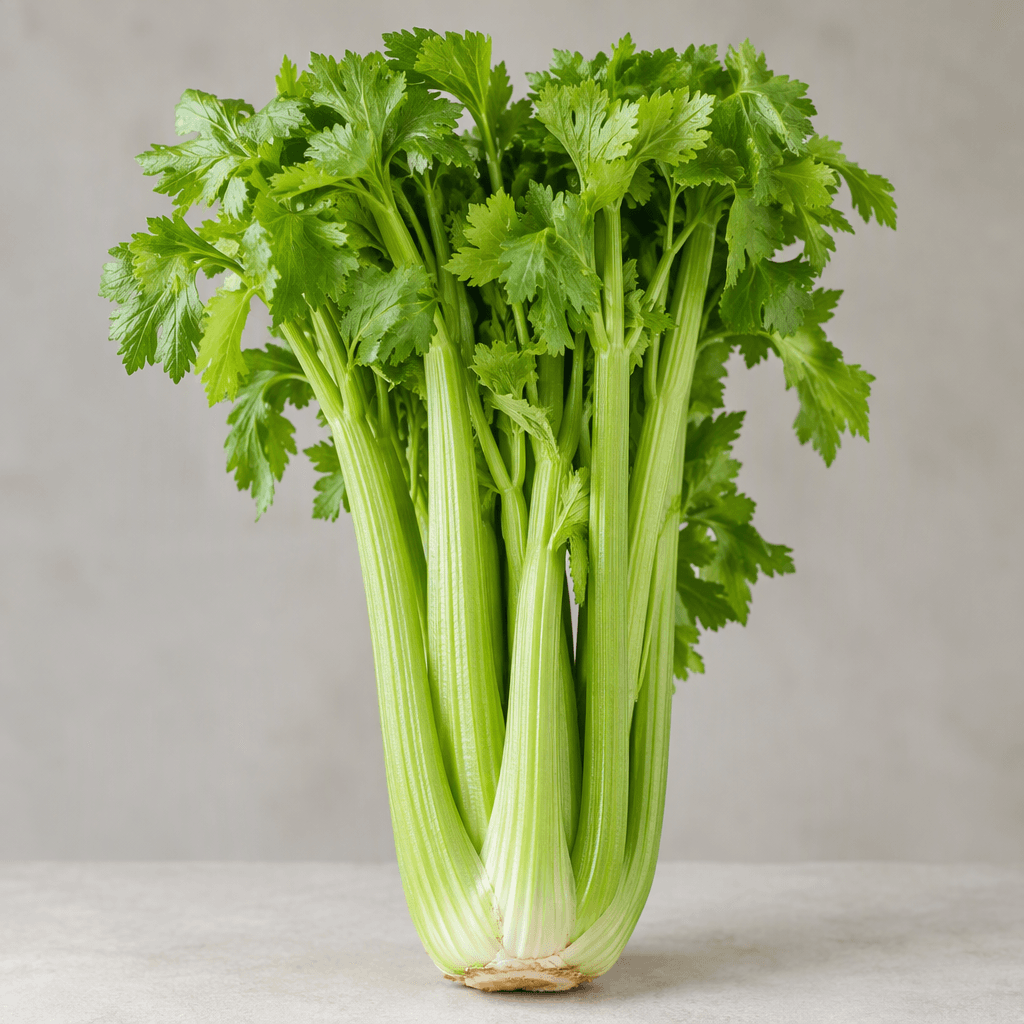
Celery Calories
Low calorie, high fiber, source of vitamin C and K
In season: Spring · Summer · Autumn · Winter
CALORIES
GI
POTASSIUM
FIBER
Quick answer
100 g of Celery has 16 calories. It contains 3 g of carbs, 0.7 g of protein, 0.2 g of fat and 1.6 g of fiber. Its 29.3 µg of Vitamin K covers 24% of the Daily Value. Its glycemic index is 15 (low), so it raises blood sugar slowly.
What is Celery?
Kereviz is the Turkish name for celeriac, the aromatic celery plant’s knobbly root, rather than the familiar bunch of crisp stalks. In Turkey it is commonly cooked with carrots and potatoes as an olive-oil dish, often brightened with orange juice or lemon; the leaves can add fragrance too.
Once cooked, the root turns tender while holding its shape, with a mild, distinctive savoury flavour. It is served warm or chilled, as a side or part of a meze spread. Celeriac brings fibre and substance to a vegetable-focused meal. For a lighter preparation, use a modest amount of oil and pair it with yoghurt or beans.
Celery Nutrition Facts
Selected: 100 g
16
KCAL / 100G
Carbs
3g
· 1% DV
Protein
0.7g
· 1% DV
Fat
0.2g
· 0% DV
Fiber
1.6g
· 6% DV
DV is the share of the daily value covered, on a 2,000 kcal reference diet.
Calories come from: Carbs 72% · Protein 17% · Fat 11%
Celery Vitamins & Minerals
Vitamins
Vitamin K
29.3µg · 24% DV
Folate
36µg · 9% DV
B2
0.06mg · 5% DV
B5
0.25mg · 5% DV
Minerals
Potassium ⭐
260mg · 8% DV
Calcium
40mg · 4% DV
Magnesium
11mg · 3% DV
Sodium
80mg · 3% DV
How Nutritious Is Celery?
Nutrient density
High
How many vitamins, minerals and how much fiber this food carries per calorie. A high score means a lot of nutrition for few calories.
Satiety score
Medium
An EatBetter score computed from fiber, protein and calorie density. A high score means staying full longer on the same calories.
Both scores are calculated per 100 g and do not change with the selected portion. The satiety score is EatBetter's own calculation, not a clinical measure.
Celery Glycemic Index
GLYCEMIC INDEX
GLYCEMIC LOAD
Accounts for portion size — a more realistic measure than GI alone.
How to Burn Off Celery
To burn the 16 calories in 100 g:
🚶
Walking (5 km/h)
🏃
Running (8 km/h)
🚴
Cycling
🏊
Swimming
Times are calculated with the MET equation for a 70 kg adult. Actual burn varies with your weight, age and pace.
Is Celery Processed?
NOVA 1
Unprocessed
1. Unprocessed
2. Minimally Processed
3. Processed
4. Ultra-Processed
NOVA classifies foods into 4 groups by industrial processing. NOVA 1 (unprocessed) is the healthiest.
Does Celery Contain Allergens?
No known major allergens
Which Diets Is Celery Good For?
Vegan
✓ Suitable
Vegetarian
✓ Suitable
Gluten-Free
✓ Suitable
Dairy-Free
— Not suitable
Mediterranean
✓ Suitable
Paleo
✓ Suitable
Whole30
— Not suitable
DASH
— Not suitable
Keto
✓ Suitable
Low FODMAP
— Not suitable
Celery Fat Profile
SATURATED
0.04g
MONOUNSATURATED
0.01g
POLYUNSATURATED
0.04g
Omega 6:3 ratio 2:1
Below the ideal 4:1 — a good omega balance.
Compare Celery
Foods Similar to Celery
Frequently Asked Questions About Celery
How do you store celery so it stays crisp?
Store celery in the refrigerator, wrapped to retain moisture. Keep the stalks unwashed until you need them, and place them in a sealed bag or container; wash just before eating to help them stay crisp.
Can you eat celery leaves?
Yes, celery leaves are edible and have a stronger flavor than the stalks. Chop them into soups, salads, sauces, or stocks. Remove any leaves that are yellowed or wilted.
Can you eat celery raw?
Yes, celery is commonly eaten raw. Rinse the stalks thoroughly, trim the ends, and remove any tough strings if you prefer. Add chopped celery to salads or serve the stalks with a dip.
Can celery be frozen?
Yes, celery can be frozen, but thawed stalks lose their crisp texture. Wash, chop, and dry the celery before freezing it in an airtight container. Use it straight from the freezer in soups, stews, or other cooked dishes.
Why does celery have strings, and how do you remove them?
The strings in celery are natural fibers running along the stalk. They can be more noticeable in thicker, mature stalks. Pull them off from the cut end, or lightly peel the outside with a vegetable peeler.
How do you wash celery properly?
Separate the celery stalks and rinse them under cool running water, rubbing away dirt around the ribs and where the leaves join. Trim the base and ends after washing, and peel away any especially tough outer fibers if needed.
Can you eat celery leaves in soup?
Yes, celery leaves work well in soup and add a more pronounced celery flavor than the stalks. Stir chopped leaves in near the end for a fresher taste, or simmer them in the broth and remove them before serving.
Why does celery taste bitter?
A mildly bitter note can be part of celery’s natural flavor, but it may be stronger in older, wilted, or poorly stored stalks. Choose firm, fresh celery and try cooking it in a soup or stew to mellow the taste.
Are celery stalks and celeriac the same thing?
They are different cultivated forms of the same plant. Celery is grown for its long, crisp stalks, while celeriac is grown for its large, knobbly root. Their textures and typical uses in recipes are different.
Does celery juice provide the same benefits as eating celery?
No, celery juice is not a complete substitute for eating whole celery. Juicing removes much of the pulp and fiber, so eating the stalks is the better way to include celery’s fiber in a meal.
Have another question about Celery?
Ask the AI nutrition coach — calories, portions, alternatives and more, answered in seconds in the app.

Scan calories with your camera
Instant AI nutrition analysis

Nutrition data compiled from USDA FoodData Central and scientific sources.