

Ready & Packaged Foods
All →Vegetables & Legumes
All →Desserts & Confectionery
All →Meat & Protein
All →Grains & Bakery
All →Beverages
All →Milk & Dairy
All →

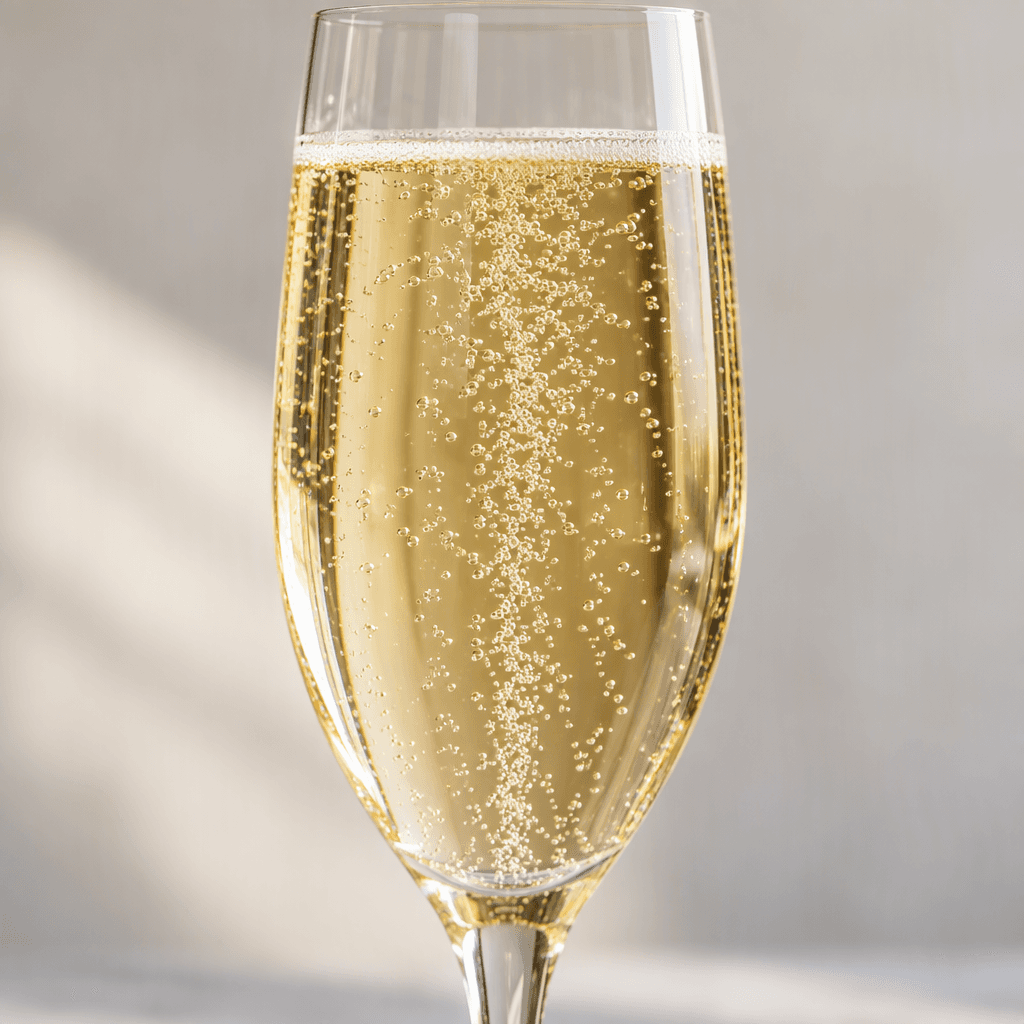
Cava Calories
Spanish sparkling wine; very low in protein and fat, with small amounts of carbohydrate.
In season: Spring · Summer · Autumn · Winter
CALORIES · 100 G
GI
POTASSIUM · 100 G
FIBER · 100 G
Quick answer
1 ounce (small) of Cava (30 g) has 25 calories. That works out to 83 calories per 100 g. It contains 0.5 g of carbs, 0 g of protein, 0 g of fat and 0 g of fiber. Its glycemic index is 0 (low), so it raises blood sugar slowly.
Cava Nutrition Facts
Selected: 1 ounce (small) · 30 g
25
KCAL / 30G
Carbs
0.5g
· 0% DV
Protein
0g
· 0% DV
Fat
0g
· 0% DV
Fiber
0g
· 0% DV
DV is the share of the daily value covered, on a 2,000 kcal reference diet.
Calories come from: Carbs 100% · Protein 0% · Fat 0%
Cava nutrition facts table · 1 ounce (small) (30 g)
| Nutrient | Amount | % DV |
|---|---|---|
| Calories | 25 kcal | |
| Total fat | 0 g | 0% |
| Saturated fat | 0 g | 0% |
| Trans fat | 0 g | |
| Sodium | 1.5 mg | 0% |
| Total carbohydrate | 0.5 g | 0% |
| Fiber | 0 g | 0% |
| Protein | 0 g | 0% |
Calories: Calories measure energy. Average daily need is 2,000 kcal. Excess calories are stored as fat, too few cause weight loss.
Carbs: Your body's primary energy source. The brain runs exclusively on carbs. Daily need: 275g.
Protein: Essential for muscle repair and cell growth. Daily need: 50g. Keeps you full and boosts metabolism.
Fat: Needed for hormone production and vitamin absorption. Daily need: 78g. Limit saturated fats, choose unsaturated.
Fiber: Critical for digestive health and satiety. Daily need: 28g. Stabilizes blood sugar, lowers cholesterol.

Log this food in EatBetter
100,000+ people use it
- Get your daily calorie target
- Snap your meal, log it in seconds
- See every vitamin and mineral

📸 Scan the code to get the app free.

How Many Calories in 1 Small oz of Cava?
| Serving | Amount | Calories |
|---|---|---|
| 1 ounce (small) | 30 g | 25 kcal |
| 1 serving (medium) | 90 g | 75 kcal |
| 100 g | 100 g | 83 kcal |
| 1 cup (small) | 120 g | 100 kcal |
| 1 cup (medium) | 180 g | 149 kcal |
| 1 bottle (half) | 375 g | 311 kcal |
| 1 bottle (whole) | 750 g | 623 kcal |
Calculated from 83 calories per 100 g.
Frequently Asked Questions About Cava
What is Cava?
Cava is Spanish sparkling wine, traditionally made by fermenting it a second time in the bottle. Much of it comes from Catalonia, and it is sold in styles ranging from very dry to sweet.
Is Cava the same as Champagne?
No. Cava comes from Spain, while Champagne must come from France’s Champagne region. Both can use bottle fermentation, but they follow different regional rules and commonly use different grape varieties.
Is Cava sweet or dry?
Cava is available from very dry to sweet. Brut Nature and Brut are dry styles, while Semi Seco and Dulce are sweeter. Look for the sweetness term on the label when choosing a bottle.
How should you serve Cava?
Serve Cava chilled, around 6–8 °C, to keep it refreshing while allowing its aromas to show. A flute preserves bubbles, while a white-wine glass gives the aromas more room to develop.
What grapes are used to make Cava?
Traditional Cava commonly uses Macabeo, Xarel·lo, and Parellada grapes. Some producers also use Chardonnay or other permitted varieties, so the blend and resulting aromas can differ from bottle to bottle.
How is Cava made?
Most Cava is made using the traditional method: the wine undergoes a second fermentation in the bottle, creating its bubbles. It is then aged, separated from the yeast sediment, and adjusted for its desired sweetness.
What does Brut Nature mean on a Cava bottle?
Brut Nature is one of the driest Cava styles and has no added sugar dosage after fermentation. It can taste especially crisp, so its acidity and the character of the grapes are more noticeable.
What is the difference between Cava and Prosecco?
Cava is Spanish and is traditionally made with a second fermentation in the bottle; Prosecco is Italian and is usually fermented in tanks. The production methods give the wines different aromas and bubble characteristics.
What food pairs well with Cava?
Cava pairs well with tapas, seafood, olives, and fried snacks. Dry styles suit salty or savory foods, while sweeter versions can work with fruit-based desserts.
How long does opened Cava last?
Opened Cava usually keeps its best fizz for one to three days in the refrigerator when sealed with a sparkling-wine stopper. It loses freshness quickly, and an ordinary cork may not hold the bottle’s pressure securely.
Cava Vitamins & Minerals
Vitamins
B2
0mg · 0% DV
B3
0.03mg · 0% DV
B6
0mg · 0% DV
B1
0mg · 0% DV
Minerals
Manganese
0.02mg · 1% DV
Potassium ⭐
21mg · 1% DV
Iron
0.09mg · 1% DV
Magnesium
2.1mg · 1% DV
Sodium
1.5mg · 0% DV
Cava Glycemic Index
GLYCEMIC INDEX
GLYCEMIC LOAD
Accounts for portion size — a more realistic measure than GI alone.
How to Burn Off Cava
To burn the 25 calories in 1 ounce (small) (30 g):
🚶
Walking (5 km/h)
🏃
Running (8 km/h)
🚴
Cycling
🏊
Swimming
Times are calculated with the MET equation for a 70 kg adult. Actual burn varies with your weight, age and pace.
What is Cava?
Cava is a Spanish sparkling wine, made mainly in Catalonia using the traditional method: the wine undergoes a second fermentation in the bottle, creating its fine bubbles. Depending on the style, it can taste crisp and dry or show softer fruit notes, with sweetness varying from bottle to bottle.
In Spain it is commonly served well chilled as an aperitif, with tapas, seafood or other small plates; elsewhere, it also suits a celebratory toast or a light meal. Its nutritional profile is mostly alcohol and water, with very little protein or fat and a small amount of carbohydrate. Pair it with simple, savoury food rather than rich sauces. As an alcoholic drink, it is not suitable for anyone avoiding alcohol or planning to drive.
How Nutritious Is Cava?
Nutrient density
Low
How many vitamins, minerals and how much fiber this food carries per calorie. A high score means a lot of nutrition for few calories.
Satiety score
Low
An EatBetter score computed from fiber, protein and calorie density. A high score means staying full longer on the same calories.
Both scores are calculated per 100 g and do not change with the selected portion. The satiety score is EatBetter's own calculation, not a clinical measure.
Is Cava Processed?
NOVA 3
Processed
1. Unprocessed
2. Minimally Processed
3. Processed
4. Ultra-Processed
NOVA classifies foods into 4 groups by industrial processing. NOVA 1 (unprocessed) is the healthiest.
Does Cava Contain Allergens?
No known major allergens
Which Diets Is Cava Good For?
Vegan
✓ Suitable
Vegetarian
✓ Suitable
Gluten-Free
✓ Suitable
Dairy-Free
— Not suitable
Mediterranean
✓ Suitable
Paleo
— Not suitable
Whole30
— Not suitable
DASH
— Not suitable
Keto
— Not suitable
Low FODMAP
— Not suitable
Cava Fat Profile
SATURATED
0g
MONOUNSATURATED
0g
POLYUNSATURATED
0g
Compare Cava
Foods Similar to Cava
Have another question about Cava?
Ask the AI nutrition coach — calories, portions, alternatives and more, answered in seconds in the app.

Scan calories with your camera
Instant AI nutrition analysis

Nutrition data compiled from USDA FoodData Central and scientific sources.