

Ready & Packaged Foods
All →Vegetables & Legumes
All →Desserts & Confectionery
All →Meat & Protein
All →Grains & Bakery
All →Beverages
All →Milk & Dairy
All →

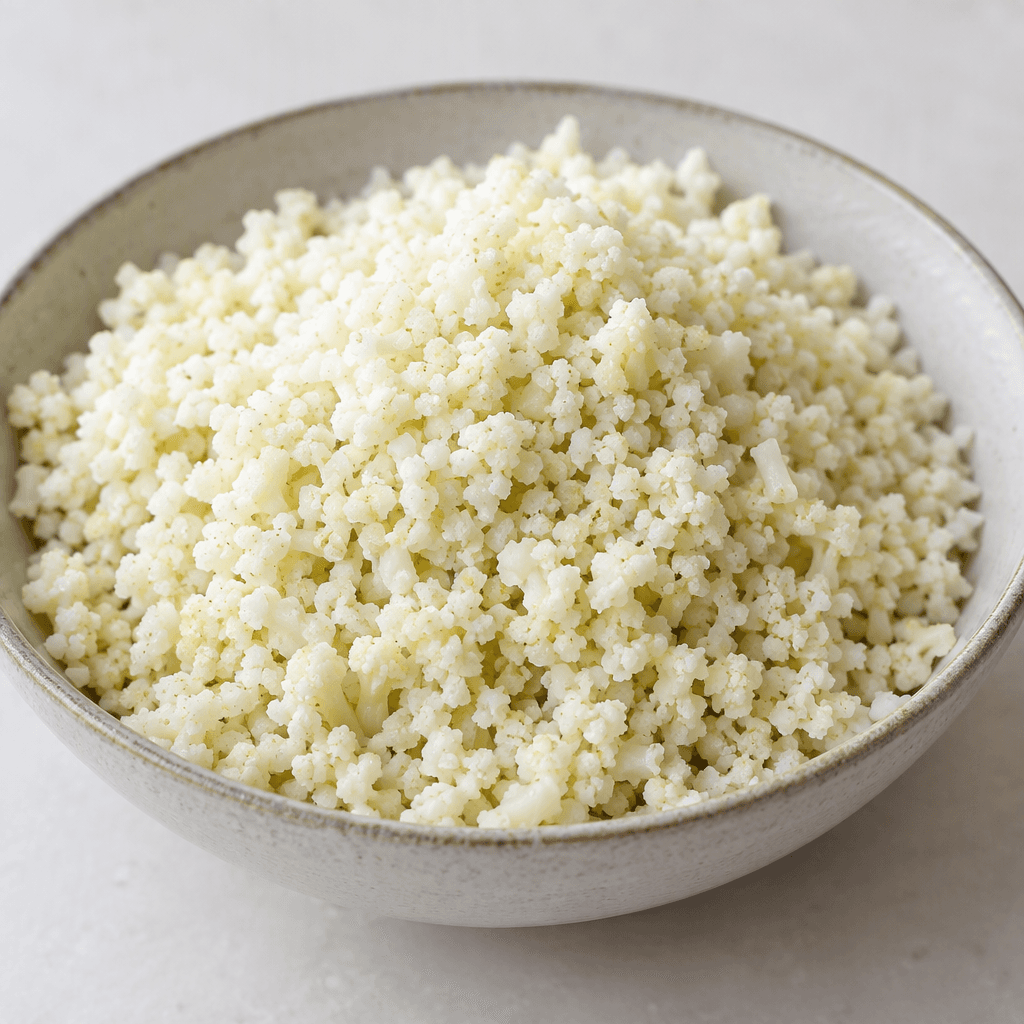
Cauliflower Rice Calories
Low carb, high fiber, gluten-free
In season: Autumn · Winter · Spring
CALORIES
GI
POTASSIUM
FIBER
Quick answer
100 g of Cauliflower Rice has 25 calories. It contains 4.5 g of carbs, 2 g of protein, 0.3 g of fat and 2.2 g of fiber. Its 48 mg of Vitamin C covers 53% of the Daily Value. Its glycemic index is 15 (low), so it raises blood sugar slowly.
What is Cauliflower Rice?
Cauliflower Rice is finely chopped or grated cauliflower cooked until tender, giving it the loose, grain-like appearance of rice. It is a modern preparation rather than a traditional rice dish, and is popular as a vegetable-based alternative in lower-carbohydrate cooking. It can be seasoned simply or cooked with aromatics such as onion and garlic.
Cook it briefly for a slightly crisp, separate texture; longer cooking makes it softer and can release more moisture. Serve it in place of rice alongside a main dish, or use it as a base for vegetables, beans, fish or meat. It is low in calories and carbohydrates and provides some fibre, but is not a substantial protein source on its own. A hot pan and a little oil help keep it from turning soggy.
Cauliflower Rice Nutrition Facts
Selected: 100 g
25
KCAL / 100G
Carbs
4.5g
· 2% DV
Protein
2g
· 4% DV
Fat
0.3g
· 0% DV
Fiber
2.2g
· 8% DV
DV is the share of the daily value covered, on a 2,000 kcal reference diet.
Calories come from: Carbs 63% · Protein 28% · Fat 9%
Cauliflower Rice Vitamins & Minerals
Vitamins
Vitamin C
48mg · 53% DV
B5
0.7mg · 14% DV
Folate
57µg · 14% DV
Vitamin K
16µg · 13% DV
Minerals
Potassium ⭐
320mg · 9% DV
Phosphorus
44mg · 6% DV
Magnesium
15mg · 4% DV
Calcium
22mg · 2% DV
How Nutritious Is Cauliflower Rice?
Nutrient density
Very high
How many vitamins, minerals and how much fiber this food carries per calorie. A high score means a lot of nutrition for few calories.
Satiety score
Medium
An EatBetter score computed from fiber, protein and calorie density. A high score means staying full longer on the same calories.
Both scores are calculated per 100 g and do not change with the selected portion. The satiety score is EatBetter's own calculation, not a clinical measure.
Cauliflower Rice Glycemic Index
GLYCEMIC INDEX
GLYCEMIC LOAD
Accounts for portion size — a more realistic measure than GI alone.
How to Burn Off Cauliflower Rice
To burn the 25 calories in 100 g:
🚶
Walking (5 km/h)
🏃
Running (8 km/h)
🚴
Cycling
🏊
Swimming
Times are calculated with the MET equation for a 70 kg adult. Actual burn varies with your weight, age and pace.
Is Cauliflower Rice Processed?
NOVA 2
Minimally Processed
1. Unprocessed
2. Minimally Processed
3. Processed
4. Ultra-Processed
NOVA classifies foods into 4 groups by industrial processing. NOVA 1 (unprocessed) is the healthiest.
Does Cauliflower Rice Contain Allergens?
No known major allergens
Which Diets Is Cauliflower Rice Good For?
Vegan
✓ Suitable
Vegetarian
✓ Suitable
Gluten-Free
✓ Suitable
Dairy-Free
— Not suitable
Mediterranean
✓ Suitable
Paleo
✓ Suitable
Whole30
— Not suitable
DASH
— Not suitable
Keto
✓ Suitable
Low FODMAP
— Not suitable
Cauliflower Rice Fat Profile
SATURATED
0.07g
MONOUNSATURATED
0.03g
POLYUNSATURATED
0.05g
Omega 6:3 ratio 0.7:1
Below the ideal 4:1 — a good omega balance.
Compare Cauliflower Rice
Foods Similar to Cauliflower Rice
Frequently Asked Questions About Cauliflower Rice
How do you make cauliflower rice?
Cut a cauliflower into florets and pulse them in a food processor until the pieces resemble rice grains. Sauté in a wide pan with a little oil until just tender, then season; overcrowding the pan can make it watery.
Does cauliflower rice taste like rice?
No, cauliflower rice does not taste exactly like rice. It has a mild, slightly earthy cauliflower flavor and a more tender, crumbly texture, so garlic, herbs, spices, or a flavorful sauce help it fit into a dish.
How do you stop cauliflower rice from getting soggy?
Cook cauliflower rice in a wide, hot pan in small batches, without covering it. Avoid adding water and stop cooking once it is just tender; excess moisture and prolonged cooking are the main causes of a soggy result.
Can you eat cauliflower rice raw?
Yes, cauliflower rice can be eaten raw in salads and grain bowls. Wash and dry the cauliflower before grating or processing it, and keep in mind that raw cauliflower may cause gas or bloating for some people.
Can you freeze cauliflower rice?
Yes, cauliflower rice freezes well. Freeze it raw in airtight portions, or cool cooked cauliflower rice completely before packing it. Cook raw frozen cauliflower rice straight from frozen in a hot pan so it releases moisture without turning mushy.
How long does cauliflower rice last in the fridge?
Cooked cauliflower rice keeps for about 3–4 days in a covered container in the refrigerator. Refrigerate it promptly, reheat it thoroughly, and discard it if it develops an unusual smell or texture.
Can cauliflower rice replace rice in every recipe?
No, cauliflower rice cannot replace rice successfully in every recipe. It works well as a side or in stir-fries, but it lacks rice’s starch and absorption, so it will not bind or soak up liquid in the same way.
How do you cook frozen cauliflower rice?
Sauté frozen cauliflower rice directly from the freezer in a hot, uncovered pan. Stir occasionally and let the moisture evaporate; thawing it first can leave it wetter and more likely to become mushy.
Is cauliflower rice good for weight loss?
Cauliflower rice can help make a meal less energy-dense when it replaces a larger serving of regular rice. It is not a weight-loss food by itself, so pair it with filling protein and vegetables rather than relying on it alone.
Can people with diabetes eat cauliflower rice?
Yes, cauliflower rice is generally a suitable alternative for people with diabetes because it usually affects blood sugar less than regular rice. The full meal still matters, and anyone adjusting a diabetes meal plan should discuss it with their care team.
Have another question about Cauliflower Rice?
Ask the AI nutrition coach — calories, portions, alternatives and more, answered in seconds in the app.

Scan calories with your camera
Instant AI nutrition analysis

Nutrition data compiled from USDA FoodData Central and scientific sources.