

Ready & Packaged Foods
All →Vegetables & Legumes
All →Desserts & Confectionery
All →Meat & Protein
All →Grains & Bakery
All →Beverages
All →Milk & Dairy
All →

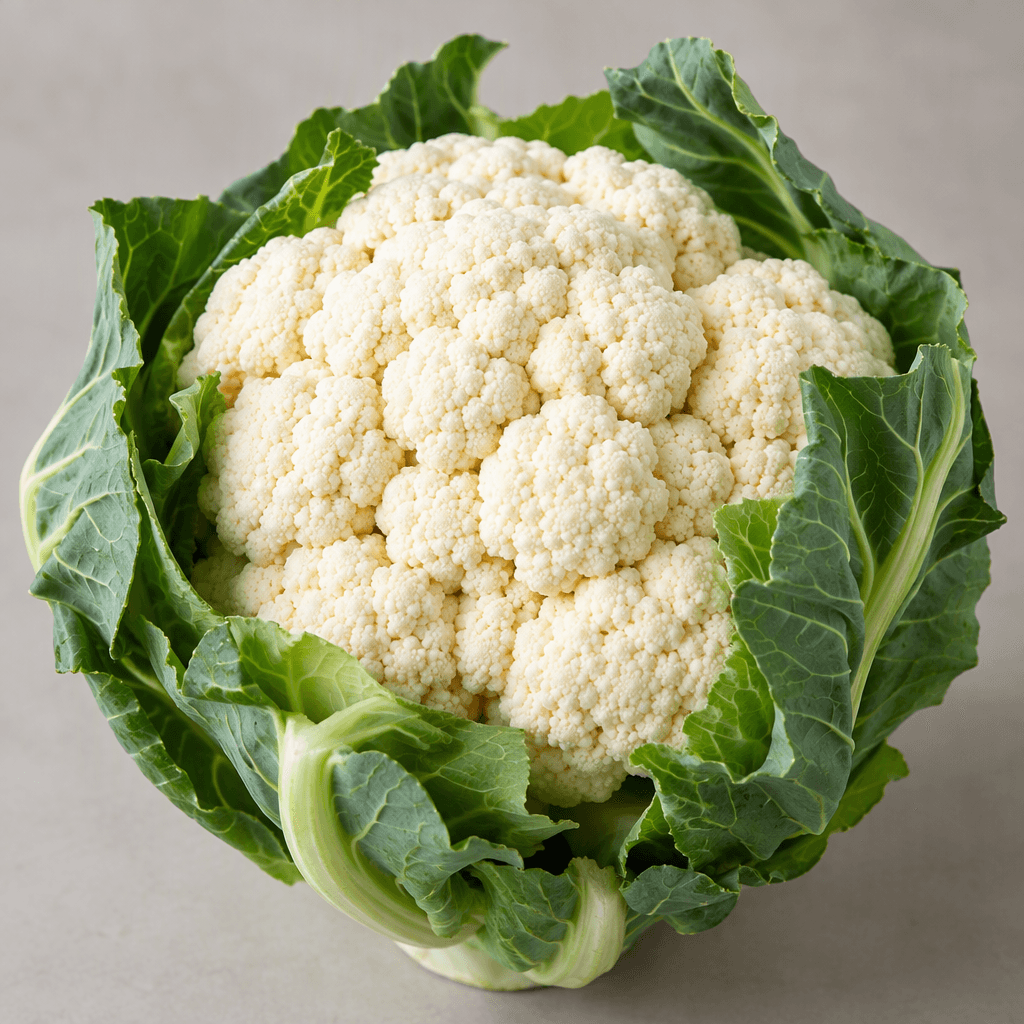
Cauliflower Calories
Low calorie, high fiber, source of vitamin C and folate
In season: Autumn · Winter · Spring
CALORIES
GI
POTASSIUM
FIBER
Quick answer
1 piece (medium) of Cauliflower (600 g) has 150 calories. That works out to 25 calories per 100 g. It contains 29.4 g of carbs, 11.4 g of protein, 1.8 g of fat and 12 g of fiber. Its 289.2 mg of Vitamin C covers 321% of the Daily Value. Its glycemic index is 15 (low), so it raises blood sugar slowly.
What is Cauliflower?
Cauliflower is a cabbage-family vegetable with a compact head of tightly clustered white florets. It developed from wild cabbage around the Mediterranean and is now a familiar ingredient in kitchens worldwide. Break it into florets for roasting, steaming or adding to soups and curries; it can also be grated or mashed as a milder alternative to grains or potatoes.
Its flavor is gentle and slightly sweet when cooked, while roasting brings out a nutty edge. In Britain and elsewhere it is often served roasted, in soups, or with a cheese sauce; in South Asian cooking it is commonly cooked with spices. With 25 calories per 100 g, it is a light vegetable that also provides fibre. For an easy side, roast florets with a little oil and serve with lemon or yogurt.
Cauliflower Nutrition Facts
Selected: 100 g
25
KCAL / 100G
Carbs
4.9g
· 2% DV
Protein
1.9g
· 4% DV
Fat
0.3g
· 0% DV
Fiber
2g
· 7% DV
DV is the share of the daily value covered, on a 2,000 kcal reference diet.
Calories come from: Carbs 66% · Protein 25% · Fat 9%
Cauliflower Vitamins & Minerals
Vitamins
Vitamin C
48.2mg · 54% DV
B5
0.7mg · 14% DV
Folate
57µg · 14% DV
Vitamin K
15.5µg · 13% DV
Minerals
Potassium ⭐
299mg · 9% DV
Phosphorus
44mg · 6% DV
Magnesium
15mg · 4% DV
Calcium
22mg · 2% DV
How Nutritious Is Cauliflower?
Nutrient density
Very high
How many vitamins, minerals and how much fiber this food carries per calorie. A high score means a lot of nutrition for few calories.
Satiety score
Medium
An EatBetter score computed from fiber, protein and calorie density. A high score means staying full longer on the same calories.
Both scores are calculated per 100 g and do not change with the selected portion. The satiety score is EatBetter's own calculation, not a clinical measure.
Cauliflower Glycemic Index
GLYCEMIC INDEX
GLYCEMIC LOAD
Accounts for portion size — a more realistic measure than GI alone.
How to Burn Off Cauliflower
To burn the 25 calories in 100 g:
🚶
Walking (5 km/h)
🏃
Running (8 km/h)
🚴
Cycling
🏊
Swimming
Times are calculated with the MET equation for a 70 kg adult. Actual burn varies with your weight, age and pace.
Is Cauliflower Processed?
NOVA 1
Unprocessed
1. Unprocessed
2. Minimally Processed
3. Processed
4. Ultra-Processed
NOVA classifies foods into 4 groups by industrial processing. NOVA 1 (unprocessed) is the healthiest.
Does Cauliflower Contain Allergens?
No known major allergens
Which Diets Is Cauliflower Good For?
Vegan
✓ Suitable
Vegetarian
✓ Suitable
Gluten-Free
✓ Suitable
Dairy-Free
— Not suitable
Mediterranean
✓ Suitable
Paleo
✓ Suitable
Whole30
— Not suitable
DASH
— Not suitable
Keto
✓ Suitable
Low FODMAP
— Not suitable
Cauliflower Fat Profile
SATURATED
0.07g
MONOUNSATURATED
0.03g
POLYUNSATURATED
0.05g
Omega 6:3 ratio 1.5:1
Below the ideal 4:1 — a good omega balance.
Compare Cauliflower
Foods Similar to Cauliflower
Frequently Asked Questions About Cauliflower
Is cauliflower good for weight loss?
Cauliflower can fit well into a weight-loss meal because it is filling for its energy content and provides fibre. Use it in place of some refined-grain sides, but remember that added oil, cheese, or creamy sauces change the meal.
How do you make cauliflower rice?
To make cauliflower rice, pulse washed cauliflower florets in a food processor until they resemble rice grains, or grate them by hand. Cook briefly in a skillet so the pieces soften without turning watery or mushy.
Why does cauliflower turn brown or yellow?
Cauliflower can develop yellow or brown patches from age, exposure to light, or bruising. Small surface marks can usually be trimmed away, but discard the head if it is slimy, moldy, or has an unpleasant smell.
Can you eat cauliflower leaves and stems?
Yes, cauliflower leaves and stems are edible. Wash them well, remove any very tough parts, and slice them thinly; they work in soups, stir-fries, and roasted vegetable dishes just like the florets.
How do you roast cauliflower so it gets crispy?
Cut cauliflower into evenly sized florets, dry them thoroughly, and spread them in a single layer with space between pieces. Roast with a little oil at high heat, turning once; crowding the pan traps steam and softens them.
Can you freeze cauliflower without blanching it?
You can freeze cauliflower without blanching, but its texture, colour, and flavour are more likely to deteriorate during storage. For better quality, blanch the florets briefly, cool them promptly, drain well, and freeze in airtight portions.
Is cauliflower safe to eat raw?
Yes, raw cauliflower is safe to eat when it is washed thoroughly. Serve the florets in salads or with a dip; if raw cruciferous vegetables upset your stomach, try a smaller portion or cook them instead.
How do you get rid of the smell when cooking cauliflower?
To keep cauliflower’s cooking smell mild, avoid boiling it for too long and use steaming, roasting, or another quick cooking method. Overcooking releases a stronger sulfur-like smell and also makes the florets soft.
How long does cauliflower last in the fridge?
A whole cauliflower generally keeps for about a week in the refrigerator when stored unwashed in a breathable bag or loosely covered container. Keep it in the crisper drawer, and wash it just before preparing it.
Does cauliflower cause gas and bloating?
Yes, cauliflower can cause gas or bloating in some people because it contains fibre and carbohydrates that gut bacteria ferment. A smaller serving, thorough cooking, and eating it slowly may make it easier to tolerate.
Have another question about Cauliflower?
Ask the AI nutrition coach — calories, portions, alternatives and more, answered in seconds in the app.

Scan calories with your camera
Instant AI nutrition analysis

Nutrition data compiled from USDA FoodData Central and scientific sources.