

Ready & Packaged Foods
All →Vegetables & Legumes
All →Desserts & Confectionery
All →Meat & Protein
All →Grains & Bakery
All →Beverages
All →Milk & Dairy
All →

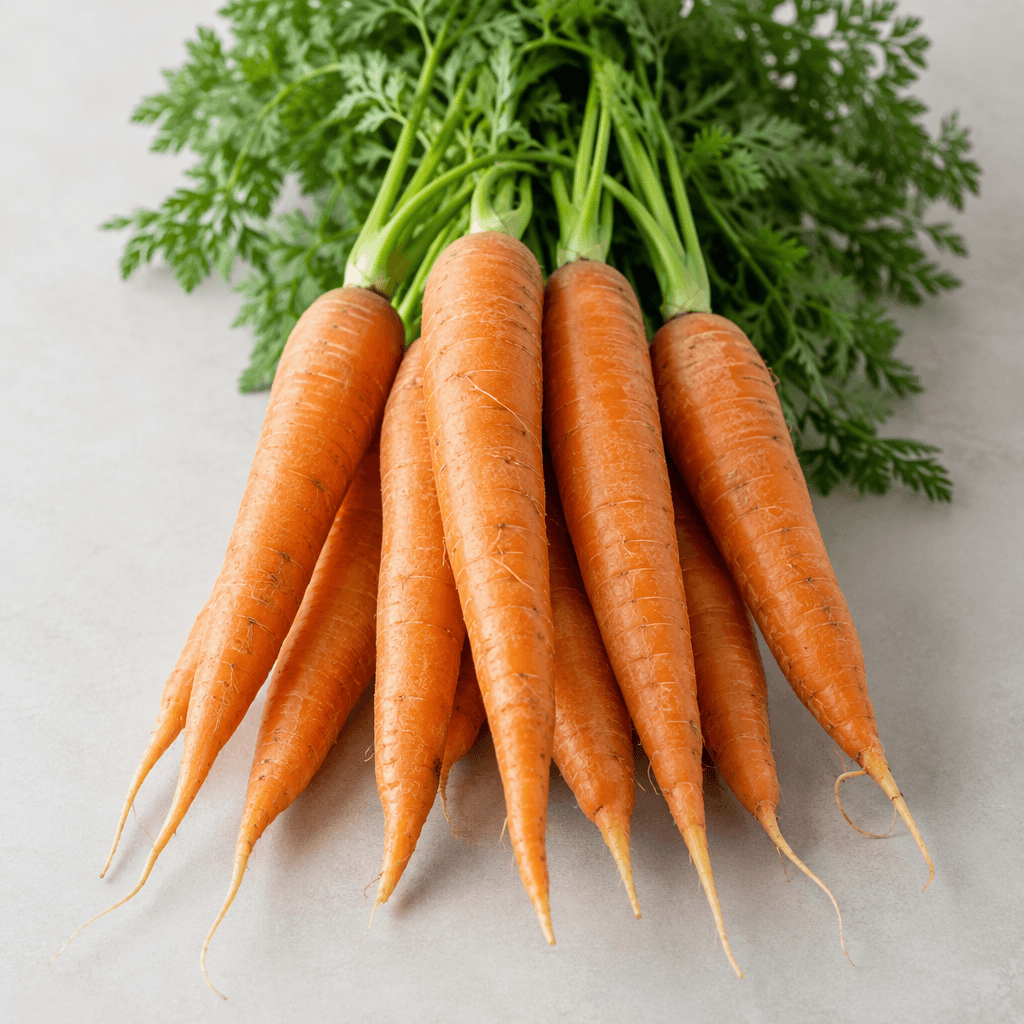
Carrots Calories
Beta-carotene, fiber, low calorie, vitamin C, eye health
In season: Spring · Summer · Autumn · Winter
CALORIES
GI
POTASSIUM
FIBER
Quick answer
1 piece (medium) of Carrots (60 g) has 25 calories. That works out to 41 calories per 100 g. It contains 5.8 g of carbs, 0.5 g of protein, 0.1 g of fat and 1.7 g of fiber. Its 501 µg of Vitamin A covers 56% of the Daily Value. Its glycemic index is 35 (low), so it raises blood sugar slowly.
What is Carrots?
Carrots are edible roots, usually orange, with a mild sweetness and a crisp bite when raw. They are cultivated around the world and eaten raw, roasted, steamed, or simmered in soups and stews. In many kitchens, they also add colour and gentle sweetness to salads, slaws, and savoury dishes.
Raw carrots stay crunchy, while cooking makes them tender and sweeter. They pair easily with citrus, herbs, spices, and dips, making them a handy snack or side. They provide fibre and beta-carotene while remaining low in calories; roast them with a little oil or serve them raw with hummus for a simple, satisfying option.
Carrots Nutrition Facts
Selected: 100 g
41
KCAL / 100G
Carbs
9.6g
· 3% DV
Protein
0.9g
· 2% DV
Fat
0.2g
· 0% DV
Fiber
2.8g
· 10% DV
DV is the share of the daily value covered, on a 2,000 kcal reference diet.
Calories come from: Carbs 88% · Protein 8% · Fat 4%
Carrots Vitamins & Minerals
Vitamins
Vitamin A
835µg · 93% DV
Vitamin K
13.2µg · 11% DV
B6
0.14mg · 8% DV
Vitamin C
5.9mg · 7% DV
Minerals
Potassium ⭐
320mg · 9% DV
Phosphorus
35mg · 5% DV
Calcium
33mg · 3% DV
Magnesium
12mg · 3% DV
How Nutritious Is Carrots?
Nutrient density
High
How many vitamins, minerals and how much fiber this food carries per calorie. A high score means a lot of nutrition for few calories.
Satiety score
Medium
An EatBetter score computed from fiber, protein and calorie density. A high score means staying full longer on the same calories.
Both scores are calculated per 100 g and do not change with the selected portion. The satiety score is EatBetter's own calculation, not a clinical measure.
Carrots Glycemic Index
GLYCEMIC INDEX
GLYCEMIC LOAD
Accounts for portion size — a more realistic measure than GI alone.
How to Burn Off Carrots
To burn the 41 calories in 100 g:
🚶
Walking (5 km/h)
🏃
Running (8 km/h)
🚴
Cycling
🏊
Swimming
Times are calculated with the MET equation for a 70 kg adult. Actual burn varies with your weight, age and pace.
Is Carrots Processed?
NOVA 1
Unprocessed
1. Unprocessed
2. Minimally Processed
3. Processed
4. Ultra-Processed
NOVA classifies foods into 4 groups by industrial processing. NOVA 1 (unprocessed) is the healthiest.
Does Carrots Contain Allergens?
No known major allergens
Which Diets Is Carrots Good For?
Vegan
✓ Suitable
Vegetarian
✓ Suitable
Gluten-Free
✓ Suitable
Dairy-Free
— Not suitable
Mediterranean
✓ Suitable
Paleo
✓ Suitable
Whole30
— Not suitable
DASH
— Not suitable
Keto
✓ Suitable
Low FODMAP
— Not suitable
Carrots Fat Profile
SATURATED
0.04g
MONOUNSATURATED
0.01g
POLYUNSATURATED
0.12g
Omega 6:3 ratio 5:1
Above the ideal 4:1 (5:1).
Compare Carrots
Foods Similar to Carrots
Frequently Asked Questions About Carrots
Are carrots good for your eyesight?
Yes, carrots contain beta-carotene, which the body converts to vitamin A, a nutrient needed for normal vision. Eating carrots can help provide vitamin A, but it will not correct poor eyesight or replace treatment for an eye condition.
Can eating too many carrots turn your skin orange?
Yes, eating large amounts of carrots over time can cause carotenemia, a harmless yellow-orange tint to the skin from beta-carotene. It is often most noticeable on the palms and soles and usually fades after you cut back.
Do you need to peel carrots before eating them?
No, peeling carrots is optional. Their skin is edible; scrub them thoroughly under running water to remove dirt. Peel them if the surface is damaged or if you prefer a smoother texture for a recipe.
Are cooked carrots healthier than raw carrots?
Neither is always healthier. Cooking can make beta-carotene easier for the body to absorb, while raw carrots keep their crisp texture. Eating them with a little fat, such as oil in a meal, can help absorb beta-carotene.
How should you store carrots to keep them fresh?
Remove the leafy tops and refrigerate carrots in the crisper drawer, ideally in a bag or covered container. The greens draw moisture from the roots, while cold storage helps carrots stay firm for longer.
Can you freeze carrots?
Yes. Wash, peel and cut carrots, briefly blanch them, then cool and drain them well before freezing in an airtight container. Frozen carrots soften after thawing, so they work best in soups, stews and other cooked dishes.
Why do carrots taste bitter?
Carrots can develop a bitter taste when stored near ethylene-producing fruit, such as apples, or when they are old. Keep them away from those fruits and remove the leafy tops; discard carrots that are soft or spoiled.
Why do carrots turn white on the outside?
A white, dry-looking film on carrots is usually “white blush,” caused by moisture loss from the surface. It is generally harmless; rinse the carrots and trim any dry areas. Discard them if they are slimy or moldy.
Are carrot tops edible?
Yes, carrot greens are edible when washed well. Their flavor is mildly bitter and herb-like, so chop a small amount into pesto, soups or salads rather than treating them exactly like leafy greens with a milder taste.
Is carrot juice as healthy as eating whole carrots?
Not quite. Carrot juice contains beta-carotene, but juicing removes much of the fiber and makes it easy to drink several carrots quickly. Whole carrots retain their fiber and usually make a more filling snack.
Have another question about Carrots?
Ask the AI nutrition coach — calories, portions, alternatives and more, answered in seconds in the app.

Scan calories with your camera
Instant AI nutrition analysis

Nutrition data compiled from USDA FoodData Central and scientific sources.