

Ready & Packaged Foods
All →Vegetables & Legumes
All →Desserts & Confectionery
All →Meat & Protein
All →Grains & Bakery
All →Beverages
All →Milk & Dairy
All →

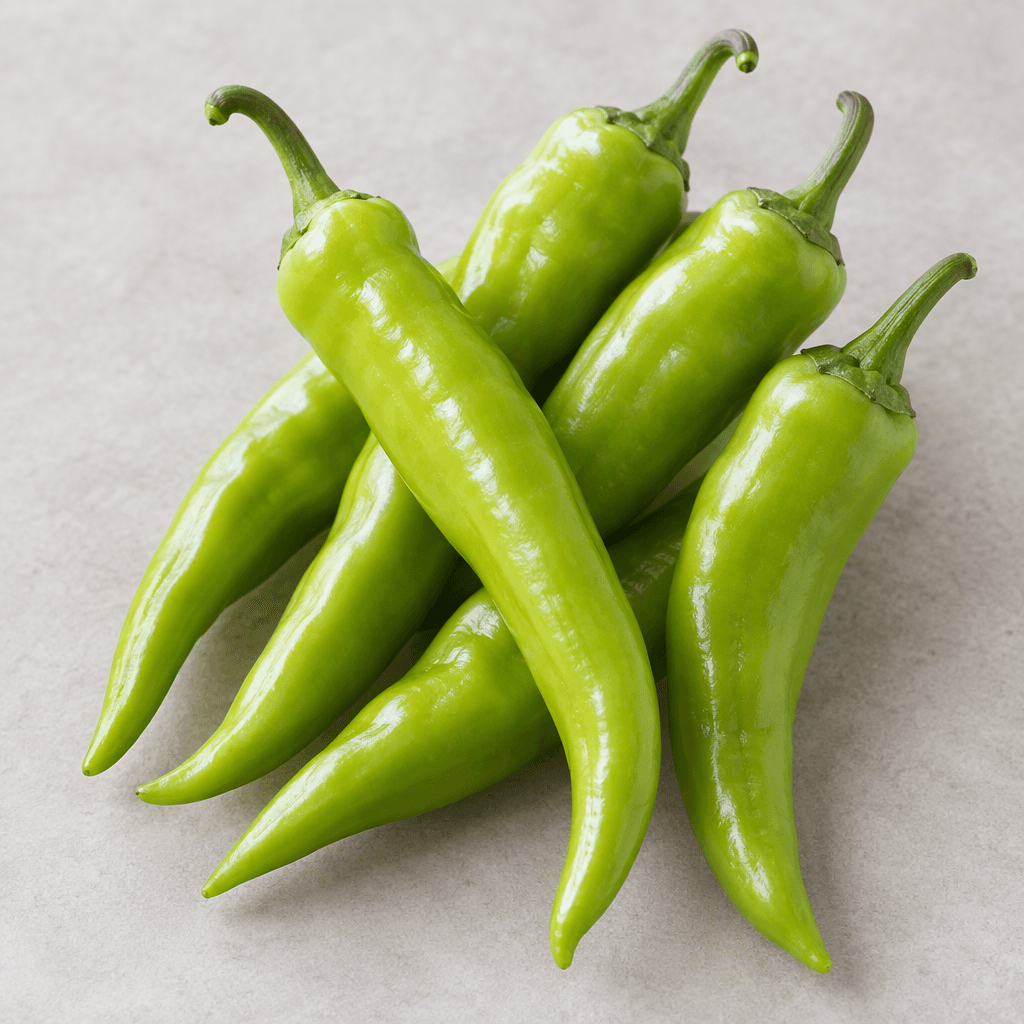
Carliston pepper Calories
High in vitamin C, low calorie, antioxidant
In season: Spring · Summer · Autumn
CALORIES
GI
POTASSIUM
FIBER
Quick answer
1 piece (medium) of Carliston pepper (60 g) has 17 calories. That works out to 28 calories per 100 g. It contains 3.4 g of carbs, 0.7 g of protein, 0.1 g of fat and 1.3 g of fiber. Its 66 mg of Vitamin C covers 73% of the Daily Value. Its glycemic index is 15 (low), so it raises blood sugar slowly.
What is Carliston pepper?
Carliston pepper is a long, slender, pale-green pepper variety associated with Turkey. Despite its pointed shape, it is usually mild rather than hot, with a fresh, gently sweet flavour. It can be eaten raw or cooked.
In Turkish cooking, it is often pan-fried for breakfast, grilled or charred as a side, and added to salads and home-style dishes. Its tender flesh softens quickly and pairs well with eggs, tomatoes and cheese. Carliston pepper is low in calories and high in vitamin C; a 100 g portion has 28 calories. For a lighter preparation, grill or roast it instead of frying.
Carliston pepper Nutrition Facts
Selected: 100 g
28
KCAL / 100G
Carbs
5.6g
· 2% DV
Protein
1.2g
· 2% DV
Fat
0.2g
· 0% DV
Fiber
2.1g
· 8% DV
DV is the share of the daily value covered, on a 2,000 kcal reference diet.
Calories come from: Carbs 77% · Protein 17% · Fat 6%
Carliston pepper Vitamins & Minerals
Vitamins
Vitamin C
110mg · 122% DV
B6
0.22mg · 13% DV
Vitamin A
110µg · 12% DV
Folate
26µg · 7% DV
Minerals
Iron
1mg · 6% DV
Potassium ⭐
220mg · 6% DV
Phosphorus
26mg · 4% DV
Magnesium
13mg · 3% DV
How Nutritious Is Carliston pepper?
Nutrient density
Very high
How many vitamins, minerals and how much fiber this food carries per calorie. A high score means a lot of nutrition for few calories.
Satiety score
Medium
An EatBetter score computed from fiber, protein and calorie density. A high score means staying full longer on the same calories.
Both scores are calculated per 100 g and do not change with the selected portion. The satiety score is EatBetter's own calculation, not a clinical measure.
Carliston pepper Glycemic Index
GLYCEMIC INDEX
GLYCEMIC LOAD
Accounts for portion size — a more realistic measure than GI alone.
How to Burn Off Carliston pepper
To burn the 28 calories in 100 g:
🚶
Walking (5 km/h)
🏃
Running (8 km/h)
🚴
Cycling
🏊
Swimming
Times are calculated with the MET equation for a 70 kg adult. Actual burn varies with your weight, age and pace.
Is Carliston pepper Processed?
NOVA 1
Unprocessed
1. Unprocessed
2. Minimally Processed
3. Processed
4. Ultra-Processed
NOVA classifies foods into 4 groups by industrial processing. NOVA 1 (unprocessed) is the healthiest.
Does Carliston pepper Contain Allergens?
No known major allergens
Which Diets Is Carliston pepper Good For?
Vegan
✓ Suitable
Vegetarian
✓ Suitable
Gluten-Free
✓ Suitable
Dairy-Free
— Not suitable
Mediterranean
✓ Suitable
Paleo
✓ Suitable
Whole30
— Not suitable
DASH
— Not suitable
Keto
— Not suitable
Low FODMAP
— Not suitable
Carliston pepper Fat Profile
SATURATED
0.03g
MONOUNSATURATED
0.02g
POLYUNSATURATED
0.05g
Omega 6:3 ratio 1.5:1
Below the ideal 4:1 — a good omega balance.
Compare Carliston pepper
Foods Similar to Carliston pepper
Frequently Asked Questions About Carliston pepper
What is a Carliston pepper?
A Carliston pepper is a long, slender, usually pale-green pepper popular in Turkish cooking. It has a mild, slightly sweet flavour and is commonly eaten raw, sautéed, fried, or added to cooked dishes.
Are Carliston peppers spicy?
Carliston peppers are usually mild rather than hot. Individual peppers can vary, so taste a small piece first if you are sensitive to heat, especially before adding one raw to a dish.
What can I use instead of a Carliston pepper?
Use a mild long green pepper instead of a Carliston pepper. Cubanelle or banana peppers can work in many recipes, though their size and flavour differ; avoid hot chilies if you want to keep the dish mild.
How do you cook Carliston peppers?
Carliston peppers are easy to cook whole or sliced. Sauté or pan-fry them until tender and lightly blistered, or add chopped peppers to eggs, tomato dishes, and stews. Dry them after washing to reduce oil splatter.
Can you eat Carliston peppers raw?
Yes, you can eat Carliston peppers raw. Rinse them under running water, remove the stem, and slice them into salads, sandwiches, or strips for dipping; the seeds are edible too.
How do you roast Carliston peppers?
Roast Carliston peppers under a hot broiler, over a flame, or in a hot oven, turning them until the skin blisters and the flesh softens. Cover briefly after cooking to loosen the skin, then peel if desired.
How should you store Carliston peppers?
Store unwashed Carliston peppers in the refrigerator’s crisper drawer, keeping them dry until you are ready to use them. Remove any soft or damaged peppers so they do not hasten spoilage of the others.
Can you freeze Carliston peppers?
Yes, Carliston peppers freeze well for cooked dishes. Wash and dry them, remove the stems and seeds if you prefer, then slice and freeze in a sealed bag. They may soften after thawing, so they are less suitable for salads.
Should you remove the seeds from a Carliston pepper?
No, removing the seeds from a Carliston pepper is optional because they are edible and the pepper is generally mild. Take them out if you prefer a smoother texture or need to make room for a filling.
Can you use Carliston peppers for stuffed peppers?
Yes, you can stuff Carliston peppers, but their narrow shape makes them trickier to fill than bell peppers. Choose larger ones, slit them lengthwise, and arrange them snugly in the pan so they hold their shape while cooking.
Have another question about Carliston pepper?
Ask the AI nutrition coach — calories, portions, alternatives and more, answered in seconds in the app.

Scan calories with your camera
Instant AI nutrition analysis

Nutrition data compiled from USDA FoodData Central and scientific sources.