

Ready & Packaged Foods
All →Vegetables & Legumes
All →Desserts & Confectionery
All →Meat & Protein
All →Grains & Bakery
All →Beverages
All →Milk & Dairy
All →

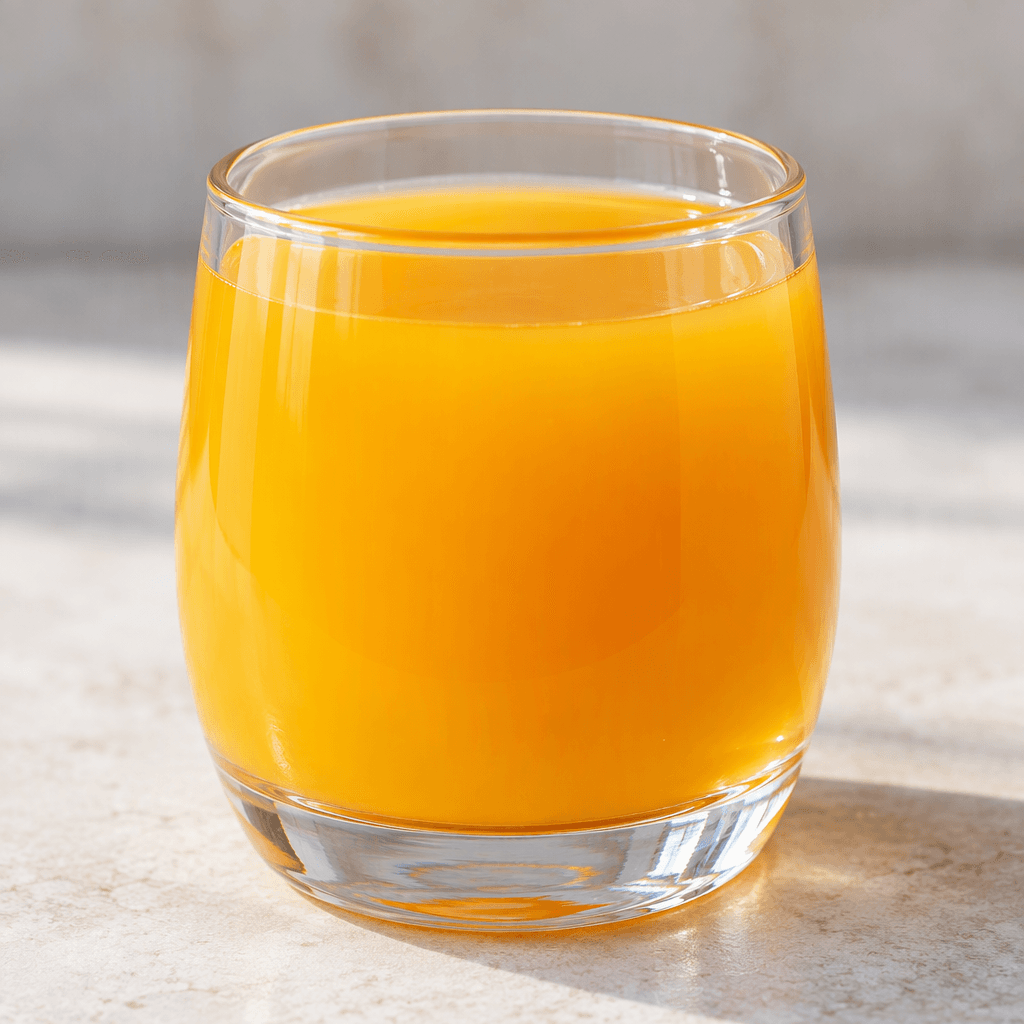
Capri Sun Savana Calories
fruit drink
CALORIES · 100 G
GI
POTASSIUM · 100 G
FIBER · 100 G
Quick answer
1 pack (whole) of Capri Sun Savana (200 g) has 80 calories. That works out to 40 calories per 100 g. It contains 19.6 g of carbs, 0 g of protein, 0 g of fat and 0 g of fiber. Its 24 mg of Vitamin C covers 27% of the Daily Value. Its glycemic index is 65 (medium), so it raises blood sugar at a moderate pace.
Capri Sun Savana Nutrition Facts
Selected: 1 pack (whole) · 200 g
80
KCAL / 200G
Carbs
19.6g
· 7% DV
Protein
0g
· 0% DV
Fat
0g
· 0% DV
Fiber
0g
· 0% DV
DV is the share of the daily value covered, on a 2,000 kcal reference diet.
Calories come from: Carbs 100% · Protein 0% · Fat 0%
Capri Sun Savana nutrition facts table · 1 pack (whole) (200 g)
| Nutrient | Amount | % DV |
|---|---|---|
| Calories | 80 kcal | |
| Total fat | 0 g | 0% |
| Saturated fat | 0 g | 0% |
| Trans fat | 0 g | |
| Sodium | 4 mg | 0% |
| Total carbohydrate | 19.6 g | 7% |
| Fiber | 0 g | 0% |
| Protein | 0 g | 0% |
Calories: Calories measure energy. Average daily need is 2,000 kcal. Excess calories are stored as fat, too few cause weight loss.
Carbs: Your body's primary energy source. The brain runs exclusively on carbs. Daily need: 275g.
Protein: Essential for muscle repair and cell growth. Daily need: 50g. Keeps you full and boosts metabolism.
Fat: Needed for hormone production and vitamin absorption. Daily need: 78g. Limit saturated fats, choose unsaturated.
Fiber: Critical for digestive health and satiety. Daily need: 28g. Stabilizes blood sugar, lowers cholesterol.

Log this food in EatBetter
100,000+ people use it
- Get your daily calorie target
- Snap your meal, log it in seconds
- See every vitamin and mineral

📸 Scan the code to get the app free.

How Many Calories in 1 Pack of Capri Sun Savana?
| Serving | Amount | Calories |
|---|---|---|
| 1 pack (whole) | 200 g | 80 kcal |
| 1 ounce (small) | 28 g | 11 kcal |
| 100 g | 100 g | 40 kcal |
| ½ pack (half) | 100 g | 40 kcal |
| 1 serving (medium) | 200 g | 80 kcal |
| 1 cup (medium) | 200 g | 80 kcal |
| 1 pack (large) | 330 g | 132 kcal |
Calculated from 40 calories per 100 g.
Frequently Asked Questions About Capri Sun Savana
What flavour is Capri Sun Savana?
Capri Sun Savana is a fruit-drink variety with a blended fruit flavour. The exact fruit combination can differ between markets and product formulations, so the pack is the best source for the specific fruits in the version you have.
Is Capri Sun Savana juice or a fruit drink?
Capri Sun Savana is a fruit drink, not simply 100% fruit juice. Its fruit content and recipe can vary by market, so the product description and ingredients on the pouch clarify what is in that particular version.
Does Capri Sun Savana contain caffeine?
No, Capri Sun Savana is not a caffeinated drink. It is different from coffee, cola or energy drinks, though water is still a better everyday drink choice, particularly for children.
Can you freeze Capri Sun Savana?
Yes, you can freeze Capri Sun Savana, but liquid expands as it freezes. Open the pouch first or pour the drink into a freezer-safe container, then let it thaw fully and stir it before drinking.
How do you put the straw into a Capri Sun Savana pouch without spilling it?
Push the straw slowly through the marked spot while holding the pouch around that area. Keeping the straw angled into the opening helps prevent it from piercing the opposite side and reduces splashing.
Is Capri Sun Savana suitable for children?
Children can drink Capri Sun Savana, but it should not replace water or become an all-day sipping drink. Frequent exposure to sugary drinks can increase the risk of tooth decay, so offer water regularly too.
How much sugar is in Capri Sun Savana?
Capri Sun Savana contains carbohydrates, much of which may come from sugars. The exact sugar content can vary by market and recipe, so use the nutrition information on your pouch for the product you have.
How long does Capri Sun Savana last after opening?
Keep an opened Capri Sun Savana pouch sealed in the refrigerator and drink it as soon as practical. Do not leave a pouch with a straw in it at room temperature for an extended period.
Can you drink Capri Sun Savana after the expiry date?
Do not drink Capri Sun Savana if its use-by date has passed. Also discard a pouch that is leaking, damaged or unusually swollen, since its seal may no longer protect the drink.
Is Capri Sun Savana a good choice for hydration during sports?
Capri Sun Savana provides fluid, but water is usually the practical choice for ordinary exercise and everyday hydration. A fruit drink can be an occasional option, but it should not be treated as a sports-recovery product.
Capri Sun Savana Vitamins & Minerals
Vitamins
Vitamin C
24mg · 27% DV
Vitamin A
0µg · 0% DV
B1
0mg · 0% DV
B2
0mg · 0% DV
Minerals
Copper
0.02mg · 2% DV
Manganese
0.04mg · 2% DV
Potassium ⭐
40mg · 1% DV
Iron
0.2mg · 1% DV
Sodium
4mg · 0% DV
Capri Sun Savana Glycemic Index
GLYCEMIC INDEX
GLYCEMIC LOAD
Accounts for portion size — a more realistic measure than GI alone.
How to Burn Off Capri Sun Savana
To burn the 80 calories in 1 pack (whole) (200 g):
🚶
Walking (5 km/h)
🏃
Running (8 km/h)
🚴
Cycling
🏊
Swimming
Times are calculated with the MET equation for a 70 kg adult. Actual burn varies with your weight, age and pace.
What is Capri Sun Savana?
Capri Sun Savana is a ready-to-drink fruit beverage sold in a sealed pouch with a straw. It is sweet and fruity rather than pulpy or juice-like, and is usually served chilled. The pouch makes it easy to take along for a packed lunch, a picnic or a day out; in many places, it is a convenient alternative to a bottled drink for children. Its nutrition is mainly carbohydrate: it provides 9.8 g per 100 g, with no protein, fat or fibre. It can fit as an occasional sweet drink, but it is not especially filling. Pair it with water and a piece of fresh fruit for a more balanced snack.
How Nutritious Is Capri Sun Savana?
Nutrient density
Low
How many vitamins, minerals and how much fiber this food carries per calorie. A high score means a lot of nutrition for few calories.
Satiety score
Medium
An EatBetter score computed from fiber, protein and calorie density. A high score means staying full longer on the same calories.
Both scores are calculated per 100 g and do not change with the selected portion. The satiety score is EatBetter's own calculation, not a clinical measure.
Is Capri Sun Savana Processed?
NOVA 3
Processed
1. Unprocessed
2. Minimally Processed
3. Processed
4. Ultra-Processed
NOVA classifies foods into 4 groups by industrial processing. NOVA 1 (unprocessed) is the healthiest.
Does Capri Sun Savana Contain Allergens?
No known major allergens
Which Diets Is Capri Sun Savana Good For?
Vegan
✓ Suitable
Vegetarian
✓ Suitable
Gluten-Free
✓ Suitable
Dairy-Free
— Not suitable
Mediterranean
— Not suitable
Paleo
— Not suitable
Whole30
— Not suitable
DASH
— Not suitable
Keto
— Not suitable
Low FODMAP
— Not suitable
Capri Sun Savana Fat Profile
SATURATED
0g
MONOUNSATURATED
0g
POLYUNSATURATED
0g
Compare Capri Sun Savana
Foods Similar to Capri Sun Savana
Have another question about Capri Sun Savana?
Ask the AI nutrition coach — calories, portions, alternatives and more, answered in seconds in the app.

Scan calories with your camera
Instant AI nutrition analysis

Nutrition data compiled from USDA FoodData Central and scientific sources.